
You’ll get the calm of minimalism without the cold by leaning on warm neutrals, tactile layers and a single muted accent that ties rooms together. Keep furniture low and sculptural, edit surfaces to a few meaningful pieces, and use soft light and plants to bring life. These simple moves make minimal spaces feel lived-in and welcoming—here’s how to apply them room by room.
Limit Accent Colors to One or Two Muted Tones
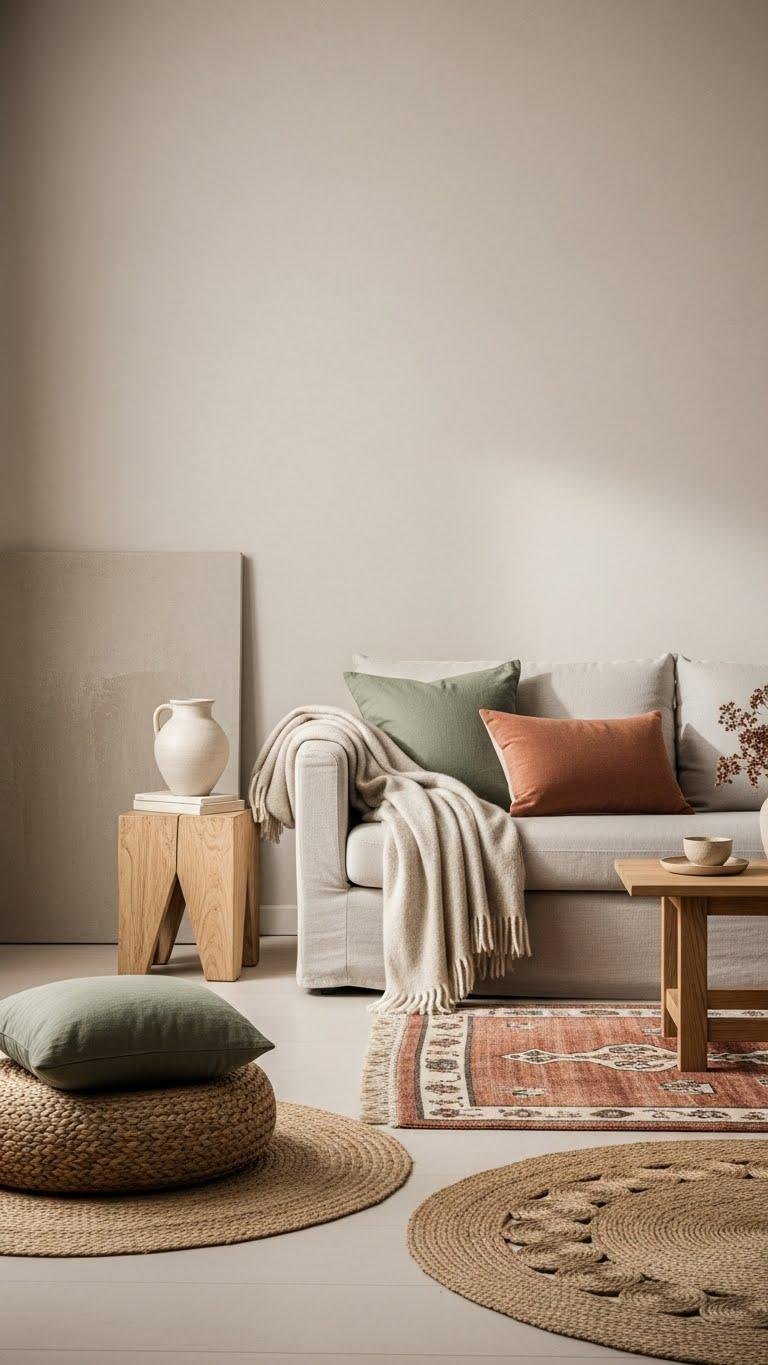
With your neutral base and layered textures in place, keep color additions restrained so the space stays calm and cohesive.
You’ll pick one or two muted accents—sage, terracotta, or dusty blue—and let them recur in cushions, art, and a single rug.
Favor subtle seasonal swaps for freshness, swapping throws or ceramics, so your minimalist room feels alive without losing freedom or calm.
Apply the Same Palette Across Adjacent Rooms

When adjacent rooms share the same pared-back palette, your home reads like a single, intentional composition rather than a series of disconnected moments. You’ll create flow by echoing warm neutrals and one accent hue, using soft passage zones—like a muted rug or trim—to guide sightlines. Embrace doorframe continuity to keep movement effortless, freeing the space and your mind.
Use Large Color Applications Instead of Many Small Accents
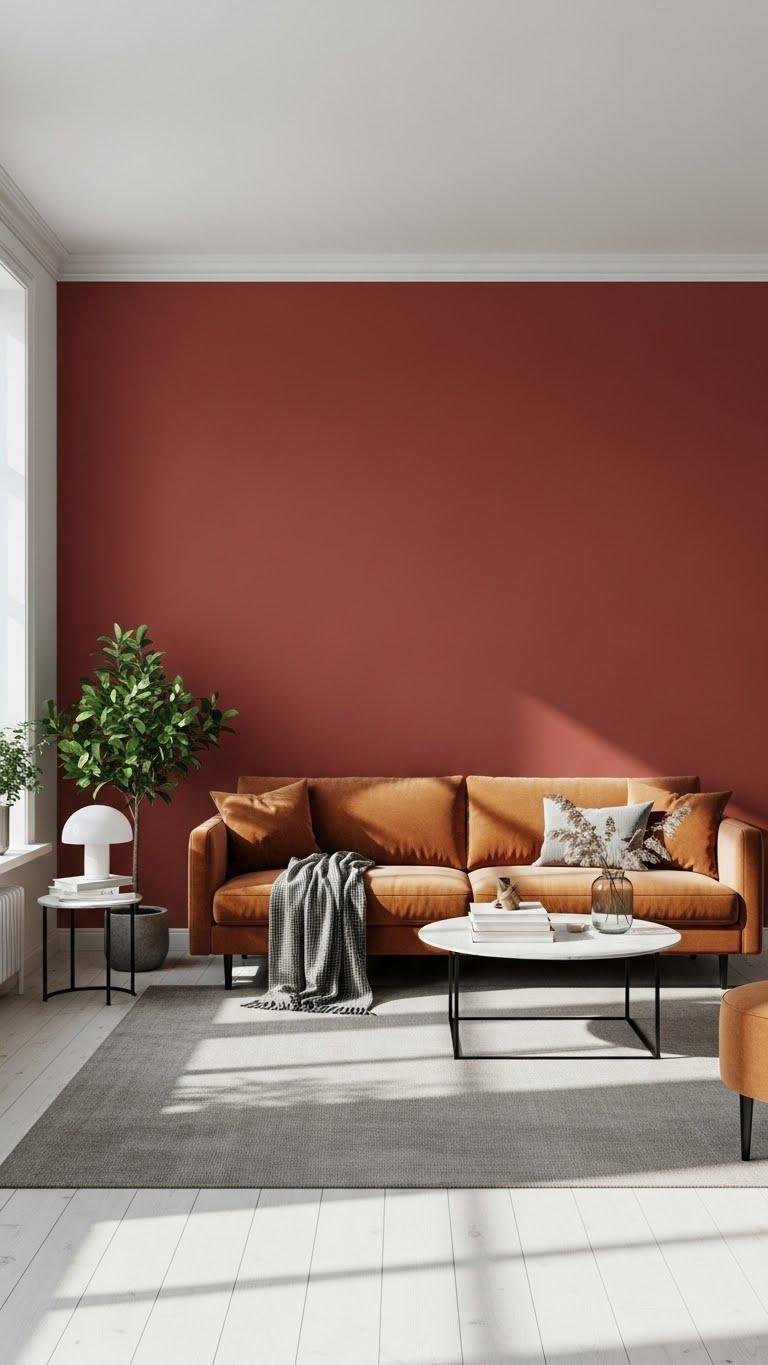
Although small accents can feel tempting, using big color applications—like a painted wall, a large area rug, or a statement sofa—gives a warmer, more cohesive impact with less visual clutter.
You’ll create calm by favoring broad colorfields and a single surfacepaint strategy, letting shape and scale sing.
Embrace bold, simple choices that free your space and your mood.
Layer Tactile Textiles for Depth and Comfort

If you want a room that feels lived-in and luxe, start stacking textiles that contrast in weight and weave—think a chunky wool throw over a linen sofa, a low-pile sisal rug topped by a plush sheepskin, or a raw-edge cotton blanket folded at the foot of a bed.
Mix subtle tones, repeat contrast textures, and plan seasonal swaps so your space breathes and invites.
Select a Few Substantial Textured Pieces

After layering soft textiles for warmth and depth, pick a few substantial textured pieces to anchor the room—think a sculptural boucle armchair, a raw-hem wool pouf, or a handwoven jute storage basket. You’ll choose textured statement rugs to ground zones and sculptural ceramic lamps to add quiet drama. Keep selections deliberate, balanced, and freeing—each piece should serve form, function, and calm.
Mix Natural Materials With Soft Fabrics
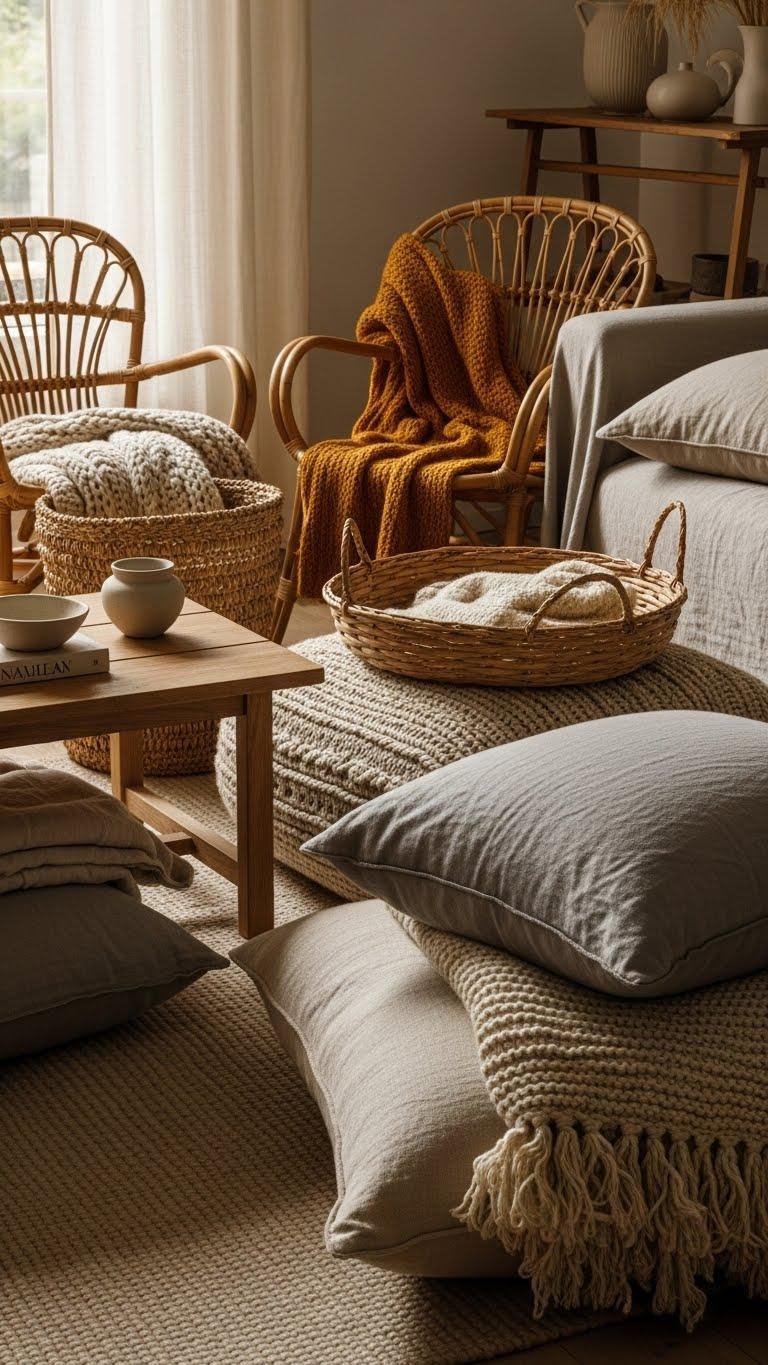
Bring together raw, tactile materials and soft fabrics to create a warm, layered look that feels both curated and lived-in. Pair organic rattan chairs or baskets with plush wool throws and linen cushions. Let natural tones and simple forms breathe; you’ll craft a calm, liberated space that balances structure and softness. Keep palettes muted, shapes honest, and textures intentional for effortless warmth.
Prioritize Durable, Touchable Finishes
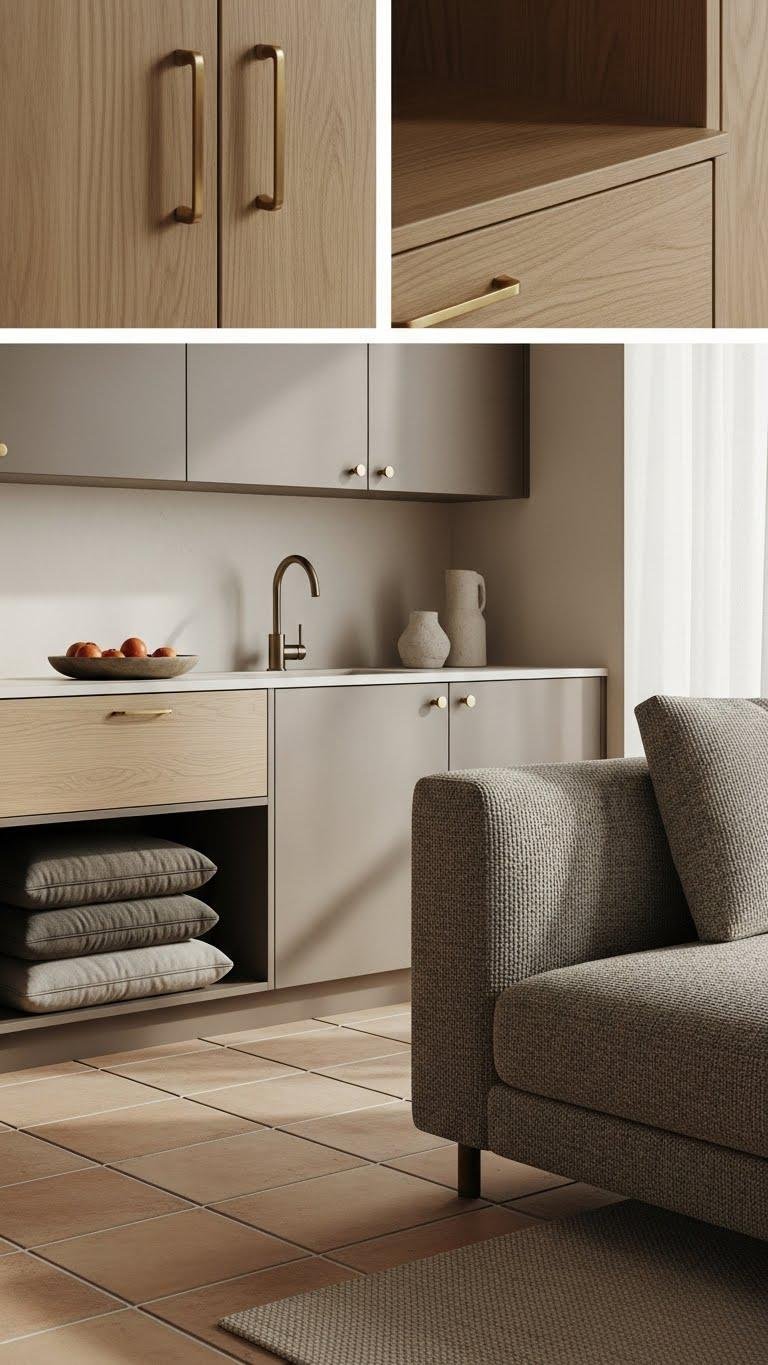
Choose finishes that invite touch and stand up to life: matte lacquered cabinetry, kiln-fired tiles, and tightly woven upholstery keep a warm minimalist space looking effortless while feeling good underhand.
You’ll favor weatherproof finishes for longevity, choose tactile woods and brushed metals, and run sensory testing to confirm comfort.
These choices let you move freely, live boldly, and enjoy a calm, resilient interior.
Pick One or Two Large Focal Items

Anchor the room with one or two substantial pieces—a sculptural sofa, an oversized pendant, or a statement credenza—so everything else can breathe and feel intentional. Choose items that play with scale contrast to create visual drama without clutter. Place them deliberately for placement balance, letting negative space amplify form. You’ll enjoy a calm, liberated interior that reads modern and personal.
Use a Full-Length Mirror to Expand Space and Light

Against a sunlit wall, a full‑length mirror will instantly double perceived space and bounce warm light into shadowed corners, giving your warm minimalist scheme a brighter, more open feel. Place a vertical mirror to emphasize height, lean it for an angled reflection that captures sunlight and movement.
You’ll create airy depth, subtle glow, and a liberated, uncluttered vibe without extra furnishings.
Display a Single Large Artwork as a Statement

Make a bold impression with a single large artwork and let it set the tone for the whole room—its scale, color, and texture will do the heavy lifting so you don’t need a lot of extras.
You’ll hang it confidently, use gallery lighting to sculpt mood, and consider oversized matting for crisp breathing space.
Let that piece speak; you’re free to live around it.
Incorporate Large Houseplants as Focal Points

Bring in a large houseplant to act as a living focal point—its scale, silhouette, and foliage texture can ground the room and add instant warmth without clutter. You’ll choose a potted fiddleleaf or a statement monstera to create sculptural presence, positioning it where light flatters leaves. Let greenery breathe; keep surroundings minimal so the plant offers calm, freedom, and tactile life.
Choose Furniture With Simple, Strong Silhouettes

Once your large plant defines the room’s organic center, pick furniture that echoes that clarity with simple, strong silhouettes.
Choose low profile sofas with clean lines and tactile fabrics, then add angular woodchairs for sculptural contrast.
Keep pieces purposeful and unornamented so movement feels free.
Limit palette and scale to maintain calm, intentional spaces that invite relaxation and effortless living.
Rely on Closed Storage to Keep Surfaces Calm
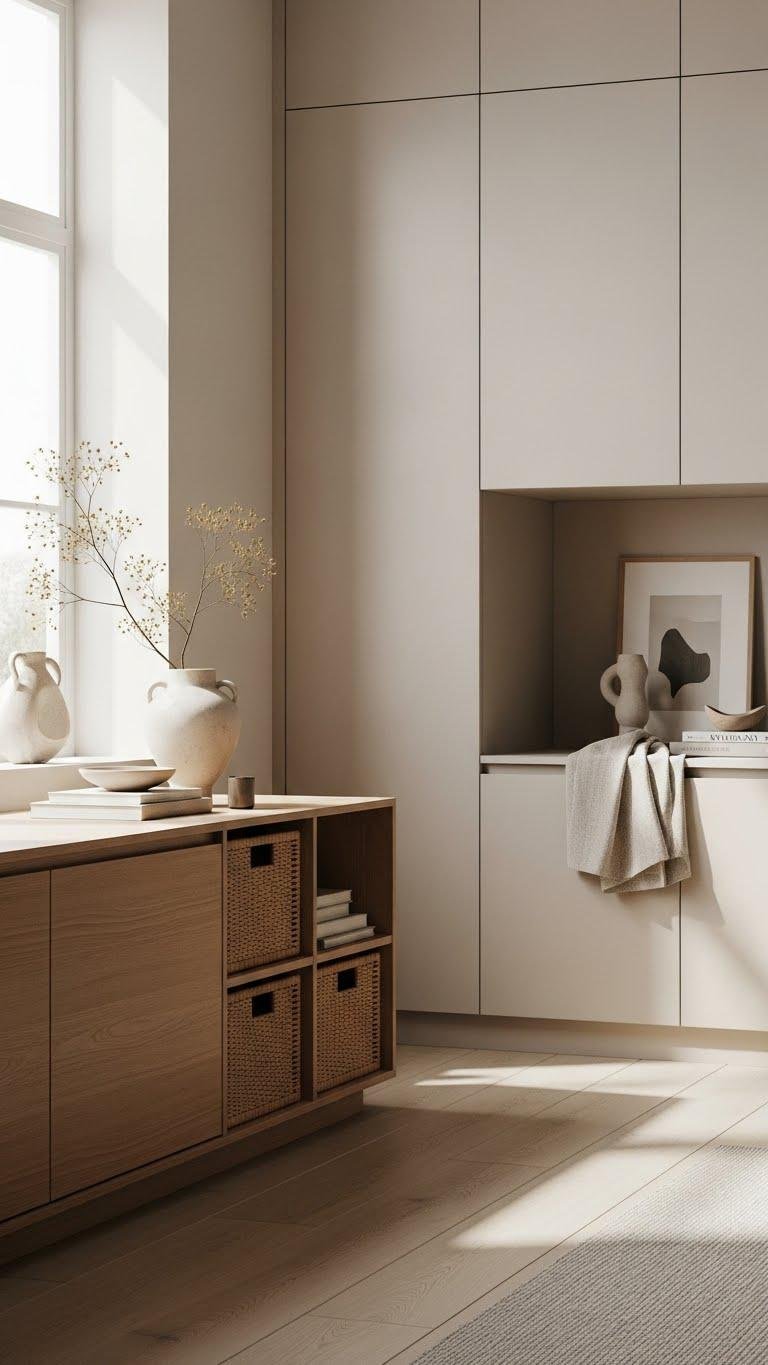
When you want surfaces to feel intentional and uncluttered, rely on closed storage to tuck away the everyday — baskets, low credenzas, and built-in cabinets keep visual noise out of sight while preserving a warm, minimalist look.
You’ll choose hidden baskets and closed cabinetry to corral chargers, papers, and extras, creating calm planes that let texture, light, and a few meaningful objects breathe.
Keep High-Use Surfaces Intentionally Cleared
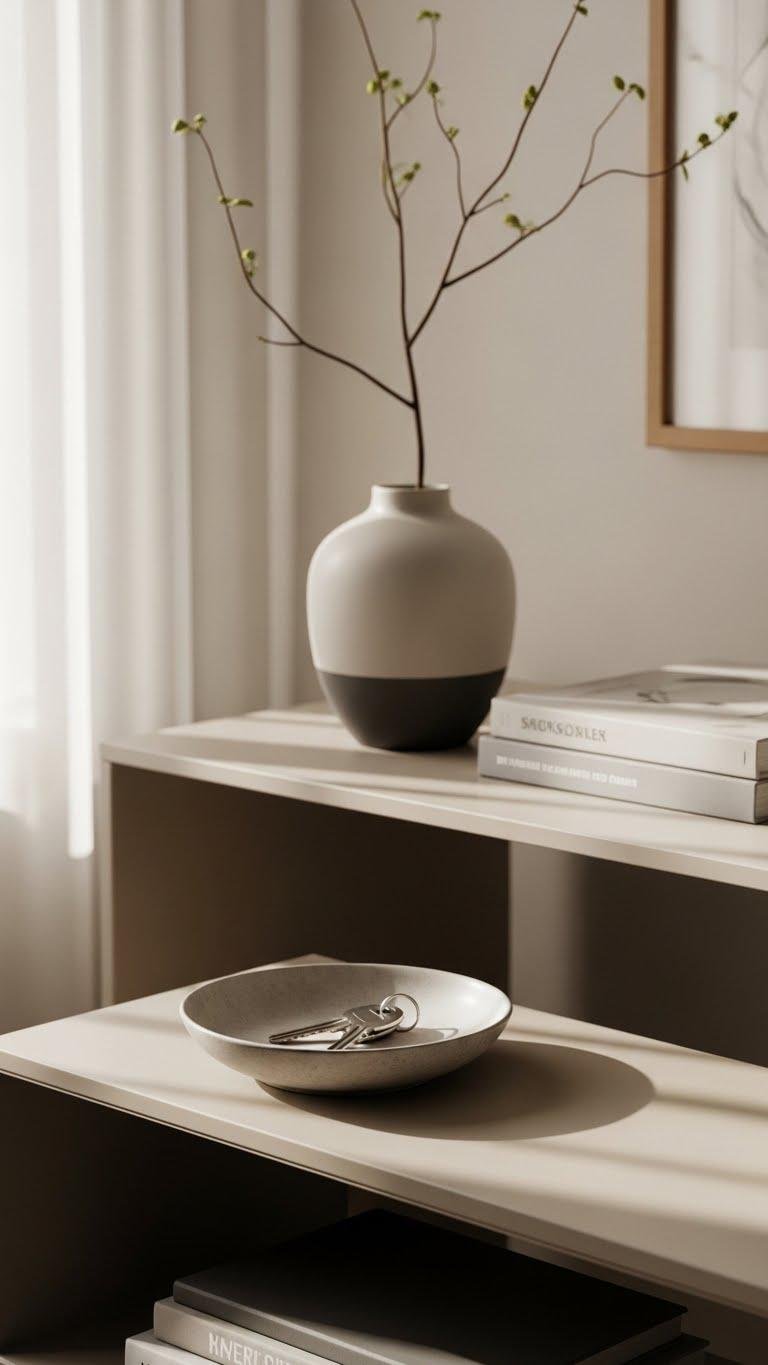
If you want daily surfaces to feel deliberate, clear the ones you touch most and keep them intentionally pared back. You’ll practice daily clearing as a small ritual: a shallow bowl for keys, one curated vase, nothing else.
That restraint creates visual zoning, letting each area breathe. The room feels freer, functional, and quietly stylish — minimalism that welcomes living.
Use Multipurpose Objects That Also Store Items

Choose pieces that do double duty: a bench with hidden storage, a sculptural basket that corrals blankets, or a tray that doubles as a catchall. You’ll favor items that free your space and mind — convertible seating, stackable ottomans, and sleek boxes that tuck away clutter. Minimalist warmth comes from purposeful forms that store essentials while keeping your home open and unburdened.
Maximize Daylight With Unobstructed Windows
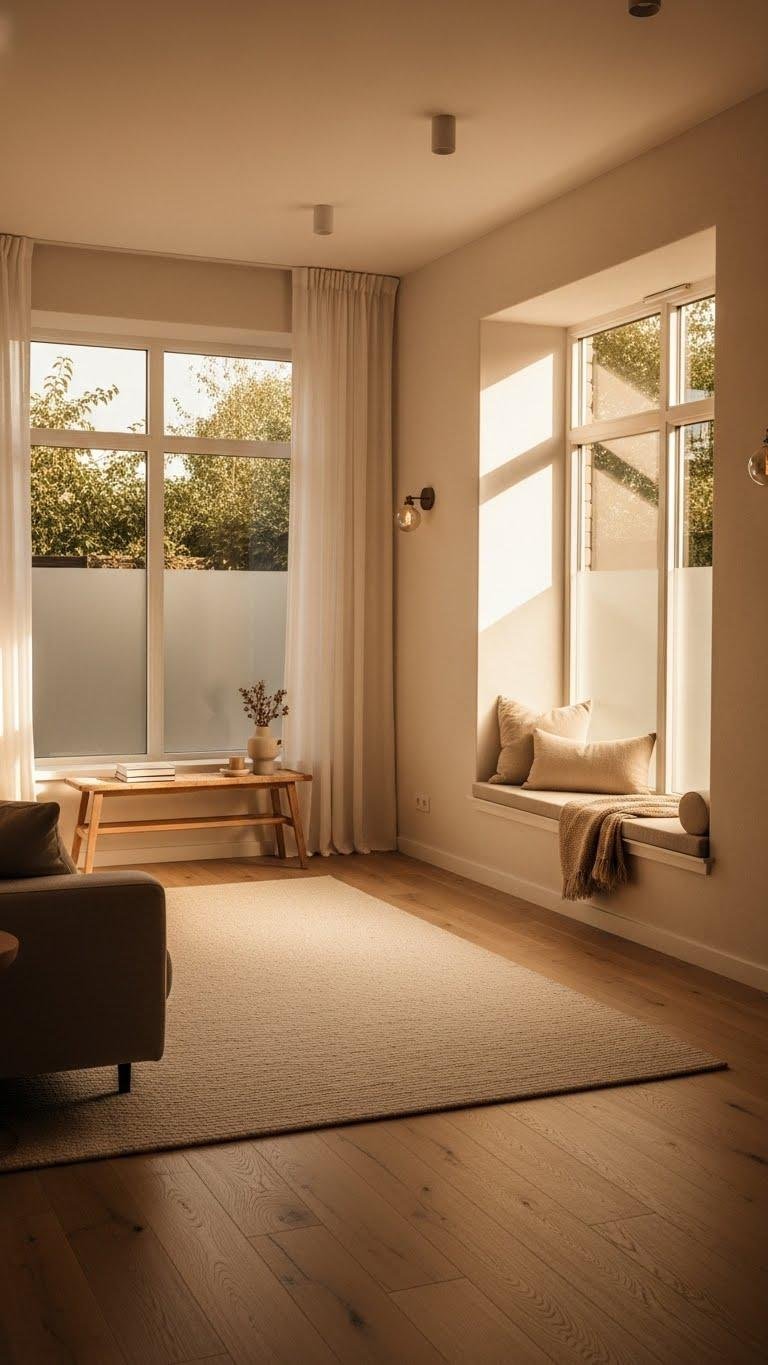
Balancing layers of light with warm-color-temperature bulbs will make your minimalist space feel intentional and intimate, not flat or museum-like.
Choose soft amber tones for general and accent lighting, pairing recessed fixtures with layered sconces to sculpt walls and corners. Dial brightness for tasks, keep glare low, and let warmth define mood. You’ll create calm, liberated spaces that invite lingering.
Install Dimmers to Control Evening Ambiance

Regularly dimming your lights lets you tune the room’s tempo as easily as lowering the volume on a record player; install smooth, wide-range dimmers so you can shift from bright tasks to soft, intimate evenings without changing bulbs.
You’ll create soft dim scenes that honor minimalism and freedom. Choose smart dimmer integration for app or voice control, letting you set moods effortlessly.
Position Reflective Surfaces to Amplify Light
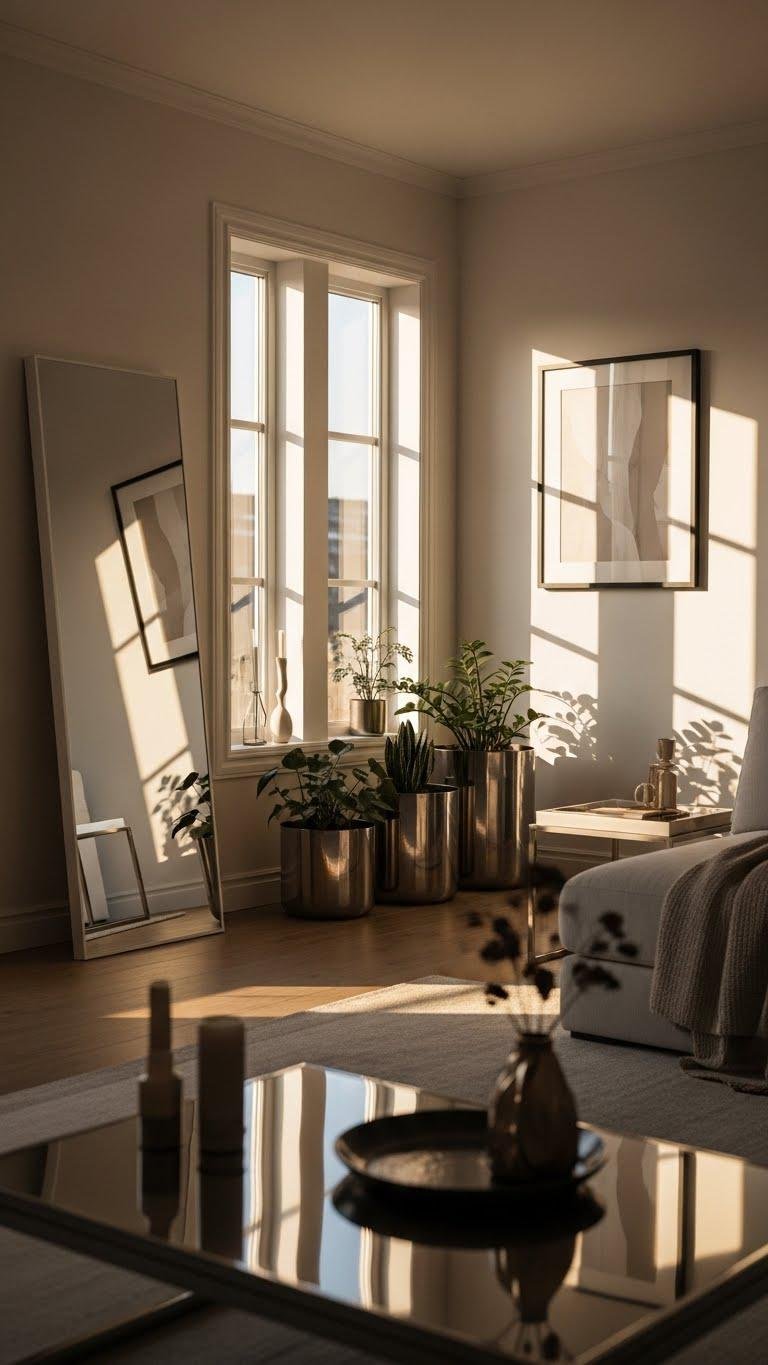
When you place mirrors and glossy accents thoughtfully, they bounce natural and artificial light into shadowed corners, instantly making a minimalist room feel larger and warmer.
Position reflective art opposite windows, lean a slim mirror to catch low sun, and group metallic planters near light sources.
These choices amplify brightness, highlight textures, and preserve your open, liberated aesthetic without clutter.
Curate a Small, Intentional Display of Personal Items

Choose a handful of personal objects and give each one room to breathe—let a single ceramic bowl, a framed photo, or a small stack of books anchor a shelf or console without crowding it. Curate with intention: use a keepsake rotation to refresh mood, arrange items by color or story for clear memory grouping, and keep negative space to let each piece feel free and meaningful.
Edit Collections Into Single Curated Vignettes

When you edit a collection into a single curated vignette, strip each group down to its strongest silhouette, texture, and color so the pieces can breathe and converse with one another.
You’ll choose focal items, pare back extras, and anchor with negative space.
Embrace seasonal rotation as a tool, not a rule, and use themed storytelling to make each vignette feel intentional, liberated, and calm.
Rotate Displayed Pieces Periodically to Keep Spaces Fresh

Regularly rotating displayed pieces keeps a room feeling intentional and alive rather than static; swap a few objects every season or month so each vignette gets renewed focus. You’ll embrace seasonal rotations and themed swaps to refresh mood without clutter.
Choose a few favorites, rotate them freely, and let light, texture, and negative space guide choices—minimalism that feels liberated and effortlessly warm.