
You want a small space that feels intentional, not cramped, so pick pieces that do double duty and clear the floor visually. Think murphy beds, lift-up sofas, slim seating, and built-ins that steal storage without stealing style. Keep palettes neutral with one bold focal piece and layer textures for warmth. I’ll show practical moves—from pocket doors to floating shelves—that make tiny rooms breathe and look edited, plus a few unexpected tricks.
Choose Multifunctional Furniture That Does Double Duty
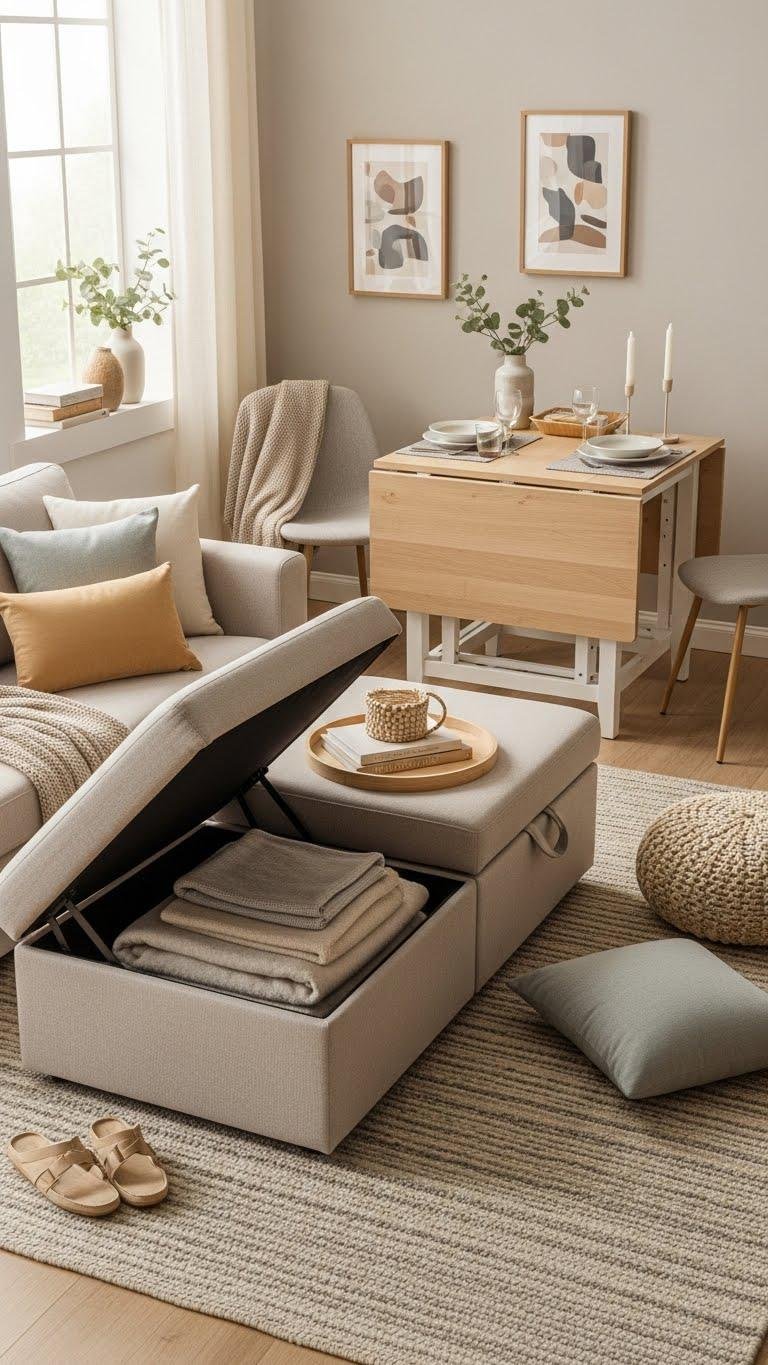
Think multifunctional: pick pieces that work twice as hard so your small space feels curated, not cluttered.
You’ll love convertible ottomans that stash blankets, seat guests and act as coffee tables.
Add drop leaf tables that expand for dinner, fold away for flow.
Choose clean lines, neutral palettes and playful textures so freedom and flexibility shape every corner you own.
Install a Murphy Bed to Free Floor Space

Free up your floor by folding a bed into the wall—Murphy beds tuck away overnight essentials and turn a bedroom into usable living space during the day. Choose a sleek wall bed with hidden hardware so your room feels open and streamlined. You’ll reclaim square footage for work, yoga, or guests, keeping the vibe modern, airy, and utterly liberating without clutter or compromise.
Add a Wall-Mounted Fold-Down Desk for Compact Workstations

Fold down a slim wall-mounted desk and you’ve got a full workstation that disappears when you’re done—ideal for small rooms where every inch counts.
You’ll create a tidy wall mounted workspace that feels airy, doubles as shelving when closed, and supports focused tasks.
Pair it with a compact fold down deskchair or stool for instant freedom to work, then reclaim the space.
Select Slim-Profile Seating to Maintain Flow

With your wall-mounted desk neatly stowed, keep sightlines open by choosing slim-profile seating that won’t block movement or visual flow.
Pick narrow armchairs with exposed legs and low backs to preserve openness, or slender benches that tuck under surfaces when you need floor space.
You’ll create airy zones that feel modern and free, prioritizing mobility without sacrificing style.
Incorporate Nesting Tables and Stackable Chairs
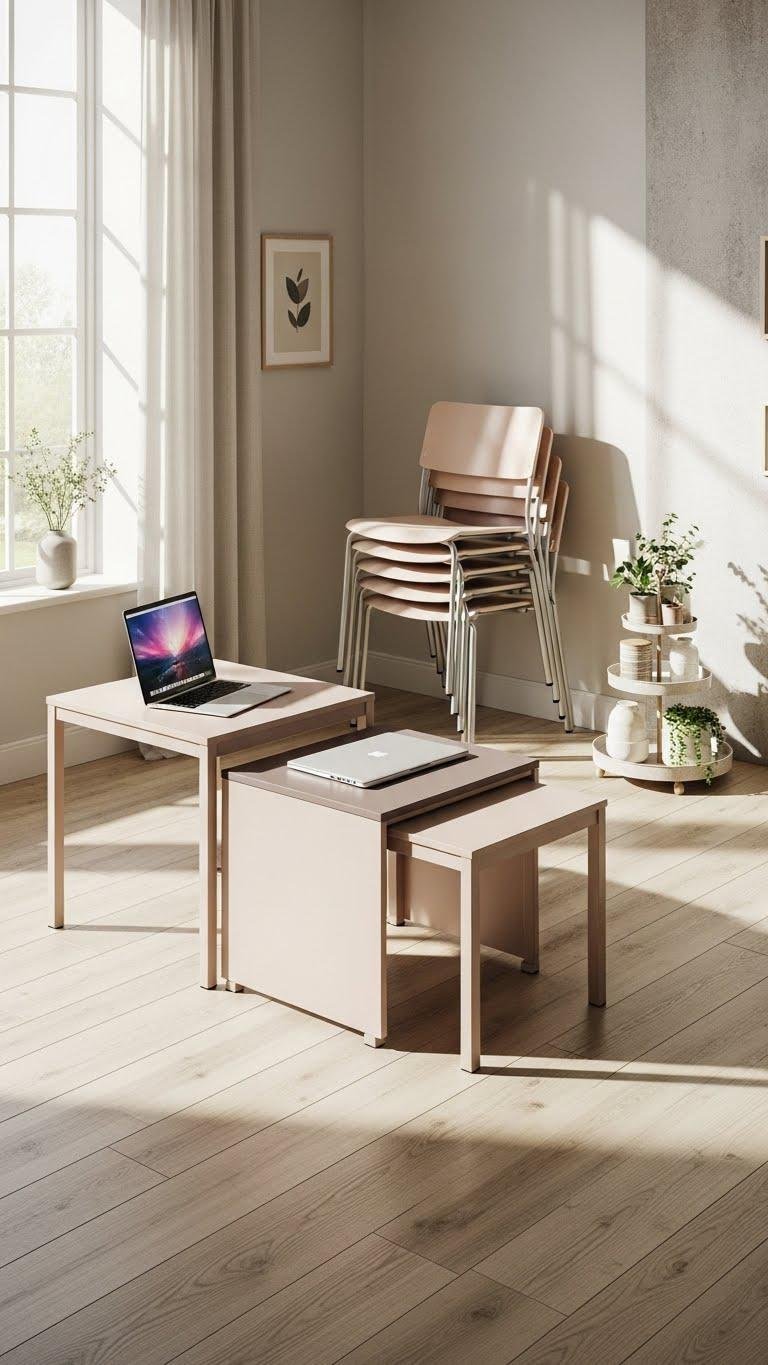
A few cleverly nested tables and stackable chairs can transform tight rooms into flexible, multiuse spaces: pull a small table forward for a laptop, slide it back to clear the path, or stack chairs against a wall when you only need seating for a moment.
Embrace compact nesting pieces, tiered trays for styling, and lightweight materials so you can rearrange instantly and live freely.
Build Floor-to-Ceiling Shelving for Vertical Storage
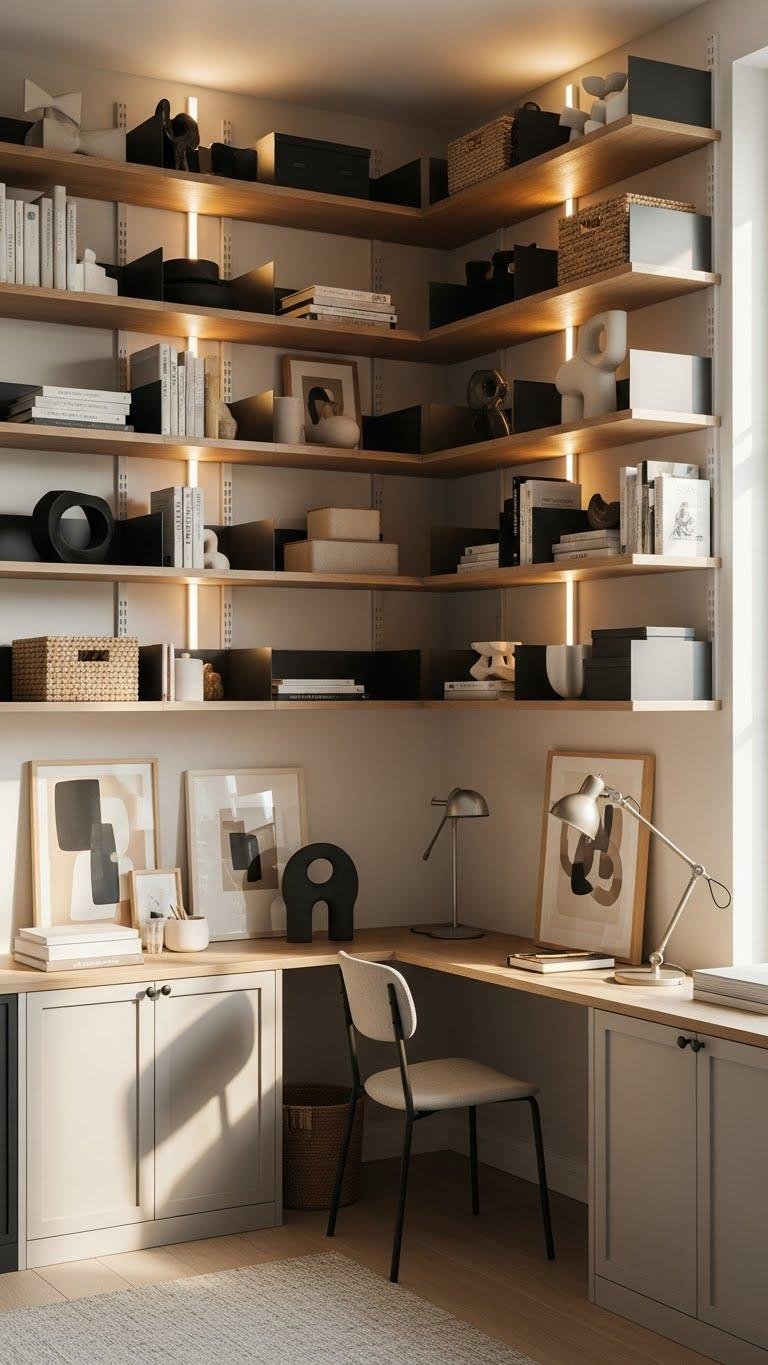
Maximize vertical space by installing floor-to-ceiling shelving that turns an entire wall into organized storage and display. You’ll create zones for books, baskets, and art, add vertical lighting to highlight layers, and tuck a compact corner desk into a lower section for work or hobbies. Choose open and closed modules, mixed materials, and floating shelves so your space feels airy and intentionally free.
Recess Cabinets and Create Built-In Niches

When you recess cabinets into walls and carve out built-in niches, you free up floor space while creating intentional display and storage pockets that read as part of the architecture. You’ll embrace minimalism with hidden niches for gear, art, or plants, and recessed benches that double as storage. These choices feel modern and liberating, making every inch purposeful and visually calm.
Utilize Over-Door Organizers and Mounted Racks

While you mightn’t think of doors as storage, over-door organizers and mounted racks turn vertical surfaces into tidy, accessible zones without eating floor space.
You’ll create an over door herbarium for herbs or art, and a compact rack gallery for hats, tools, or frames. These solutions free your floor, keep things visible, and make small rooms feel organized and open.
Maximize Under-Bed Storage With Drawers or Lift Platforms

Under the bed is prime real estate—so use it: slide-out drawers or hydraulic lift platforms turn that wasted void into neat, accessible storage for linens, seasonal clothes, or bulky items.
You’ll reclaim floor space, organize with clear bins for seasonal rotation, and add under bed lighting for visibility.
Choose streamlined finishes and easy-glide hardware so your space feels open and liberating.
Style Open Shelving Sparingly for an Airy Look
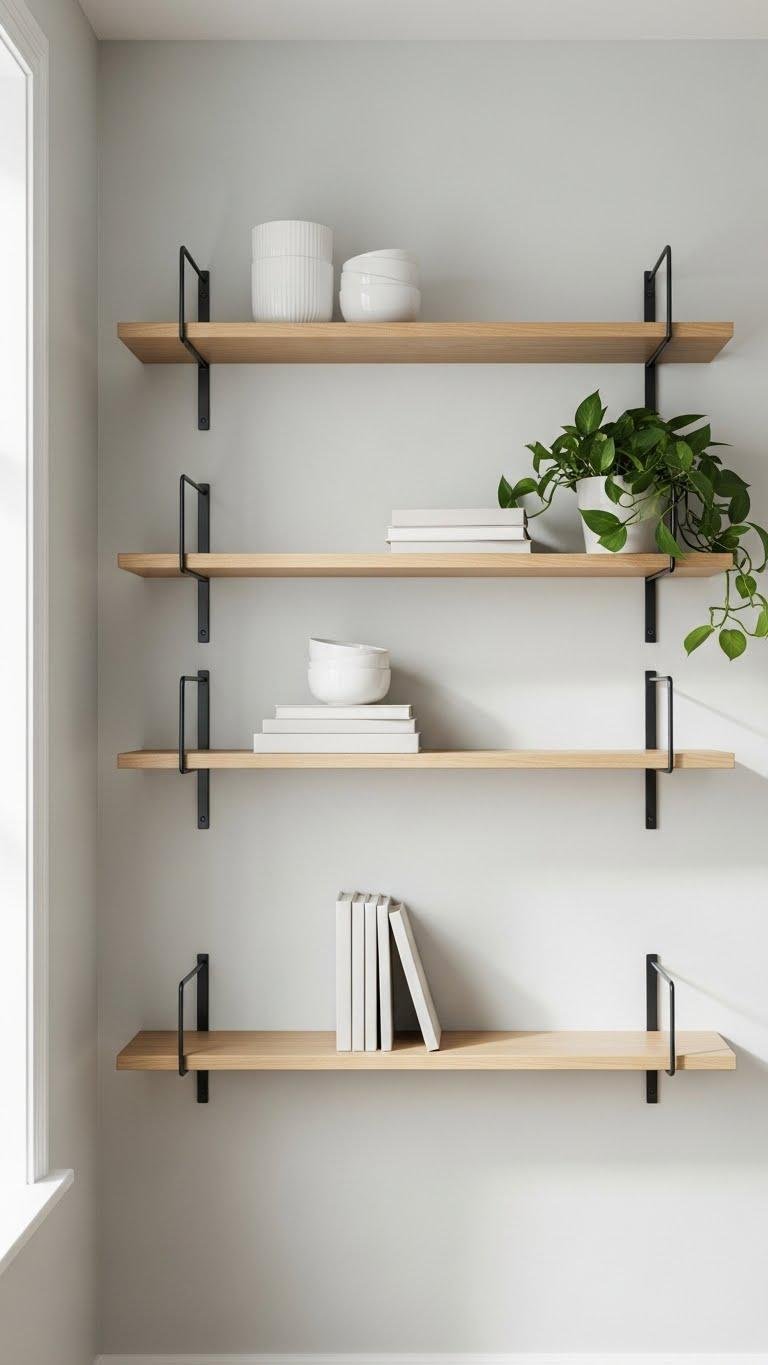
Open shelving can make a room feel breezy—but style it sparingly so the openness reads intentional, not cluttered.
You’ll pick a few curated pieces, leave negative space, and mount shelves on minimalist brackets for clean lines. Embrace airy styling with open ceramics, slim books, and a lone plant. That restrained approach keeps the room feeling free, modern, and effortlessly composed.
Paint Walls in Light, Neutral Tones to Open the Room

A few coats of light, neutral paint will instantly make a small room feel wider and brighter, letting natural light bounce farther and highlighting architectural details.
Choose soft gray for a cool, modern calm or warm beige to evoke cozy openness.
You’ll feel freer with pared-back walls that showcase art and furniture, create visual continuity, and let accessories pop without crowding the space.
Hang Large Mirrors to Amplify Light and Depth
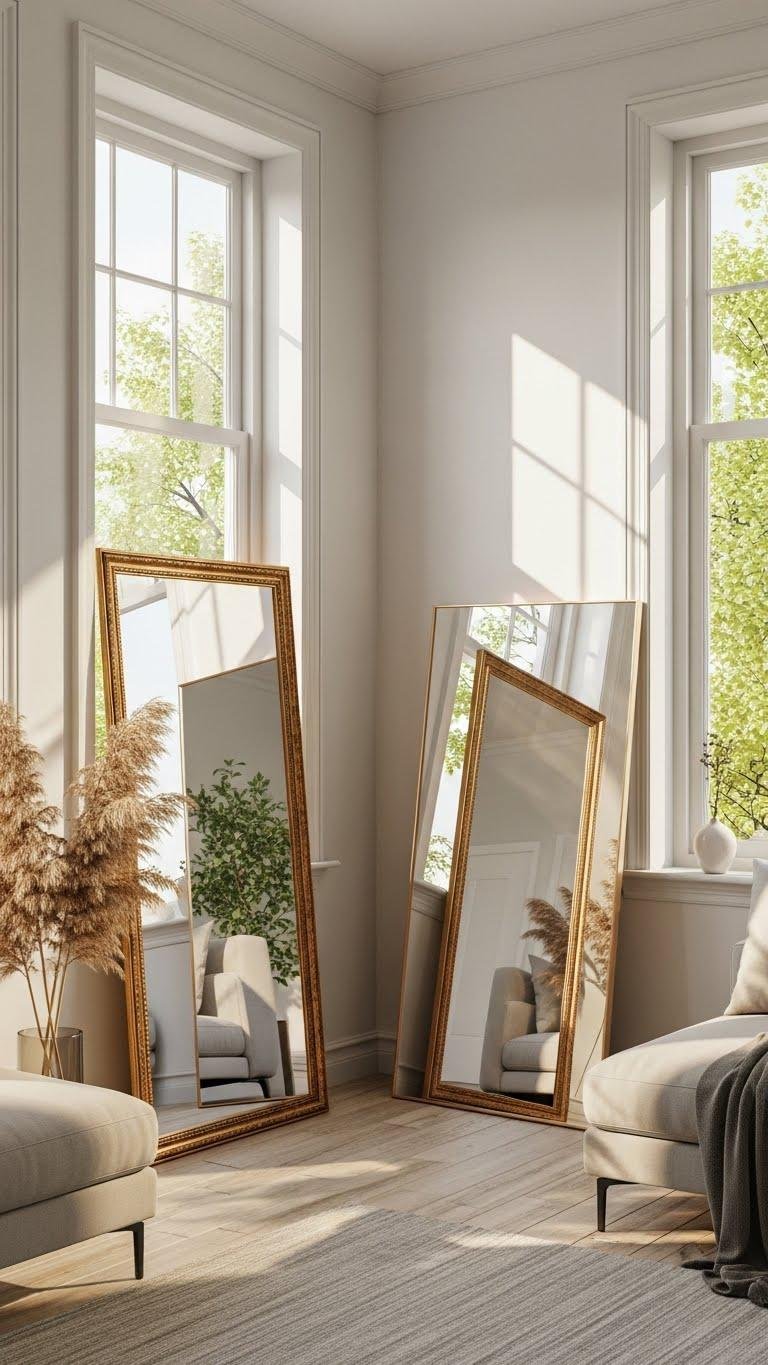
Keeping walls light sets the stage, but mirrors multiply that effect—strategically placed large mirrors boost natural light and create instant depth so your small room reads as bigger and brighter.
Choose one statement piece with ornate frames for personality, or modern minimal glass for airy feel. Try leaning placements against a wall to avoid drilling, reflect views, and let your space breathe with liberated style.
Keep a Monochromatic Palette to Reduce Visual Clutter

Choose one dominant color and stick with it across walls, furniture, and textiles so your small room reads calm and cohesive.
You’ll create depth through subtle tonal contrast and confident texture pairing — matte paint, soft wool, glossy ceramics — letting forms breathe.
Keep accessories minimal, vary finishes, and trust restraint; you’ll enjoy a liberated, airy space that feels curated without clutter.
Create One Statement Accent Without Overwhelming the Space
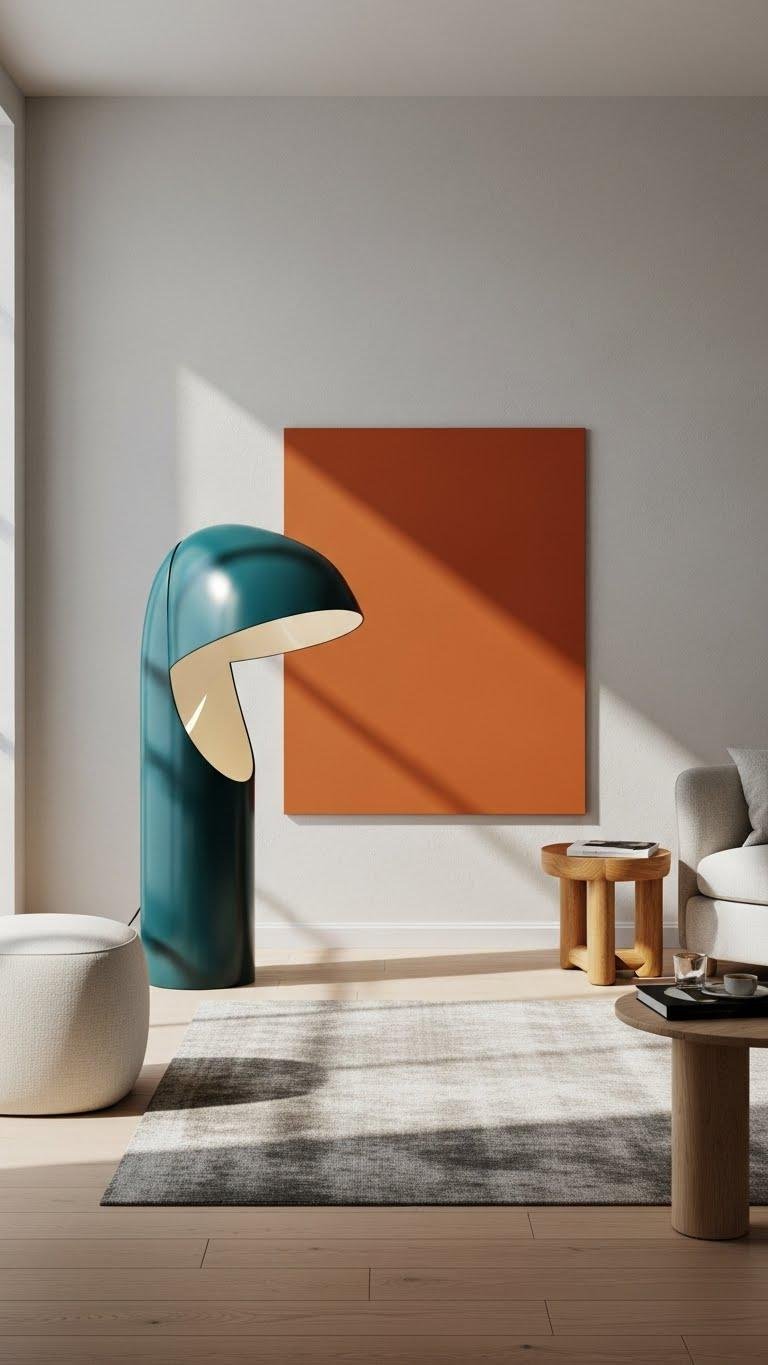
When you pick a single bold element—like a sculptural lamp, a saturated art piece, or a textured rug—you give the room a focal point without crowding it.
Choose one oversized artwork or a striking pattern focalpoint, keep surrounding pieces minimal, and let negative space breathe.
You’ll feel liberated by intentional choices that read modern, confident, and invigoratingly uncluttered.
Scale Furniture to Human Proportions for Better Circulation
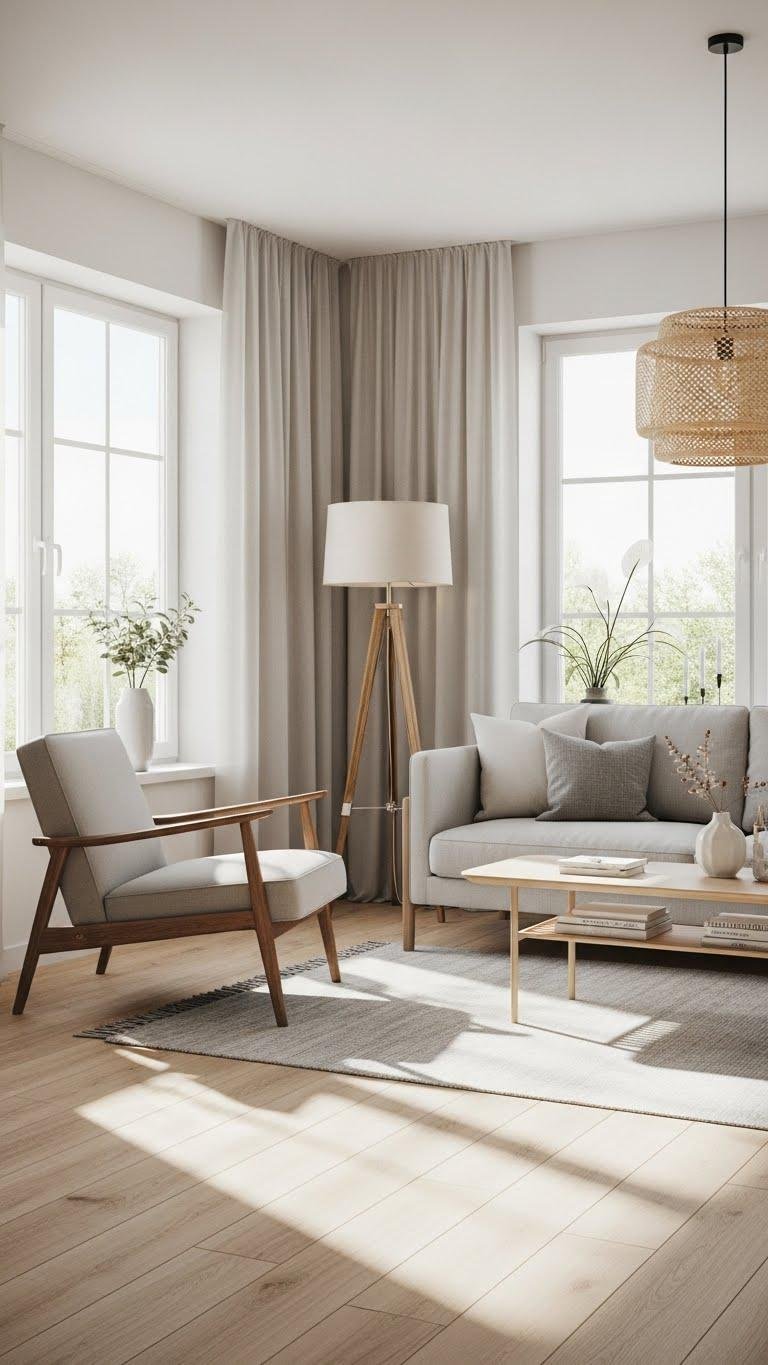
Although small rooms tempt you to cram in every piece you love, scale furniture to human proportions so people can move freely and the space feels intentional.
Choose human scale seating and slim-profile tables so you get comfort without crowding. Define clear circulation pathways, leave breathing room around focal pieces, and favor airy silhouettes that let you live freely and move with ease.
Zone Functions With Rugs and Layered Lighting

If you want a small space to feel purposeful and layered, use rugs to anchor activity zones and mix overhead, task, and accent lighting to build depth. You’ll create pattern zoning with contrasting textures and rug sizes, then use ambient layering to shift mood from bright work to cozy rest. Choose low-profile fixtures and movable lamps so you stay flexible and free.
Float Key Pieces Strategically to Improve Flow

Because anchored walls can make a tiny room feel boxed in, float your sofa, bed, or desk away from the perimeter to open sightlines and invite movement. You’ll create deliberate negative space, clarify circulation patterns, and let furniture act as sculptural markers.
Choose slim-legged pieces, rugs to anchor zones, and keep pathways unobstructed so the room feels airy, modern, and free to flow.
Prioritize a Single Focal Point in Each Room

Pick one strong focal point per room and let everything else support it.
You’ll build a clear focal hierarchy by choosing a single visual anchors—art, a bold rug, or a sculptural lamp—and arranging furniture to emphasize it.
Keep palettes and textures restrained so the anchor breathes.
This gives you freedom to edit, move pieces, and keep small spaces feeling curated, calm, and intentional.
Replace Swing Doors With Pocket or Sliding Options

When space is tight, swapping a swing door for a pocket or sliding door instantly frees up floor and visual real estate—you can place furniture flush against the wall, create cleaner traffic lines, and make small rooms feel larger and more modern.
Choose a sleek pocket door or a barn door on minimalist track hardware to add personality without crowding — it’s a smart move for liberated living.
Layer Textures With Natural Materials and Tactile Textiles

Through layered textures—think raw wood, stone, woven fibers, and chunky knits—you’ll give a small space depth without crowding it. Mix woven baskets for storage, a jute rug, and tactile cushions to create zones that feel curated not cluttered. Drape linen throws over a slim sofa, leave surfaces honest, and let material contrasts create a calm, liberated vibe that reads modern and lived-in.
Add Low-Maintenance Plants for Biophilic Warmth
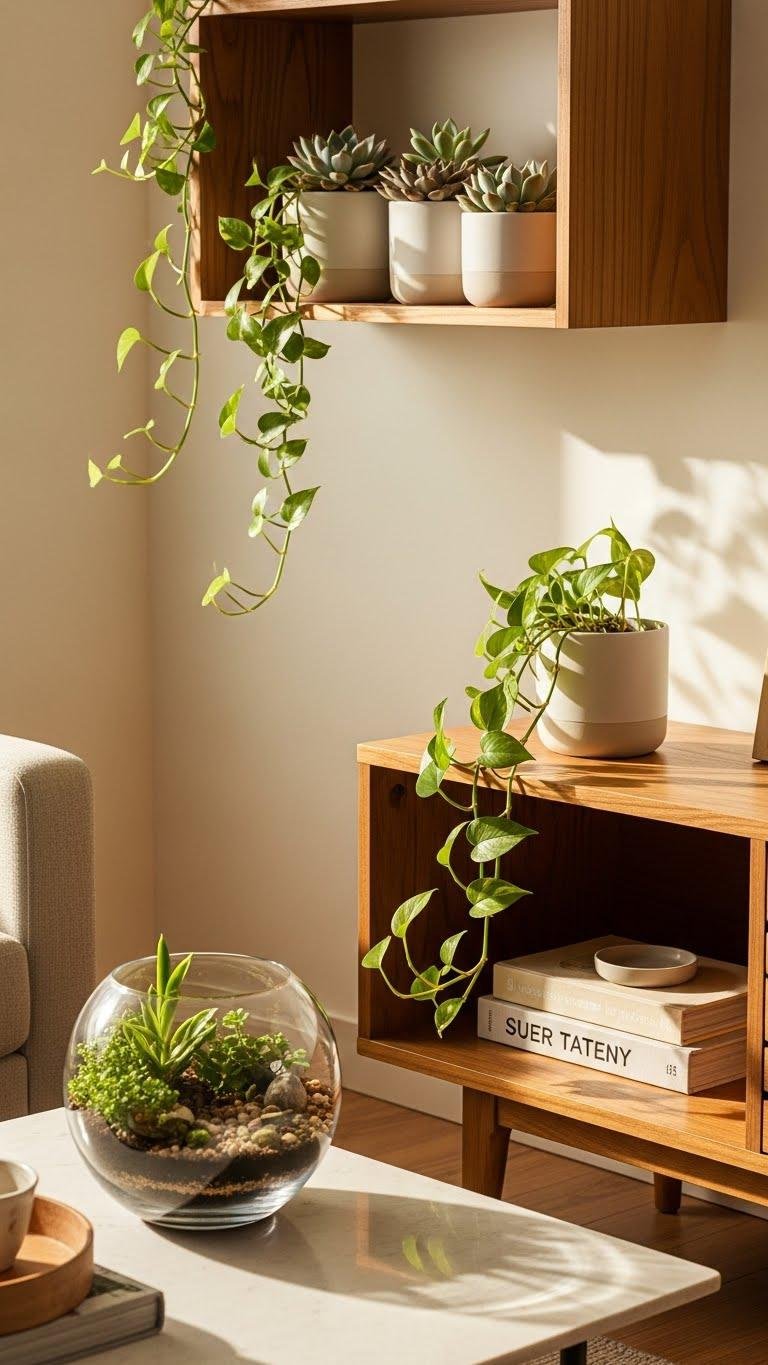
Bring a few low-maintenance plants into your compact living area to add instant biophilic warmth and visual life.
You’ll pick small statement pieces—succulent clusters on open shelves, trailing pothos in minimalist pots, and glass terrarium bowls for curated micro-gardens.
They freshen air, soften corners, and require little fuss, letting you enjoy a freer, calmer space without sacrificing style or floor space.
Mix Matte and Glossy Finishes to Create Depth
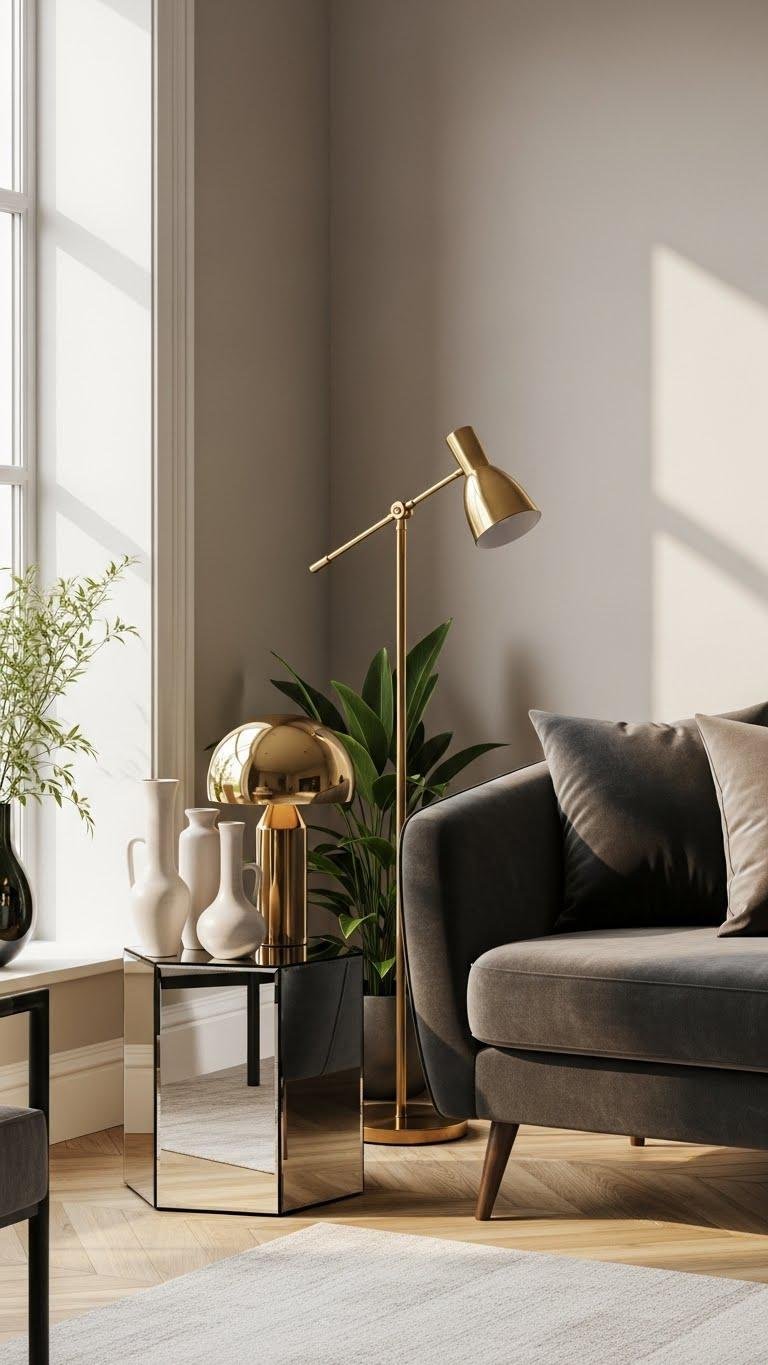
After you’ve introduced greenery to soften corners, balance those organic textures with a mix of matte and glossy finishes to add visual depth. You’ll play matte gloss contrasts—velvet paint, satin ceramics, and shiny metal accents—so light dances across surfaces.
Finish layering keeps the palette cohesive while freeing your space: pick a dominant matte, punctuate with gloss, and let reflections expand the room.
Choose Durable, Sustainable Pieces That Last
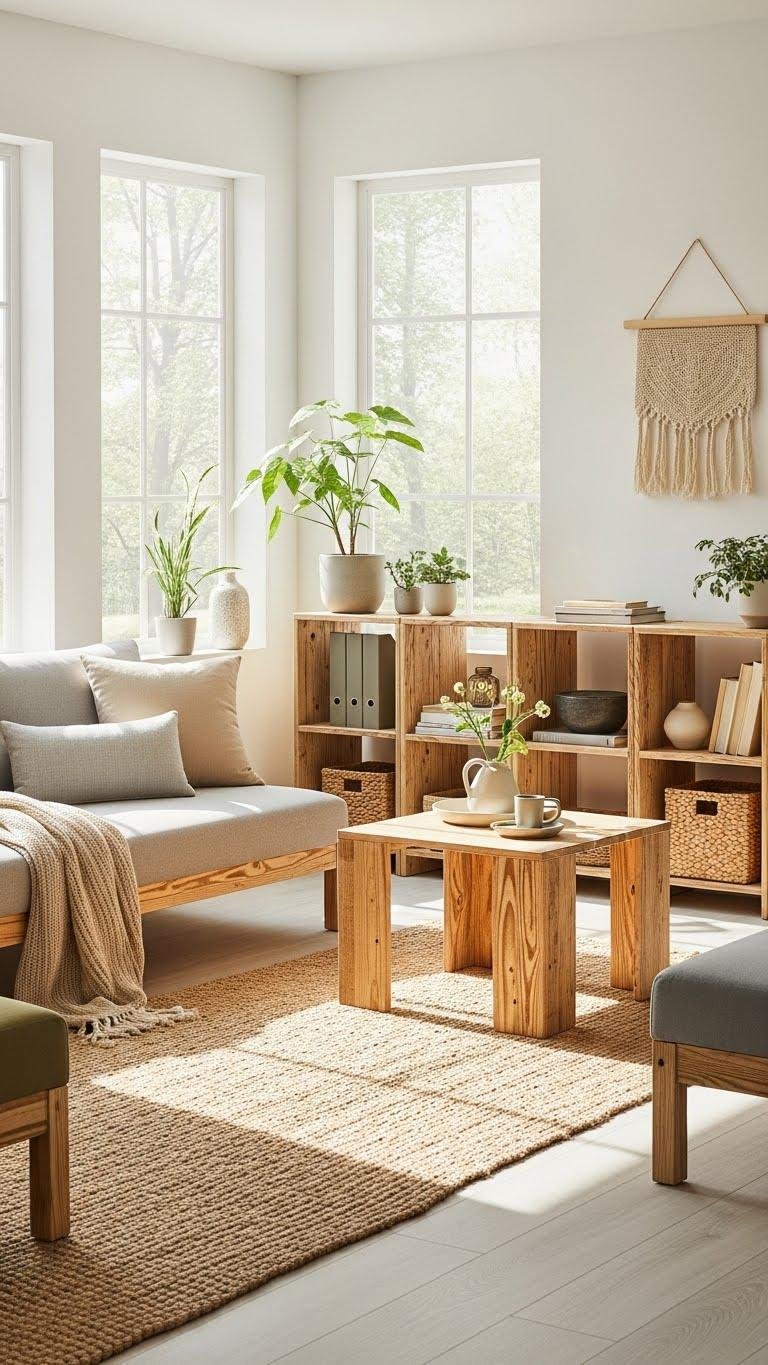
When you invest in pieces built to last, you’re not just saving money—you’re shaping a cleaner, more intentional space.
Choose furniture crafted from ethical materials, reclaimed woods, and low-VOC finishes so your small space breathes. Pick versatile silhouettes with neutral palettes and lifetime warranties for peace of mind. You’ll free yourself from churn, keep visuals calm, and live with fewer, better possessions.
Install Wall-Mounted and Pendant Lighting to Save Surfaces
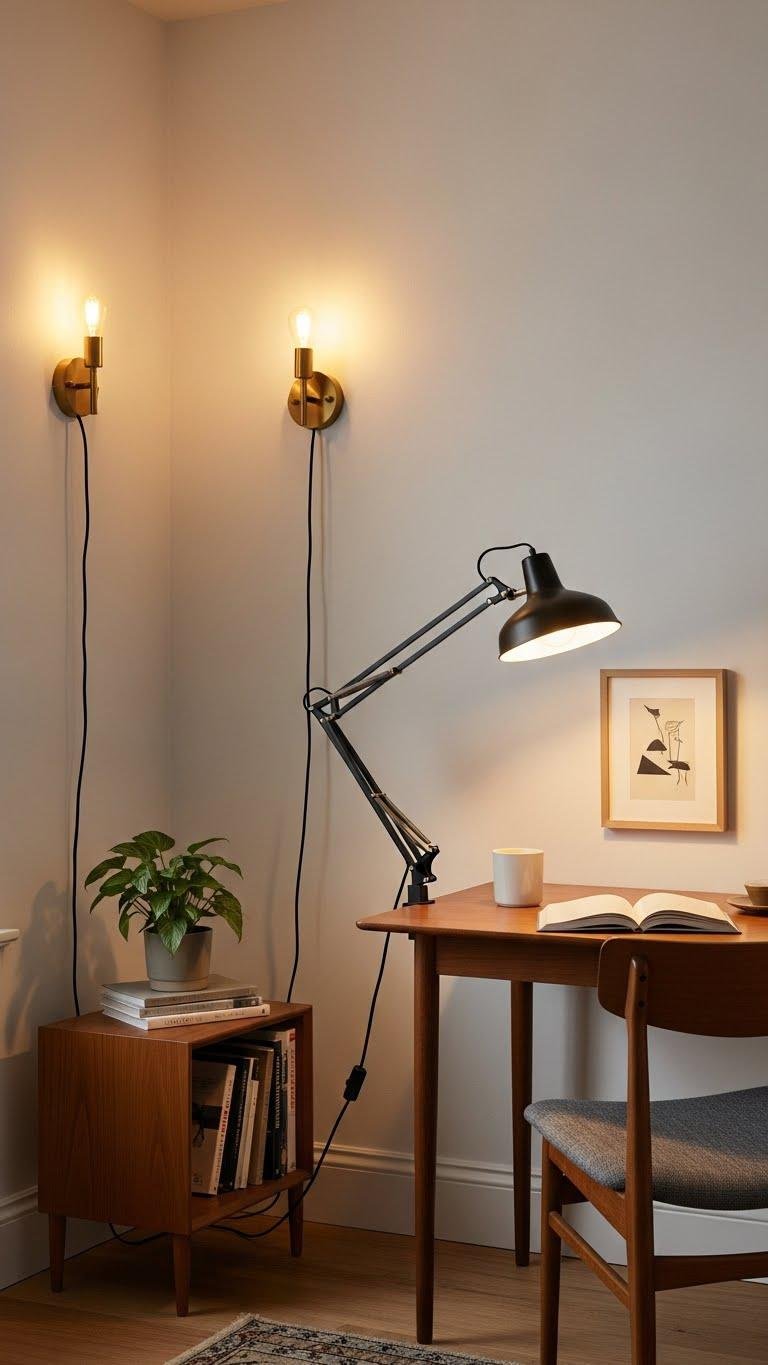
Free up precious tabletop and floor space by switching to wall-mounted sconces and single-bulb pendants—they hang your lighting where it belongs without crowding surfaces. Choose adjustable pendants for task zones and wall mounted sconces for ambient layers, creating depth and movement.
You’ll open sightlines, simplify styling, and keep surfaces free for what matters—plants, books, or a clear corner to breathe.
Use Adhesive or Low-Profile Sconces for Rental-Friendly Illumination

Switching to wall-mounted and pendant fixtures is great, but renters often can’t alter wiring or drill into plaster—so adhesive and ultra-low-profile sconces are a smart workaround.
You can mount battery operated sconces or choose removable plug in lamps to free surfaces, create layered light, and maintain clean walls. They’re sleek, damage-free, and keep your layout flexible.
Integrate LED Strip Lighting to Highlight Shelves and Cabinets

Brighten up shelves and cabinets with slim LED strips that tuck into seams and cast an even, modern glow. You’ll create ambient glow and crisp edge lighting that turns storage into display. Use color control for mood shifts, dimmers for late-night calm, and strategic cabinet accents to highlight textures and objects. It’s an easy, reversible upgrade that keeps your space open and liberated.
Opt for Glass and Lucite Pieces to Reduce Visual Bulk

Lighting makes shelves pop; now think about what sits on them. Choose glass and clear acrylic pieces so your view stays open and airy. You’ll love furniture with translucent bases that float visually, letting light pass and reducing bulk. Mix in sculptural lucite accents and slim glass trays to keep the scene modern, breezy, and easygoing without cluttering sightlines.
Curate Accessories Carefully to Keep the Space Calm
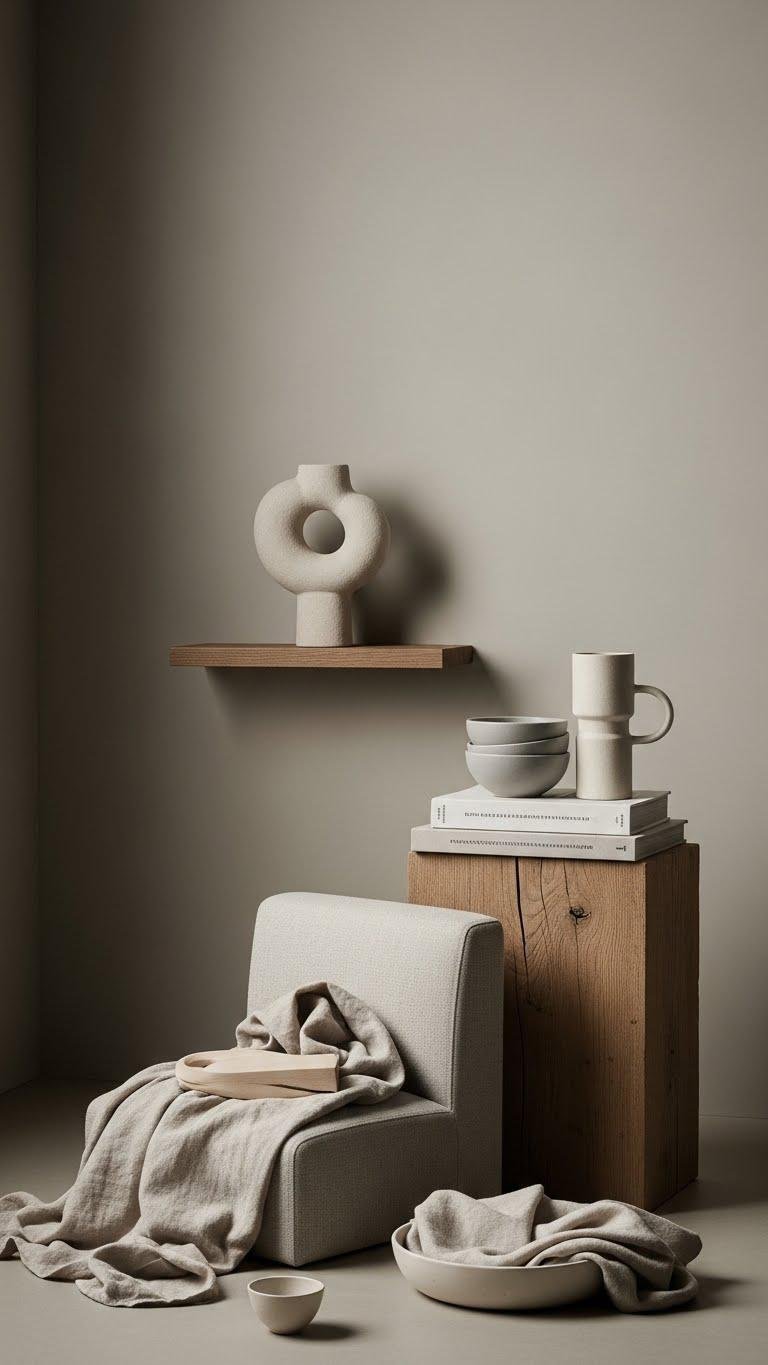
To keep a small room feeling serene, edit down what you display and let negative space breathe around each object. You’ll craft minimalist vignettes that feel purposeful, choosing pieces with clean lines and tactile restraint. Limit palettes, rotate a single sculptural item, and embrace surfaces that invite touch. This focused editing gives you freedom to live in a calm, stylish tiny space.