
If you want a small bedroom that actually feels roomy, start with pale walls and light bedding to bounce natural light, then layer tonal textures—linen, cotton, wool—for depth without busy patterns. Mount sheer curtains high and wide, add a mirror, and choose slim, low-profile furniture with built-in storage to free floor space. Keep accessories minimal and pick one subtle focal wall to anchor the room, and you’ll see how simple swaps transform the space—keep going for practical tips.
Use Light-Colored Bedding to Brighten the Space

Want a room that feels airier instantly? You’ll swap heavy colors for pale sheets and light-colored bedding that reflect light and free your space. Choose linen textures and breathable cotton for a crisp, lived-in look that stays cool. Keep layers simple: a duvet, a throw, two pillows. The result is bright, calm, and liberating — minimal effort, maximum space.
Keep Textile Patterns Minimal for a Cleaner Look

When you stick to simple, small-scale patterns—or skip them altogether—the room reads as calmer and larger.
Choose neutral prints for bedding and curtains so visual clutter fades, and layer tonal textures—linen, wool, cotton—for depth without contrast. You’ll move freely in a space that feels open and intentional; minimal patterns keep focus on light, scale, and the essentials you love.
Paint Walls White or Soft Neutrals to Open the Room
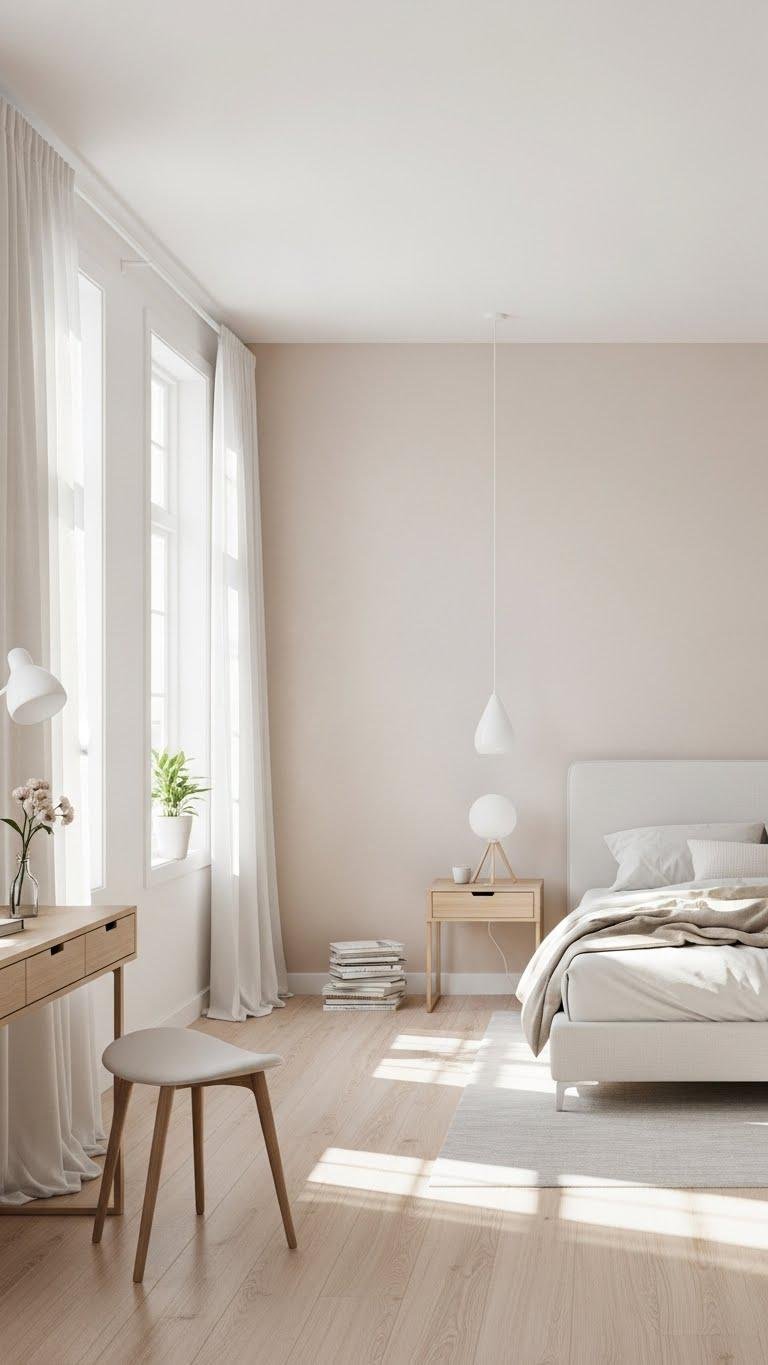
Because light-colored walls reflect daylight and reduce visual boundaries, painting your bedroom white or a soft neutral instantly makes the space feel larger and airier.
Opt for finishes that boost natural light — satin or eggshell — and consider subtle textured paint for depth without clutter. You’ll create an open, calm backdrop that lets furniture and sunlight breathe, freeing the room visually.
Choose a Calming, Limited Color Palette

With pale walls set, pick a calming, limited palette to keep the room feeling spacious and serene. Choose two or three soft hues and use muted contrasts to define surfaces without clutter.
Layer textures and finishes for tonal layering—linen, matte paint, soft wood—so the space breathes. Stick to restrained accents so you feel free, uncluttered, and effortlessly composed.
Anchor the Room With a Simple, Long Area Rug

If you want the room to feel grounded and longer, lay a simple, long area rug that runs the bed’s length or the main traffic path; it visually stretches the space and ties furniture together. Choose neutral tones and layered textures to add depth without clutter. Mind runner placement—centered along the bed or hallway—so movement feels effortless and the room breathes.
Hang Sheer Curtains to Maximize Natural Light
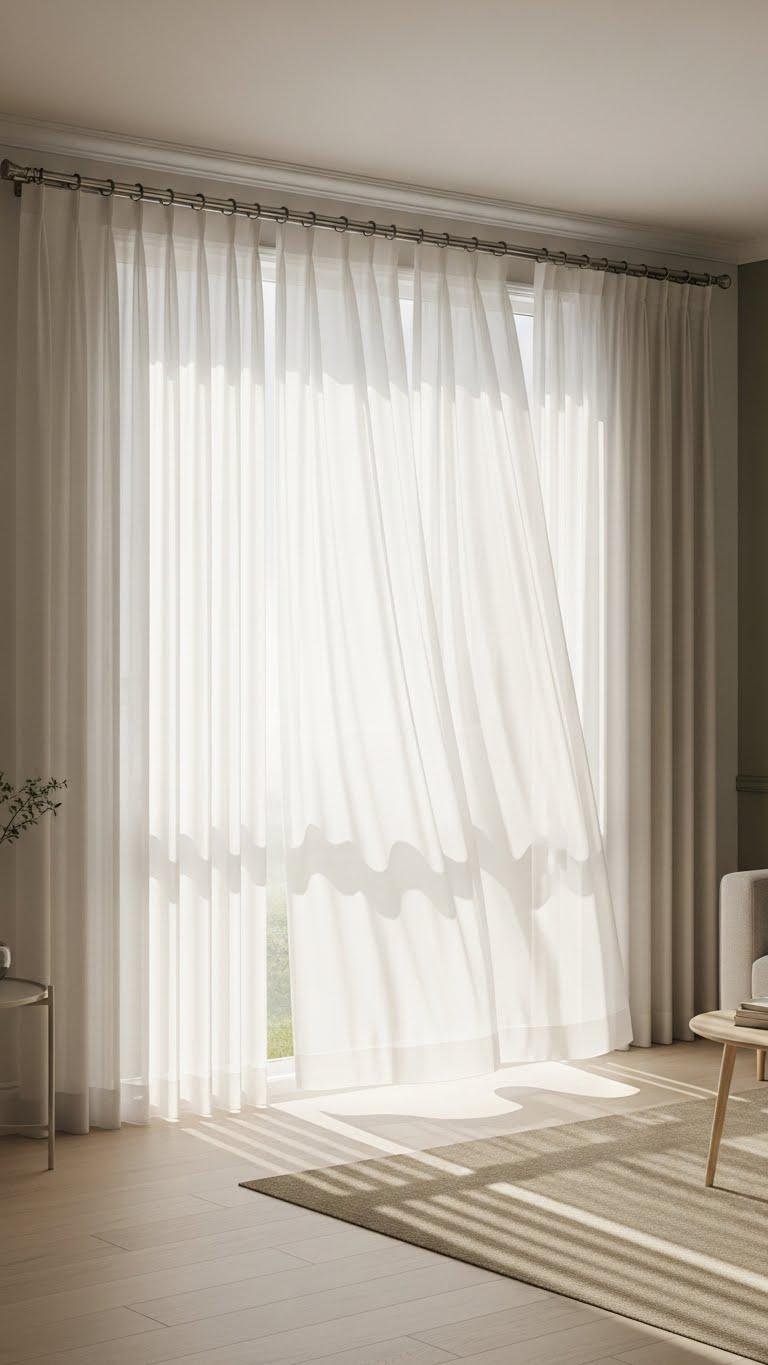
Let in soft, diffused light by hanging sheer curtains that skim the window and sway with the breeze; they brighten the room without sacrificing privacy and make small spaces feel airier. Choose airy fabrics with optional thermal lining for comfort, mount high and wide to maximize light, and pick simple hardware finishes that echo your style. Keep panels long and unbroken for a liberated, expansive vibe.
Install Wall Sconces Instead of Table Lamps
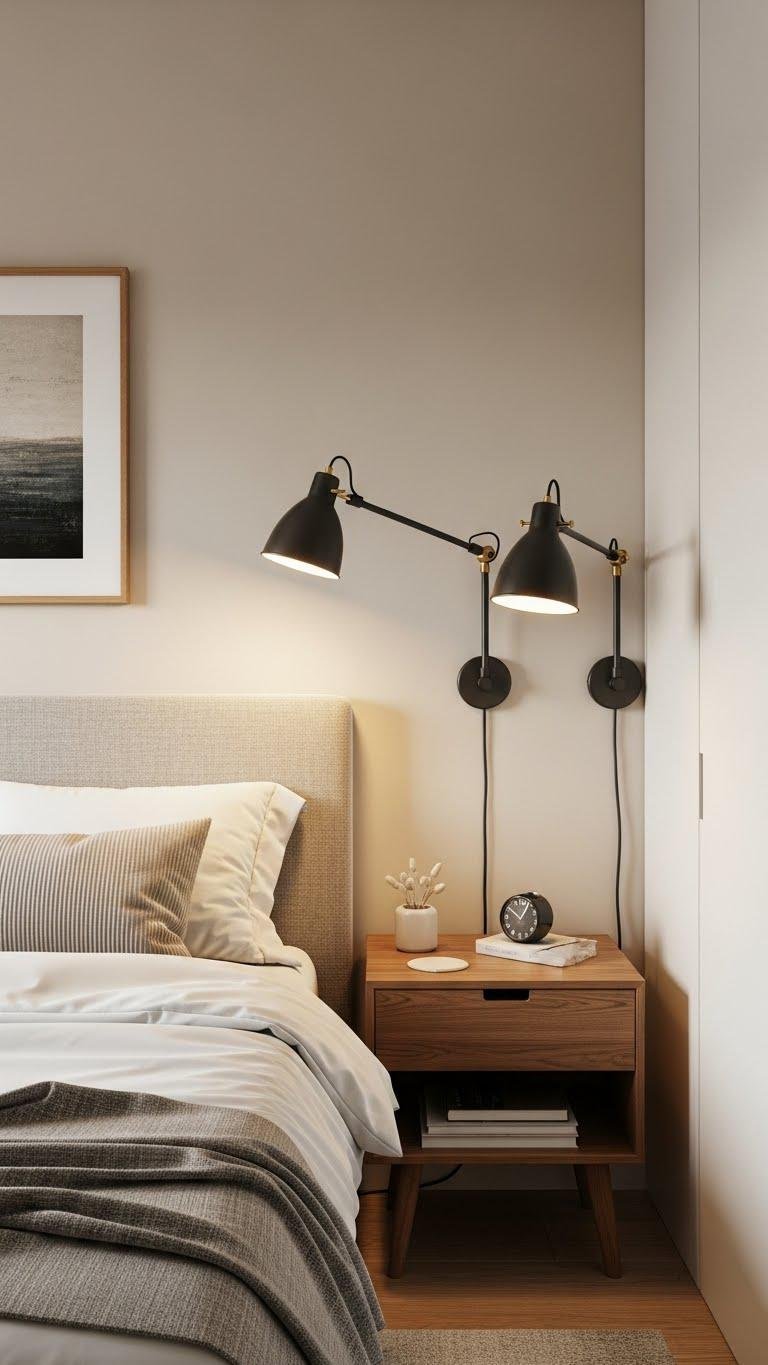
When you replace bulky table lamps with streamlined wall sconces, you’ll free up surfaces and create cleaner sightlines that make a small bedroom feel larger.
Choose adjustable arms to direct reading light without crowding a nightstand. Opt for hardwired fixtures for a seamless look and safer installation. Position sconces at differing heights to balance the room and maximize usable surface freedom.
Select Properly Sized Bedding for Proportion
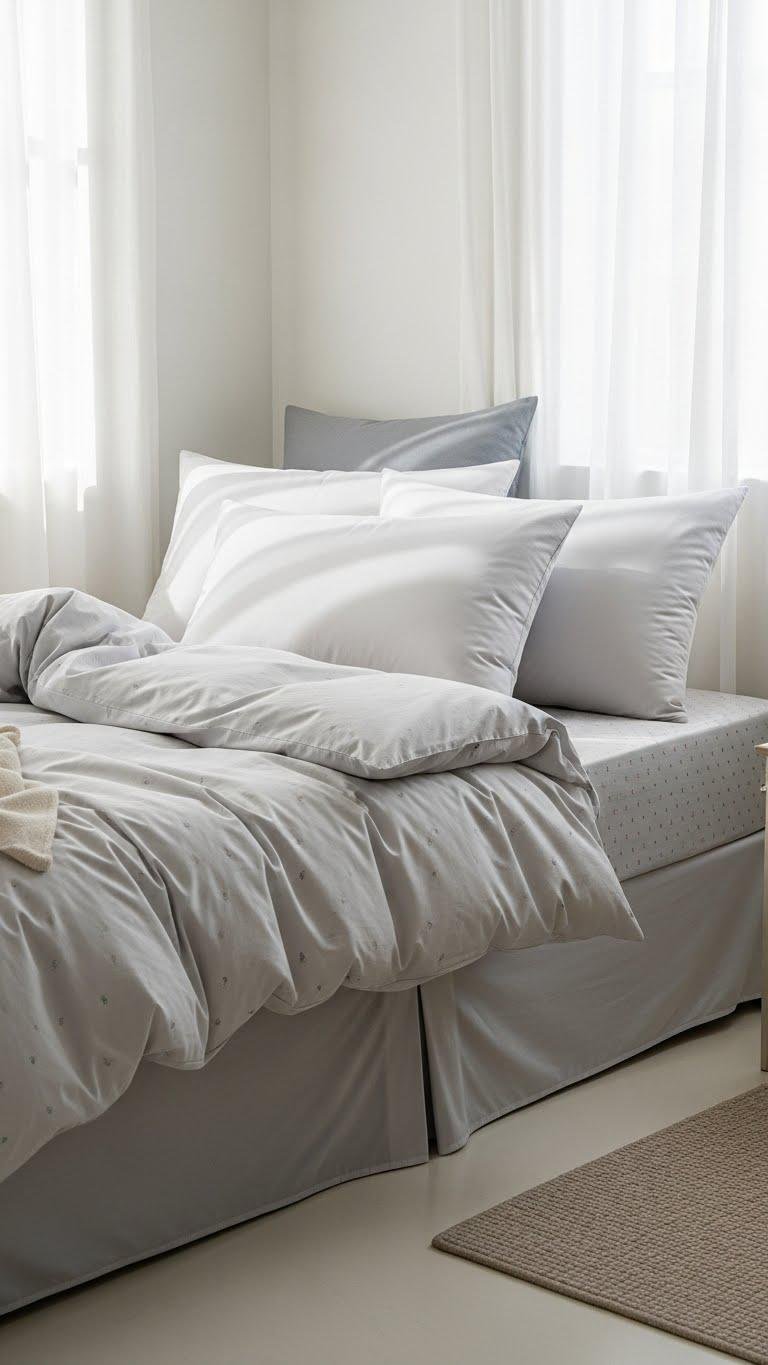
Good lighting highlights good proportion, so shift attention to bedding next—it’s one of the fastest ways to make a small room feel balanced. Scale down your duvet and avoid oversized comforters.
Choose fitted sheets that match mattress height, and layer proportion pillows for a crisp, airy look. Keep colors light and patterns minimal to maintain flow and a liberated, uncluttered vibe.
Invest in a Storage Bed or Under-Bed Drawers
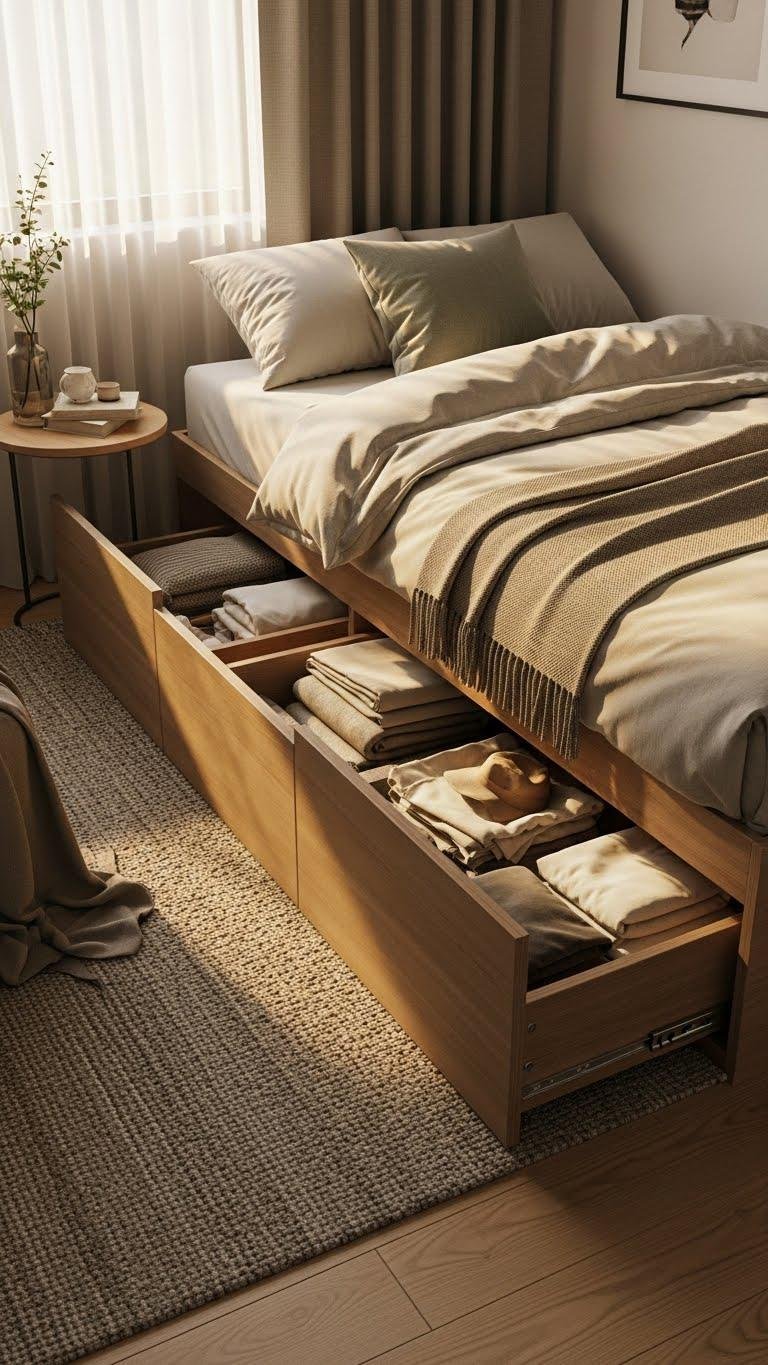
A storage bed or under-bed drawers give you serious extra space without crowding the room, so you can tuck away seasonal clothes, bedding, or bulky items out of sight.
Choose platform storage with neat hidden compartments to keep clutter invisible and surfaces clean. You’ll gain freedom to move, style, and breathe in a compact bedroom while everything stays organized and ready.
Use Pull-Out Closet Shelves for Easy Access

Slide out a pull-out closet shelf and you’ll instantly see what’s hiding at the back, saving you from rummaging and wasted space. You’ll glide full-depth trays and floor to ceiling pullouts to organize clothes, accessories, and boxes.
Add a rotating shoe rack in a narrow column to free the floor visually. You’ll reclaim calm, access, and control in a small bedroom.
Place a Dresser Inside the Closet to Free Floor Space

Tucked into the closet, a low dresser frees up floor space and keeps your bedroom feeling open while keeping daily items within reach.
Slide a built in dresser into a recessed area so you can close doors and reveal uncluttered space. Use sliding organizers atop drawers for belts, socks and accessories. You’ll gain visual calm and more freedom to move.
Incorporate Floating Shelves for Vertical Storage

Mounted high on your walls, floating shelves reclaim vertical space and keep the floor clear so you can move freely in a small bedroom. You’ll use staggered tiers and corner ledges to display books, plants, and essentials without crowding.
Choose slim, sturdy boards and minimalist brackets, arrange items by height, and maintain open surfaces to preserve that airy, liberated feel.
Create a Statement Wall With Paint, Wallpaper, or Slats

If you want a quick personality boost, turn one wall into the room’s focal point with paint, wallpaper, or wood slats—each option gives you a different mood: bold color for drama, patterned paper for texture and interest, or vertical/horizontal slats for warmth and rhythm.
Pick a textured accent or subtle mural, or install geometric slats to add depth without crowding the space; keep finishes matte.
Opt for a Patterned or Textured Headboard for Interest
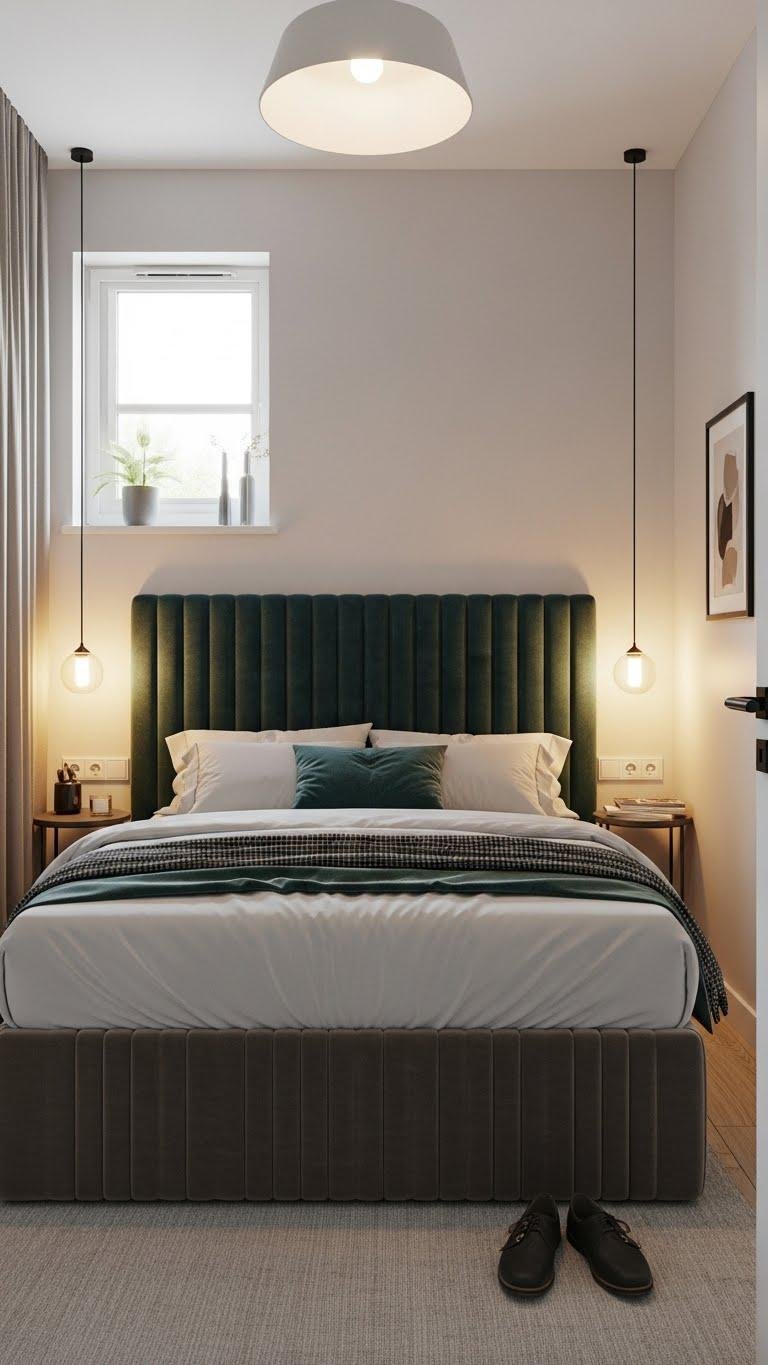
Give your small bedroom an instant focal point by swapping a plain headboard for a patterned or textured one—you’ll add visual interest without using floor space. Choose upholstered tufting for structure or patterned velvet for luxe depth; both draw the eye and free floor area. Pick slim profiles, vertical seams, or low-profiles to keep the room airy while expressing your bold, unfussy style.
Introduce Houseplants for Freshness Without Bulk
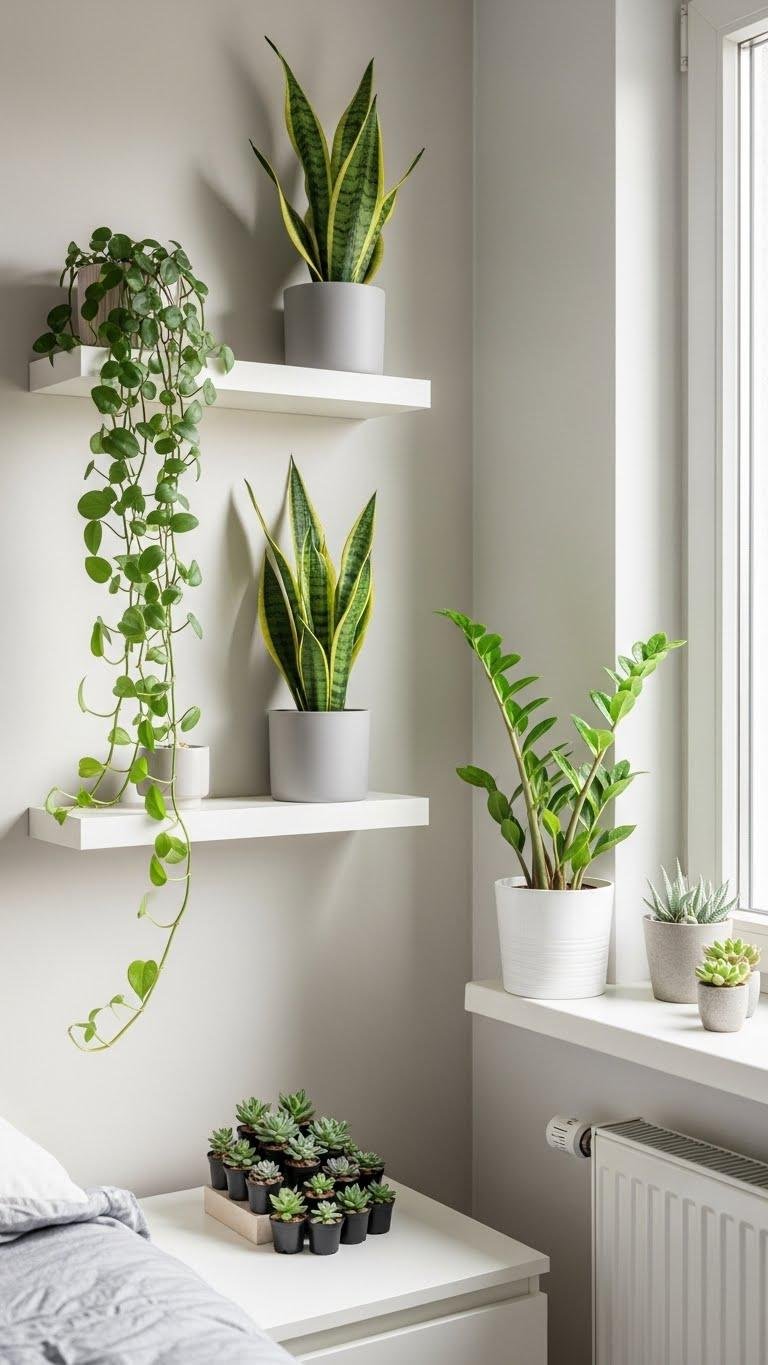
Adding houseplants brightens a small bedroom without eating up floor space — pick narrow, sculptural varieties like snake plants, ZZs, or pothos and place them on floating shelves, a slim windowsill, or hanging planters. You’ll choose compact succulents in tiny pots, cluster greenery for impact, and let trailing pothos spill softly down a wall, keeping the room airy and free.
Use Space-Saving Custom Furniture Where Needed
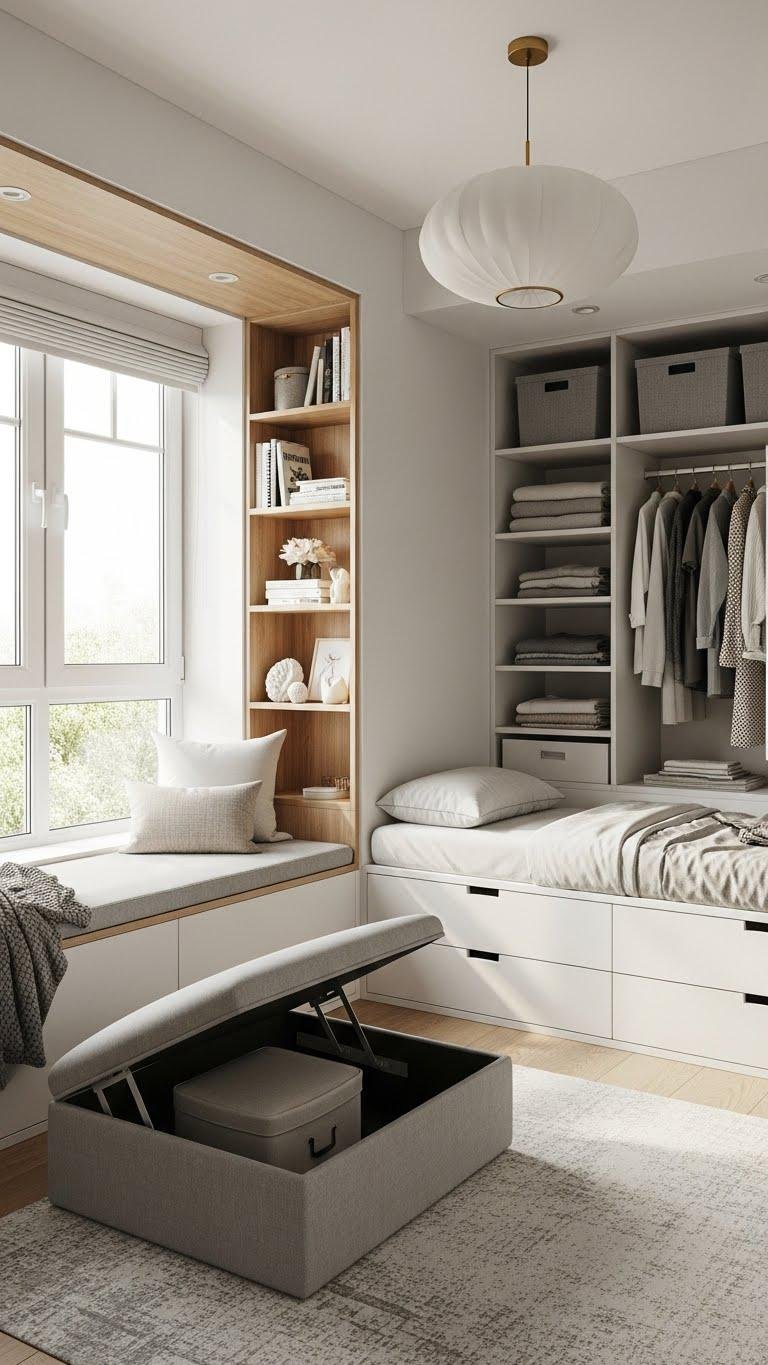
When your layout resists off-the-shelf solutions, choose custom, space-saving furniture that fits every niche and function. You’ll maximize floor area with built-in shelving, window benches, and sleek beds with storage.
Use custom ottomans that double as seats and hidden bins, and install modular closets tailored to your clothing and gear. These choices keep the room orderly, airy, and utterly yours.
Choose Light-Weight, Airy Curtains to Lengthen Walls

By hanging lightweight, sheer curtains high and wide, you’ll visually stretch the walls and let soft light wash the room, making a small bedroom feel taller and airier.
Choose linen panels or gauzy sheers and mount float rods close to the ceiling so fabric skims the floor. Tiebacks and minimal hardware keep views open, airy, and liberating without bulky treatments.
Arrange Furniture to Keep Sightlines Open
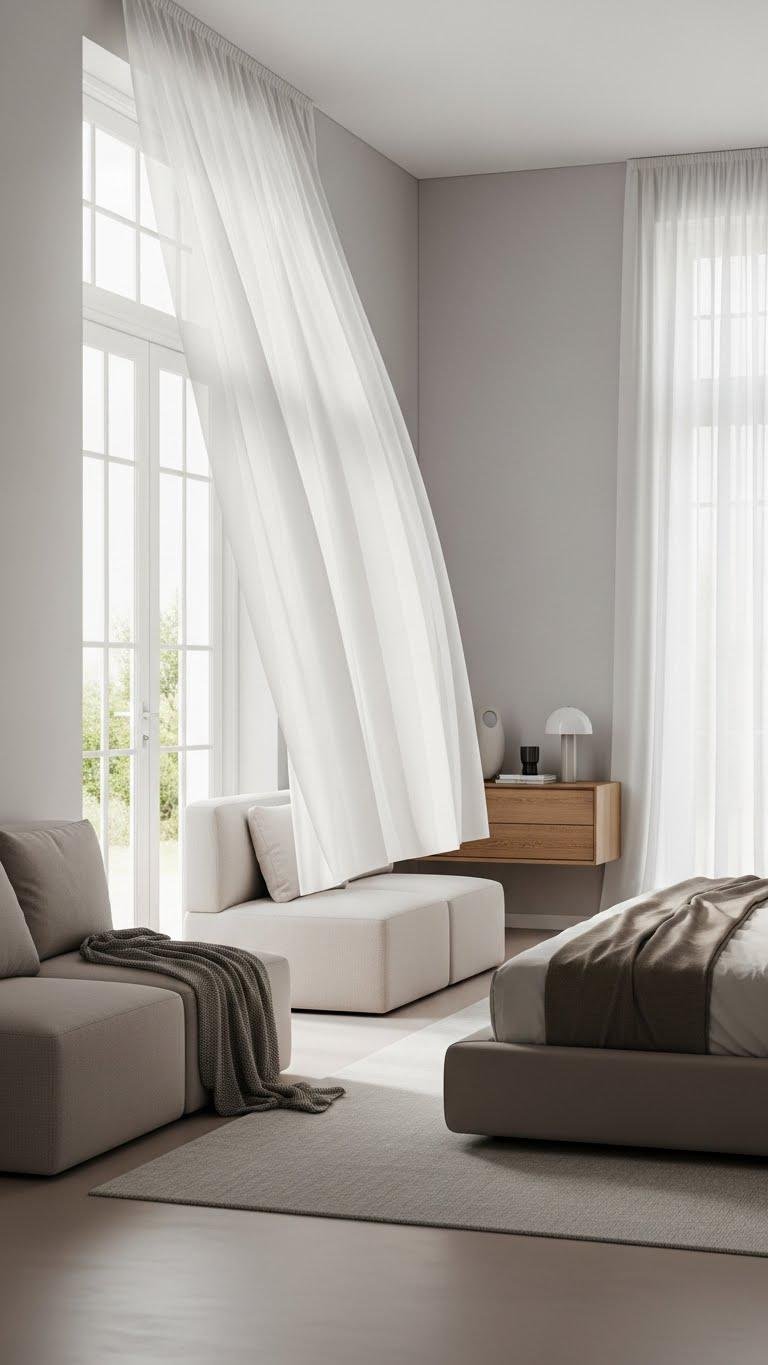
Sheer curtains open up the vertical plane, and arranging furniture with clear sightlines keeps that airy feel flowing through the whole room. Position low profile seating against walls, leaving open pathways to windows and doors.
Use angled bedplacement to guide movement and create diagonal views that enlarge perspectives. Keep pieces minimal, float a nightstand if needed, and prioritize unobstructed sightlines for freedom.
Use Mirrors Strategically to Reflect Light and Depth

Framed or freestanding mirrors amplify light and add instant depth, so place them where they catch windows, doorways, or a lamp to double brightness and widen sightlines.
You’ll position angled mirrors to bounce light into dark corners, mount mirrored panels behind dressers or headboards, and lean a tall mirror to elongate the room. Keep placements intentional so the space feels open and liberating.
Keep Accessories Minimal and Purposeful

Choose a few well-made pieces and let them breathe so the room feels calm and uncluttered. You’ll pick intentional accents that whisper personality without crowding sightlines. Opt for functional art—lighting, a sculptural shelf, or a slim mirror—that serves use and beauty. Keep surfaces clear, rotate items seasonally, and trust space to amplify each piece, giving you freedom to move and rest.
Use Consistent Wood Tones or Unicolours for Cohesion

A handful of matching wood tones or a single painted color can instantly unify a small bedroom, making it feel larger and more composed. Choose matched grain furnishings and trim to create seamless flow, then use tonal layering—lighter walls, mid-tone bedframe, darker accents—to add depth without clutter.
You’ll free visual space, simplify choices, and keep the room calm and effortless.
Define Zones With Subtle Rugs and Simple Dividers
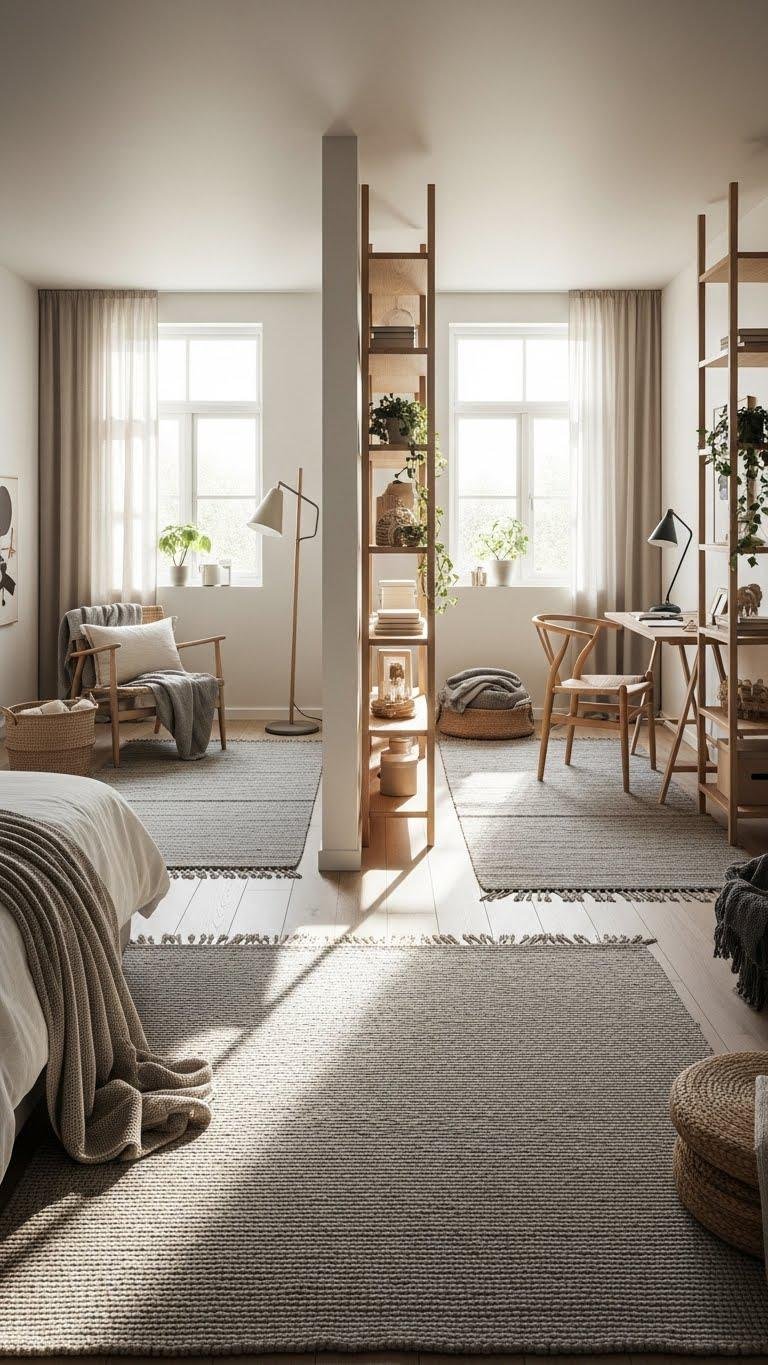
Once you’ve unified finishes and color, define functional pockets without crowding the room by using subtle rugs and simple dividers. You’ll anchor a bed, reading nook, or workspace with textured rug zones that read as intentional, not heavy. Choose low profile dividers—open slats or slim shelving—to separate areas while keeping sightlines open, so the space feels airy and free to move through.