
You want your small apartment to feel open, bright, and effortless without a remodel. Start by simplifying color, light, and furniture choices so each decision stretches space instead of crowding it. I’ll share practical swaps—paint, mirrors, lighting, storage and furniture hacks—that create air and flow while staying renter-friendly. Try one or two and you’ll see how much more spacious your place can feel.
Paint With Light, Reflective Colors
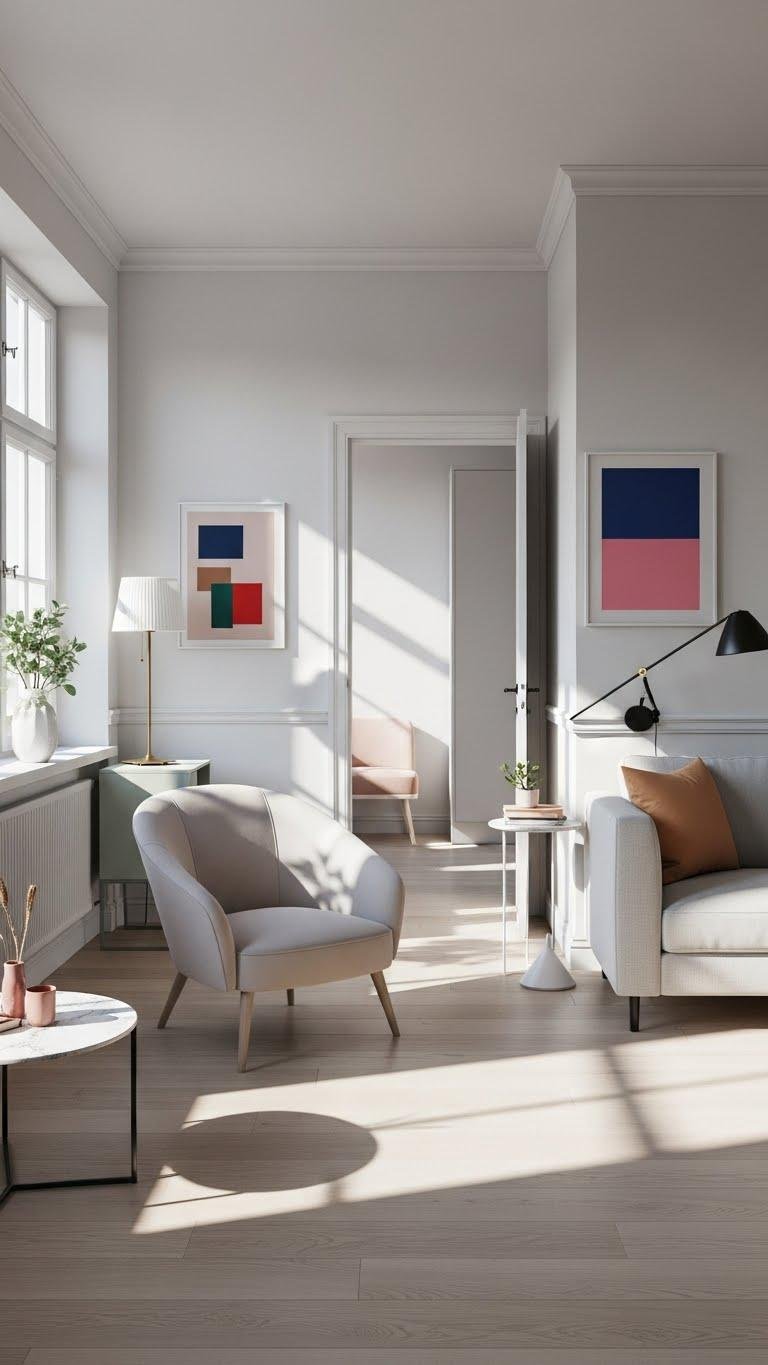
If you want your small apartment to feel roomier, paint with light, reflective colors to bounce natural and artificial light around the space. Choose soft whites and pearly greys to create airy, calm backdrops.
You’ll free visual clutter, unify furnishings, and let accents pop without overwhelming. Apply satin finishes on trim and walls to amplify glow and keep the mood open.
Maximize Natural Light
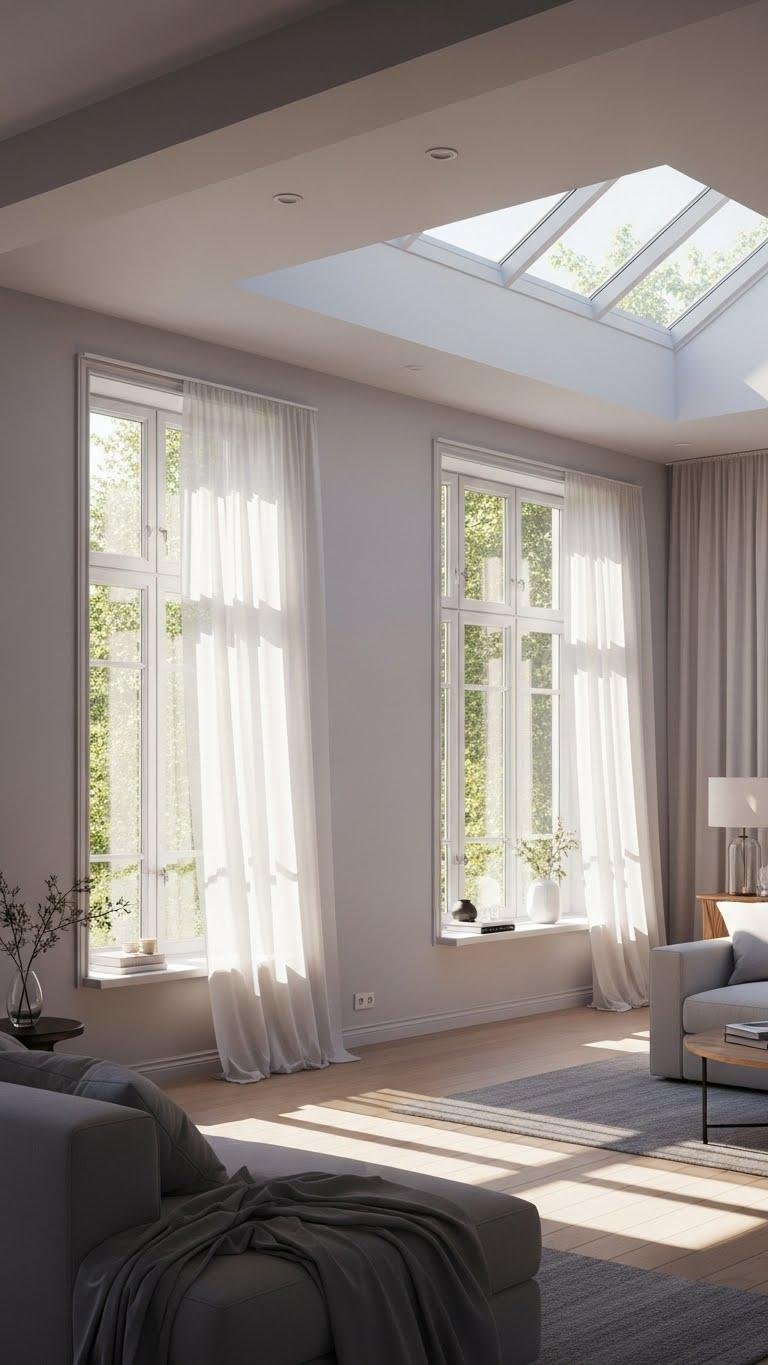
Painting with light colors sets the stage, but maximizing natural light brings that glow to life. You’ll open curtains, choose minimal window treatments that lift, and clear sill clutter so sunlight travels.
Consider skylight options if your layout allows, adding vertical brightness. Position low-profile furnishings to keep paths open, and embrace airy fabrics so daylight feels abundant and freeing.
Use Mirrors to Bounce Light and Add Depth
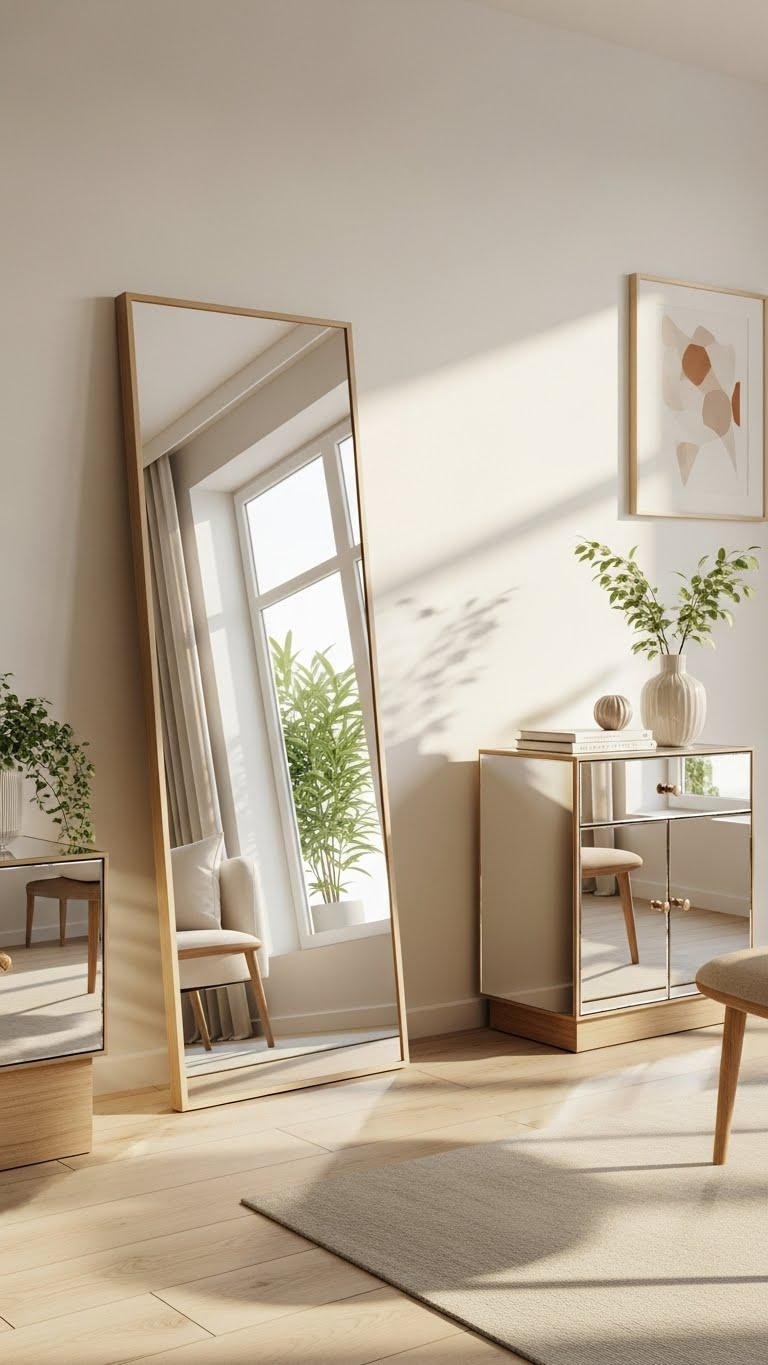
Bring mirrors in to bounce light around the room and instantly amplify perceived space. Position angled mirrors to reflect views, windows, or a pretty corner, creating depth and movement.
Lean a large mirror for casual freedom or choose mirrored furniture to double reflective surfaces without clutter. You’ll expand sightlines, make rooms feel airy, and keep the layout open and intentional.
Layer Lighting for a Spacious Feel
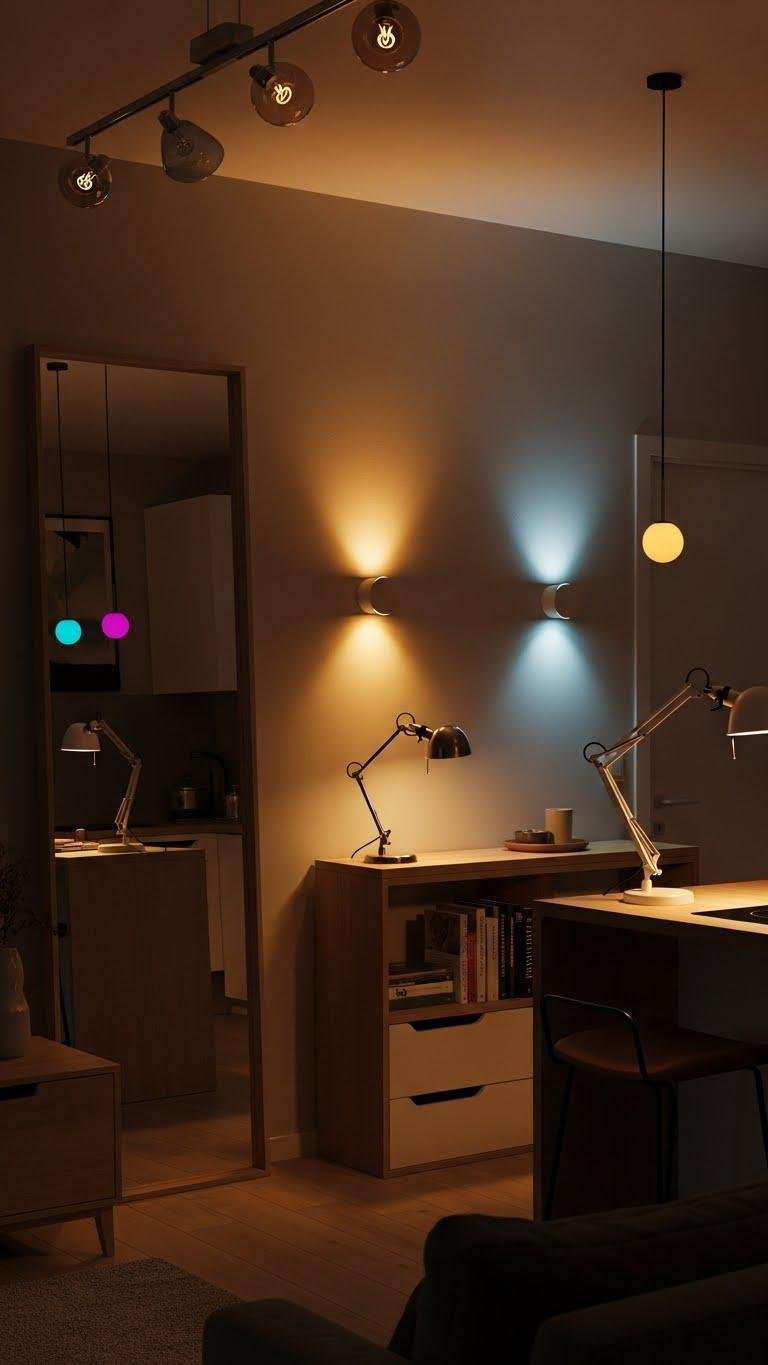
Mirrors help amplify daylight, but layered lighting is what keeps a small apartment feeling spacious after sunset and on cloudy days. You’ll mix dimmable sconces, overhead fixtures, and task lamps on layered dimmers so each zone breathes.
Add colored accent bulbs sparingly for personality, and use circadian lighting to support your rhythm — flexible, freeing, and visually open without clutter.
Keep Ceilings and Trim Monochromatic
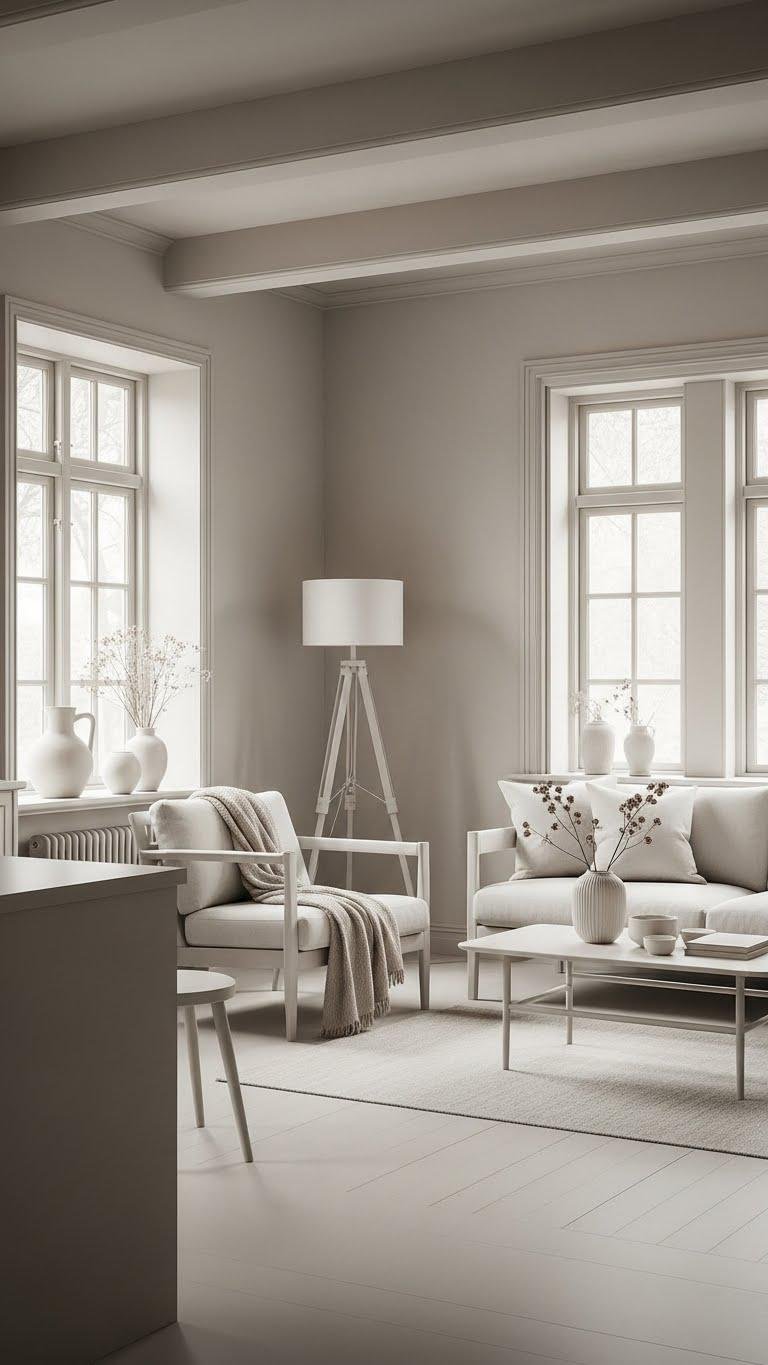
When you keep ceilings and trim the same color as your walls, the room reads as one continuous plane and feels taller and cleaner.
Embrace a monochrome ceiling and matching trim to simplify sightlines and free visual clutter. Even painted beams gain subtlety with a unified finish, so your small space breathes, appears larger, and lets you move and live without restraint.
Choose Multifunctional Furniture
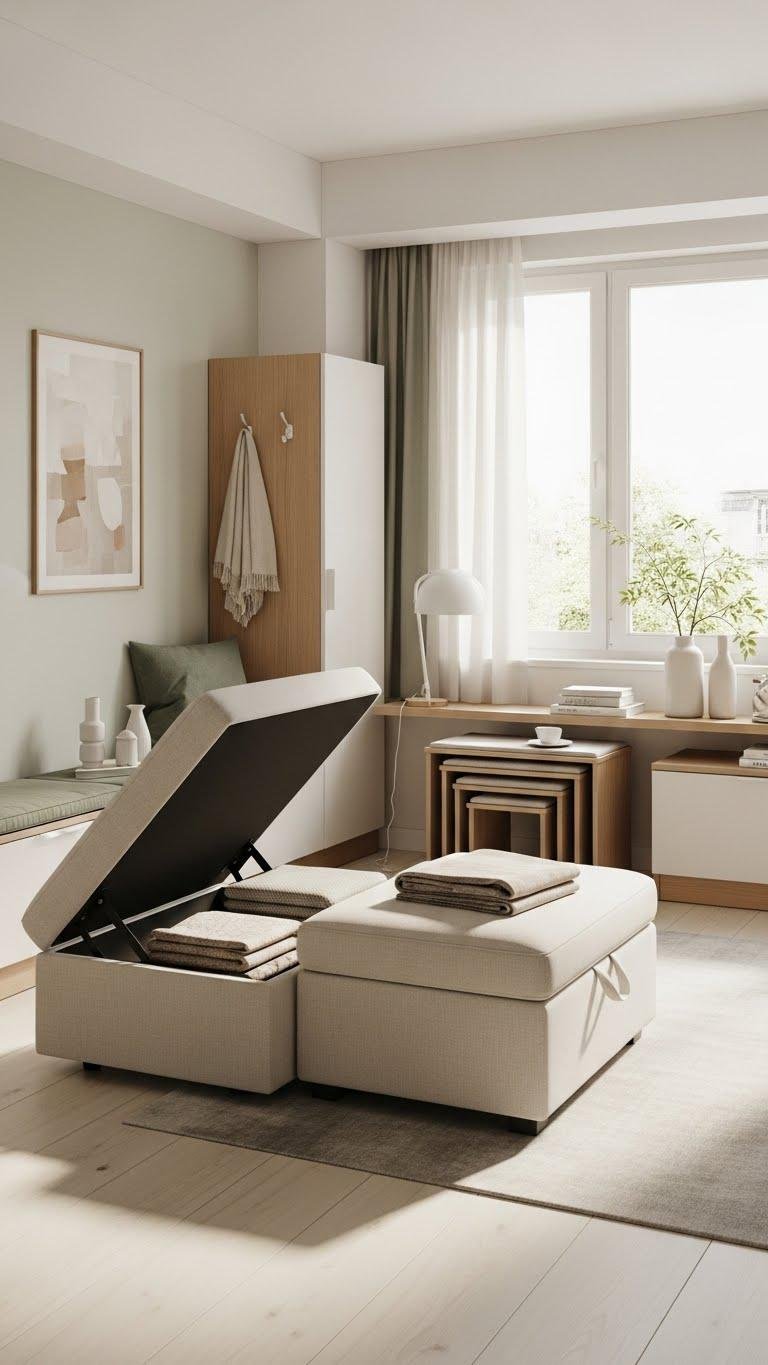
If you need your small apartment to do more with less, choose furniture that multitasks without shouting for attention. You’ll pick pieces that free up space and mind: convertible ottomans that stash blankets and pop open into extra seating, nesting stools you tuck away or spread for guests, and sleek storage benches.
Let form serve function so your home feels open and unfettered.
Select Scaled, Low-Profile Pieces
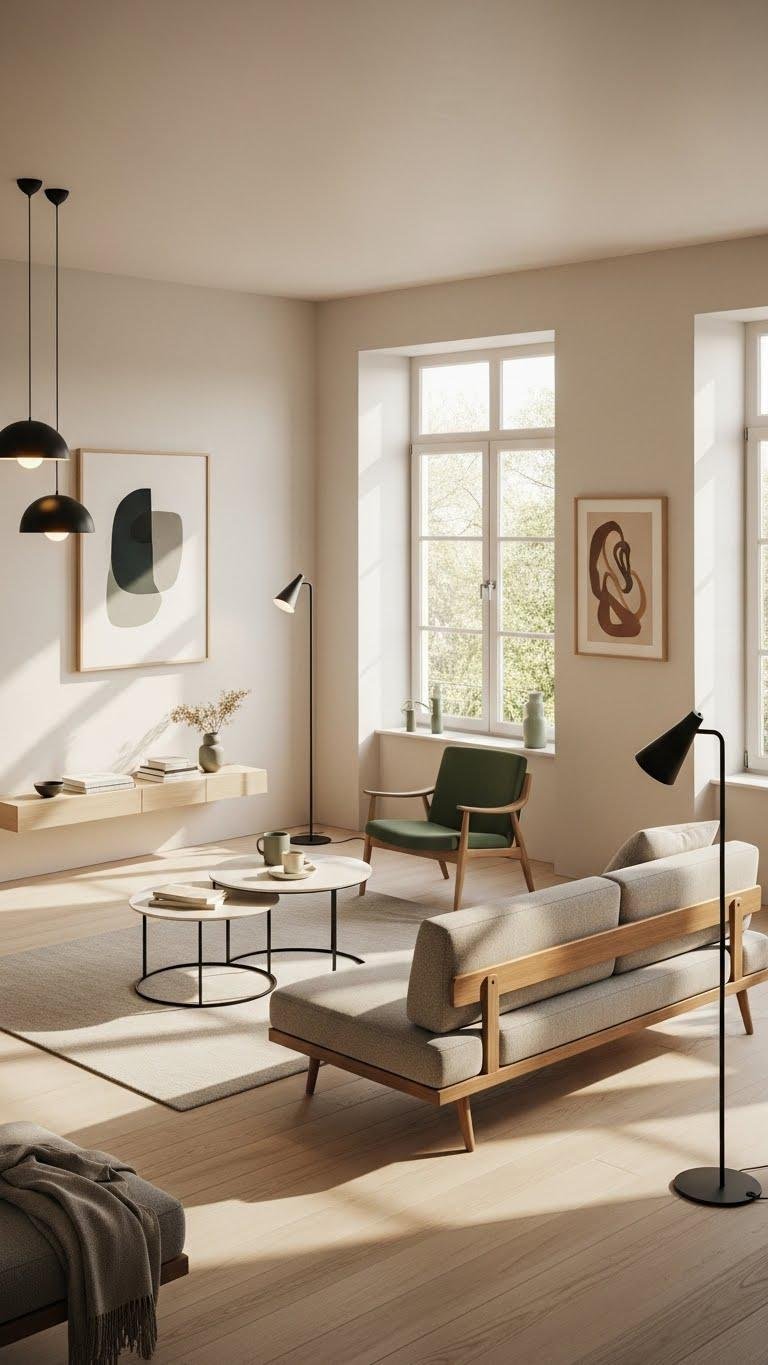
Because space feels larger when furniture sits low and in scale with the room, pick pieces with slim profiles, shorter legs, and reduced bulk that let sightlines travel across the apartment.
You’ll choose low sofas, narrow consoles, and minimalist tables that free movement.
Add compact lighting and scaled artwork to keep proportions calm, create openness, and let your space breathe with confident ease.
Favor Furniture With Exposed Legs or Clear Materials
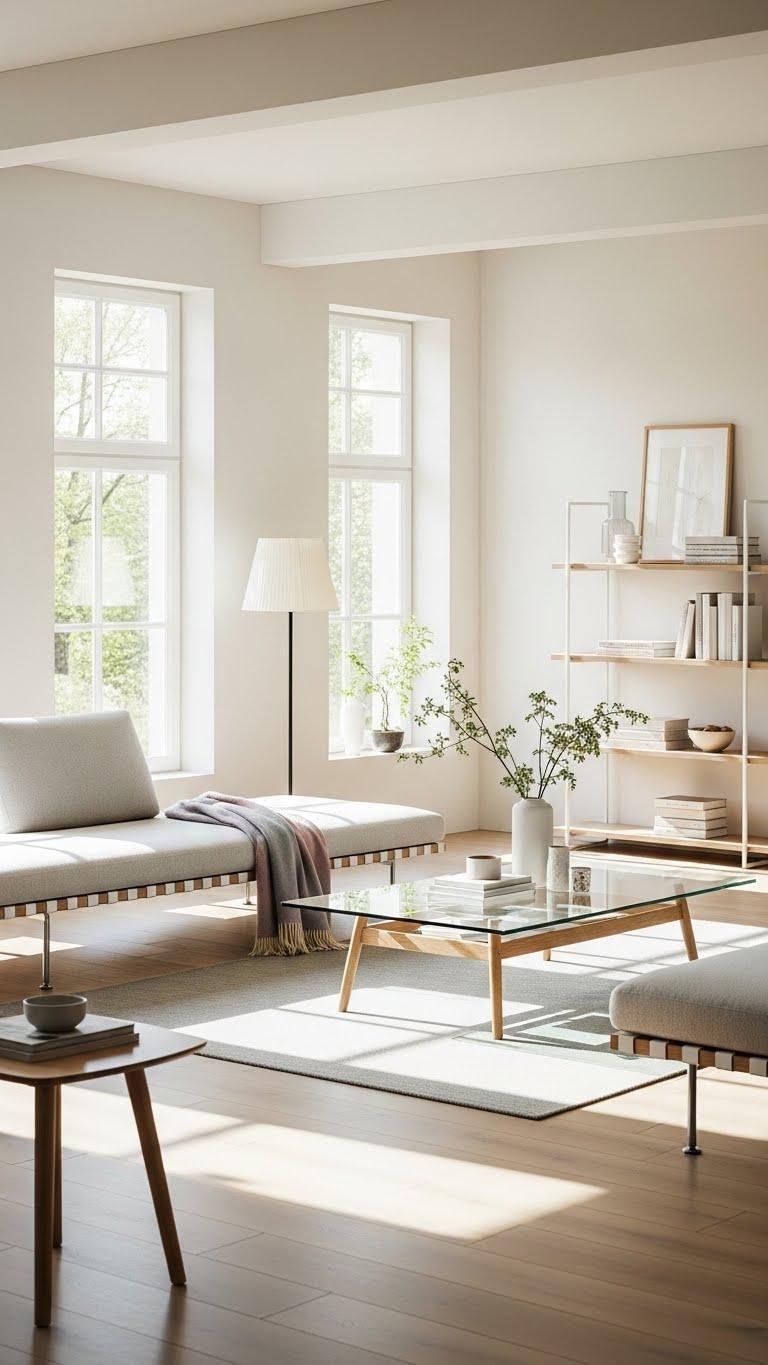
With exposed legs or clear materials, furniture visually lifts off the floor so your rooms feel airier and less crowded. Choose pieces with airy silhouettes and transparent materials to keep sightlines open and movement free. You’ll enjoy a minimalist vibe that breathes, lets light travel, and maintains practicality.
Opt for lightweight frames and acrylic accents that support your need for space and freedom.
Float Furniture Away From Walls
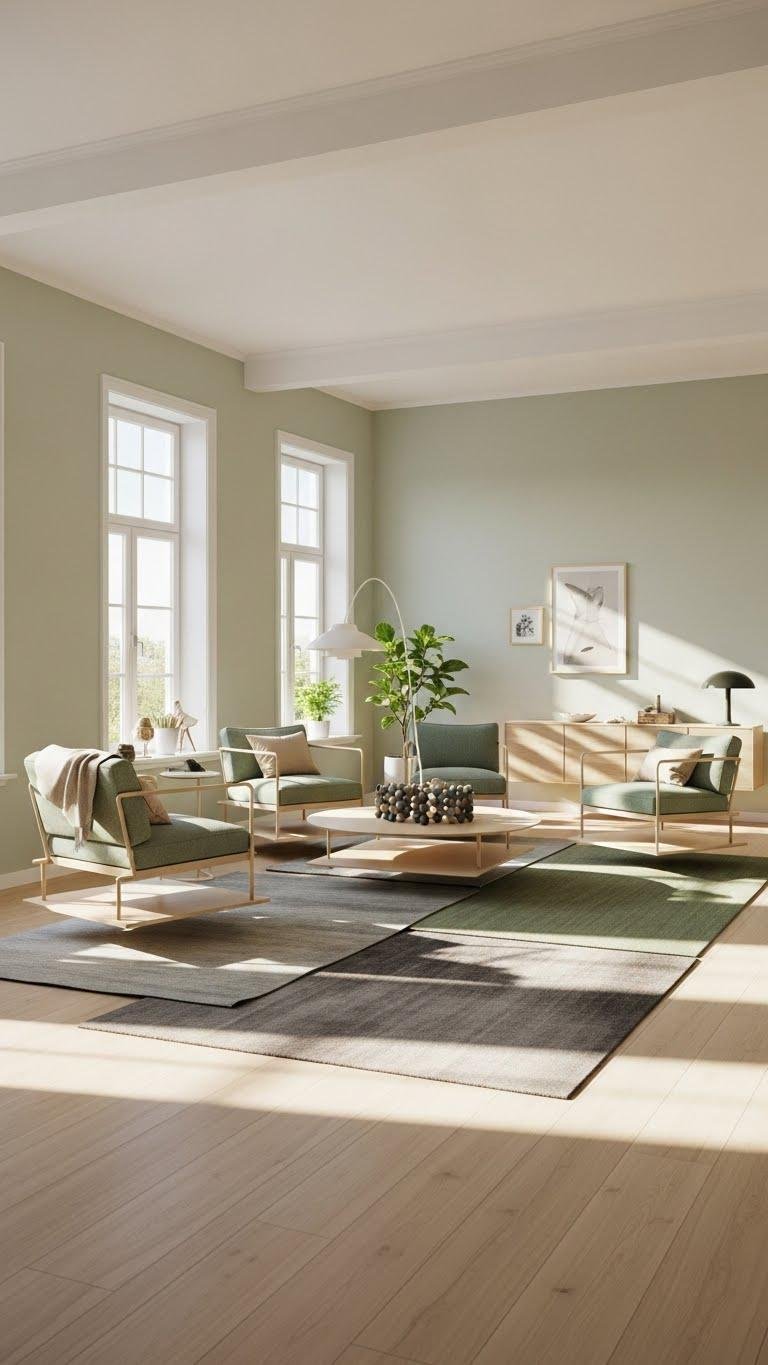
After choosing lightweight pieces that keep sightlines open, try pulling furniture a few inches—or even a foot—away from the walls to create intentional breathing room.
You’ll craft distinct zones with floating rugs anchoring seating, while a centerpieces cluster on a low table draws focus inward.
This layout invites movement, feels liberated, and lets light flow around each element for airy, deliberate living.
Use Benches and Tuck-Away Seating
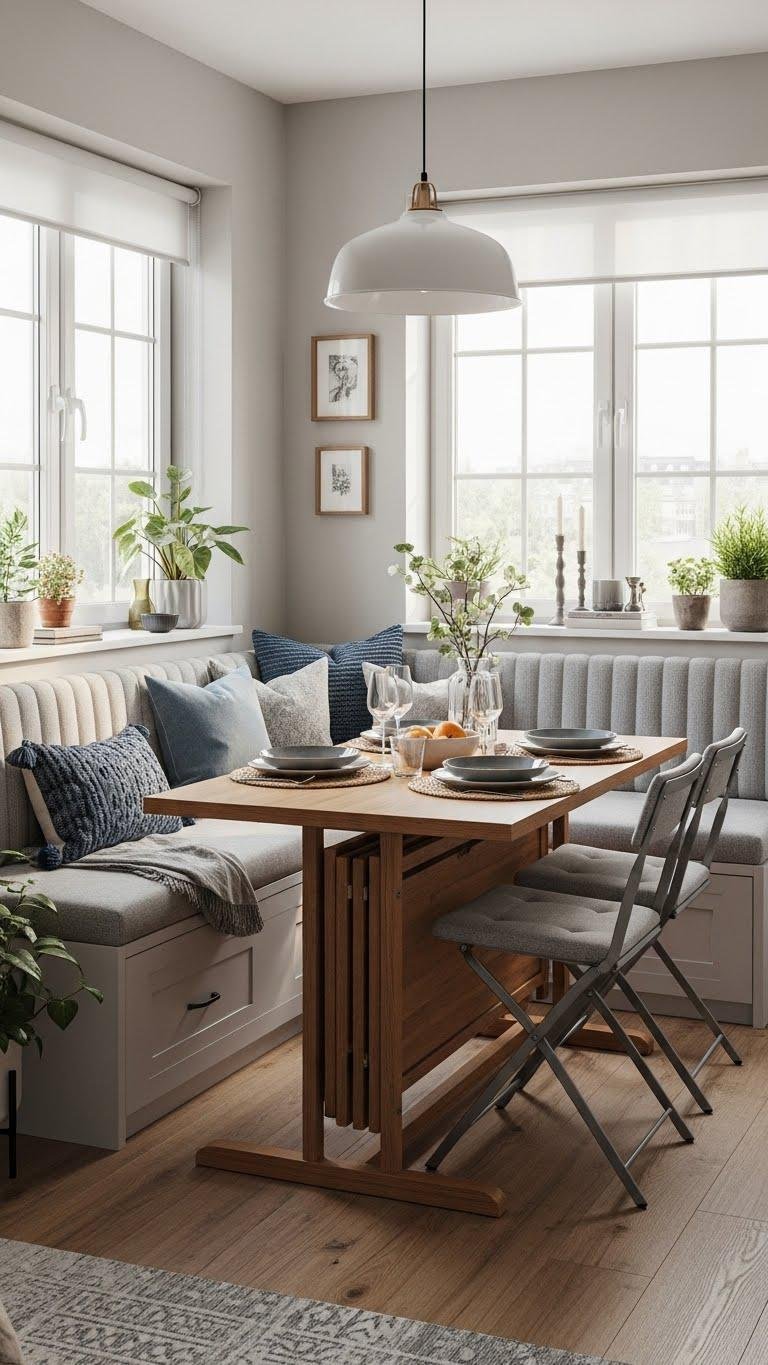
Pull seating in tight spaces with benches and tuck-away chairs to save floor area without sacrificing function or style.
Choose slim benches, storage ottomans and foldable seats that tuck under tables to keep walkways clear.
Install built in banquettes where possible to anchor a dining nook and hide clutter.
You’ll gain flexible seating, hidden storage, and a freer, lighter feel.
Install Vertical Storage Solutions
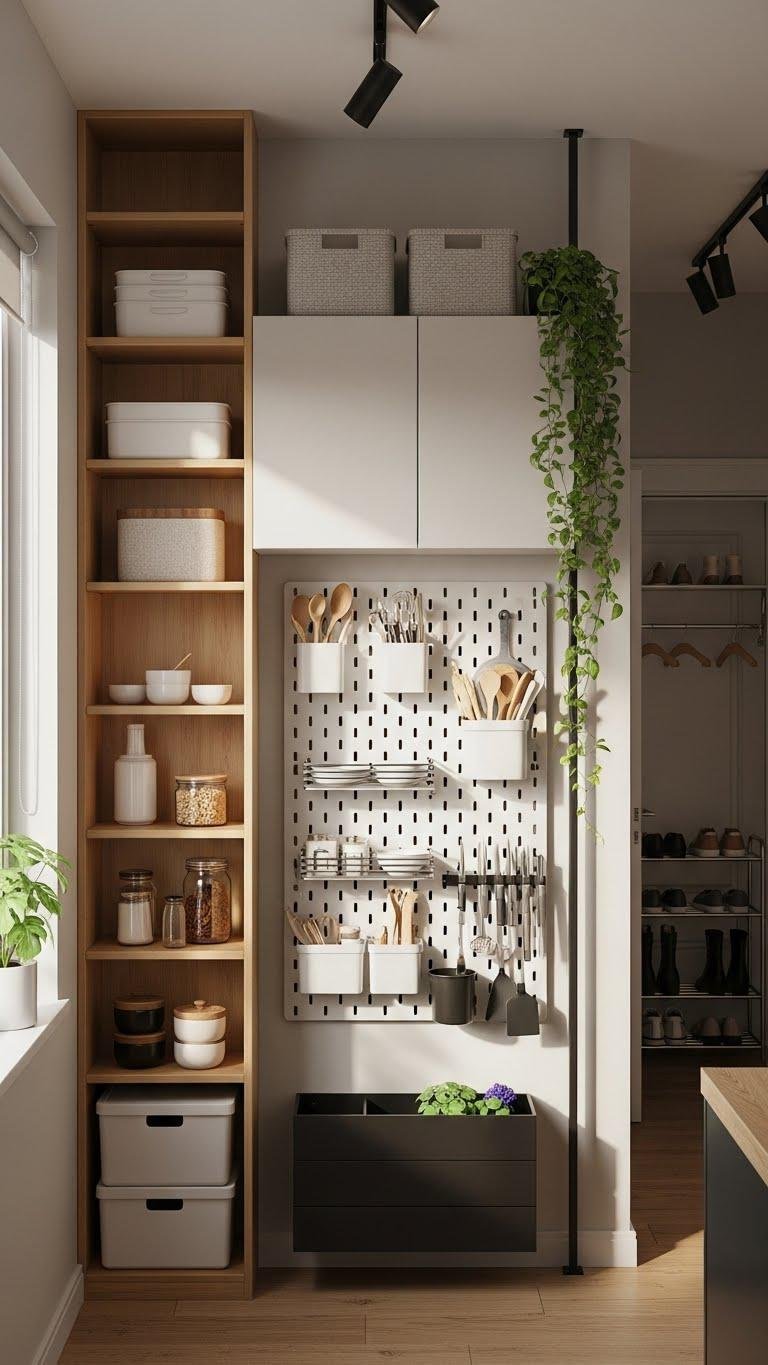
In narrow apartments, think up instead of out: tall shelving, wall-mounted cabinets and slim pegboards free precious floor space while keeping items visible and accessible.
You’ll maximize air and movement by stacking essentials, adding vertical planters for greenery, and fitting overdoor racks to hold shoes or supplies.
Choose slim, durable pieces that echo your style so storage feels liberating, not cluttered.
Create Hidden Storage Everywhere
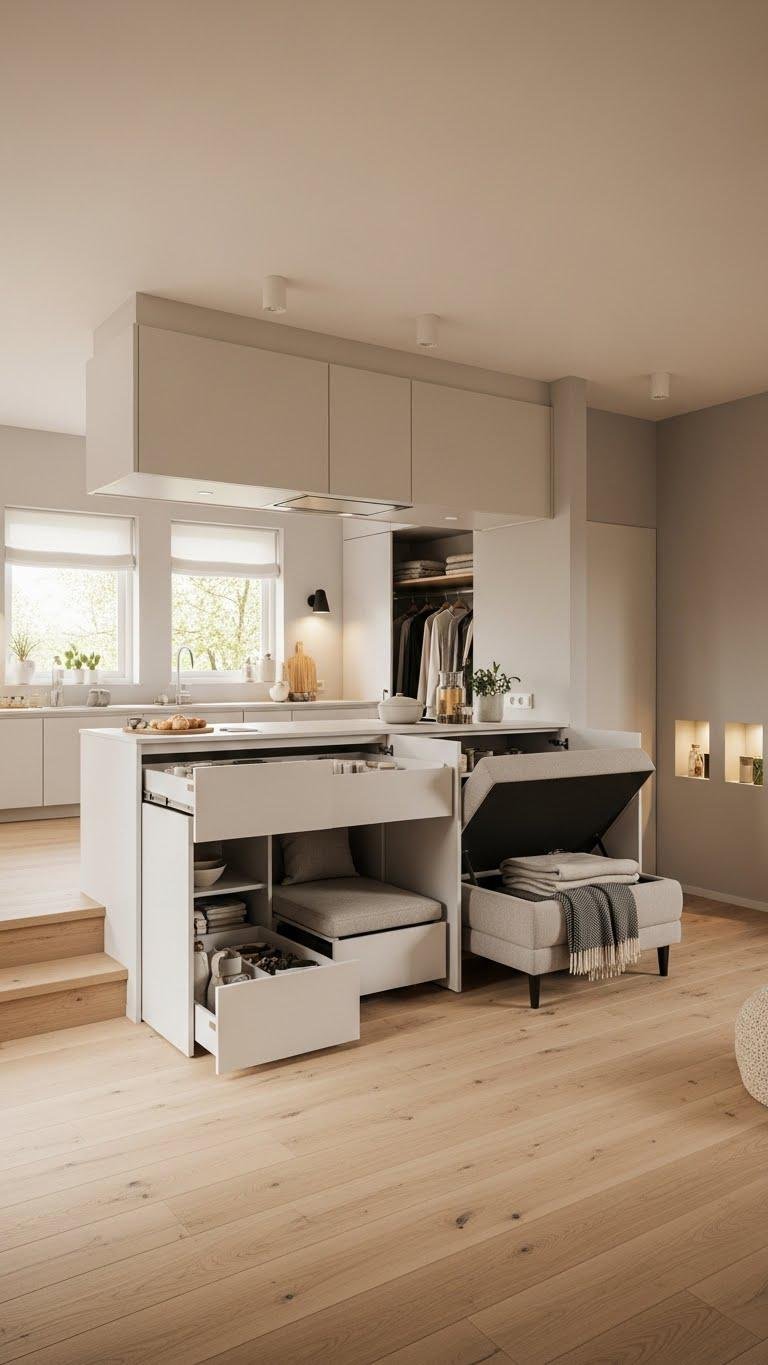
You’ve stretched upward—now hide smartly to keep surfaces calm and rooms feeling larger. Tuck essentials into under stair drawers, bench seats, and ottomans so floors stay open and choices feel liberating.
Mount ceiling hung cabinets above closets or kitchens to clear counters without crowding sightlines. Use concealed hooks, built-in niches, and furniture with secret compartments to preserve a minimalist, free-moving home.
Use Open or Glass Shelving Selectively
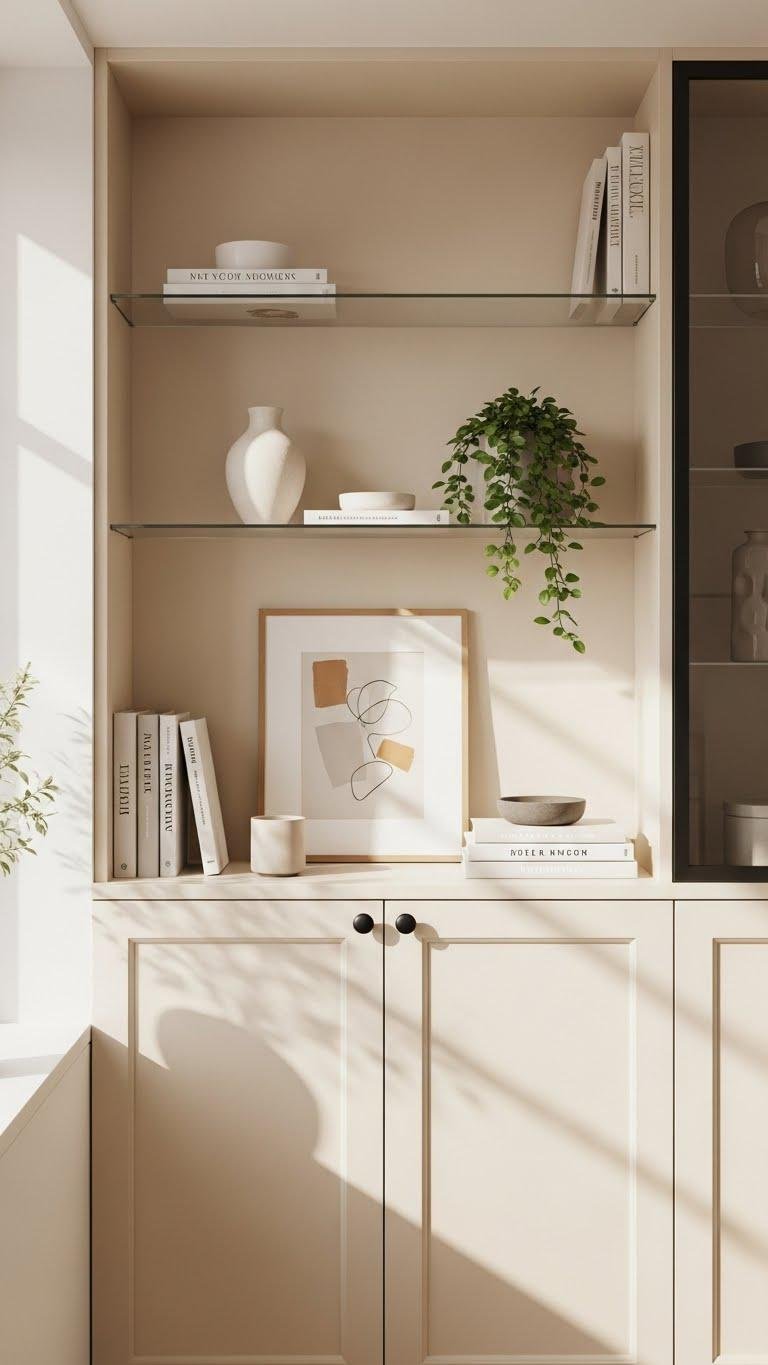
Open or glass shelving can lift a small space visually, but use it with intention so it feels airy rather than cluttered. You’ll display essentials and art sparingly, balancing negative space with a few curated pieces. Choose open shelving for easy access and glass cabinets to protect items without closing the room. Keep palettes simple, align heights, and rotate items to maintain freedom and calm.
Add Slim Organizers for Overlooked Spaces
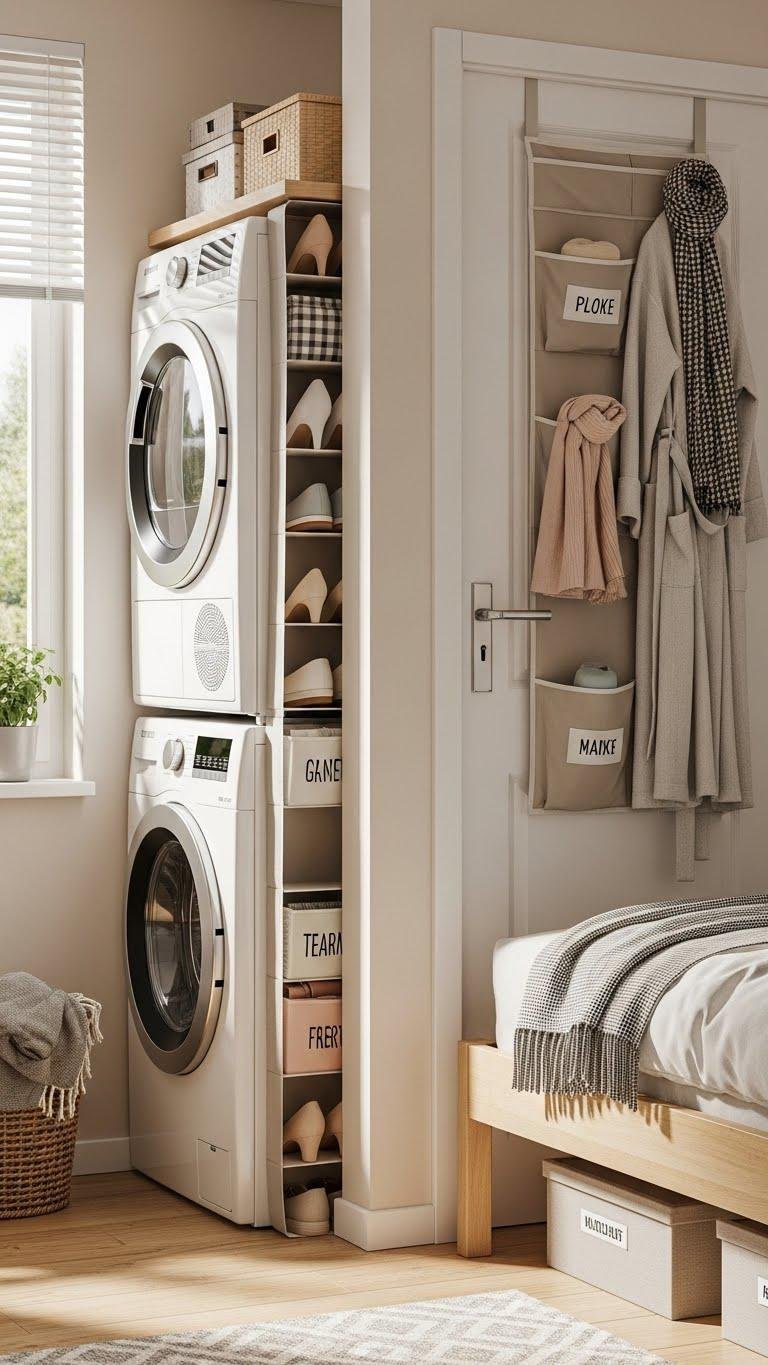
Slide slim organizers into forgotten gaps and you’ll reclaim useful storage without crowding your layout.
You can tuck narrow shoe organizers beside washer stacks, under beds, or along hallways to free floor space.
Hang behind door hooks for robes, bags, or scarves so things stay visible and light.
These tweaks keep your apartment airy, efficient, and ready for spontaneous living.
Define Zones With Rugs and Lighting

By layering rugs and targeted lighting, you’ll carve out clear zones that feel intentional without adding walls.
Use accent rugs to define seating, dining, and workspace areas, choosing scale and texture that complement flow. Pair with pendant clusters over tables and a floor lamp for task corners.
This lets you shape function and mood while keeping openness and lightness throughout your apartment.
Use Shelving Screens as Room Dividers
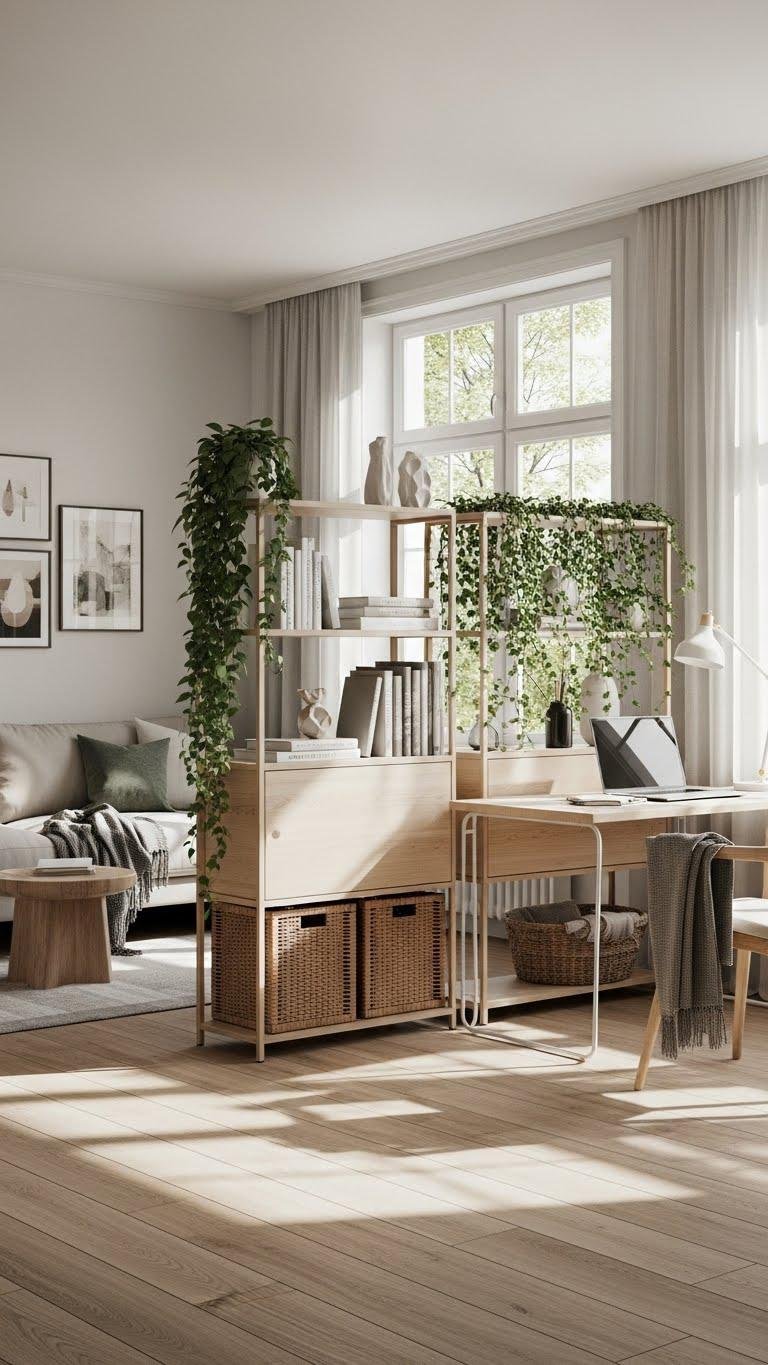
Framed between functions, a shelving screen gives you privacy, storage, and style without closing off light.
Use open shelving to create shelving privacy that still breathes; display books, baskets, and a plant partition to soften sightlines. You’ll define zones while keeping flow and airiness. Choose slim, modular units so you can move and reconfigure as your life changes.
Hang Floor-To-Ceiling Curtains for Flexible Separation
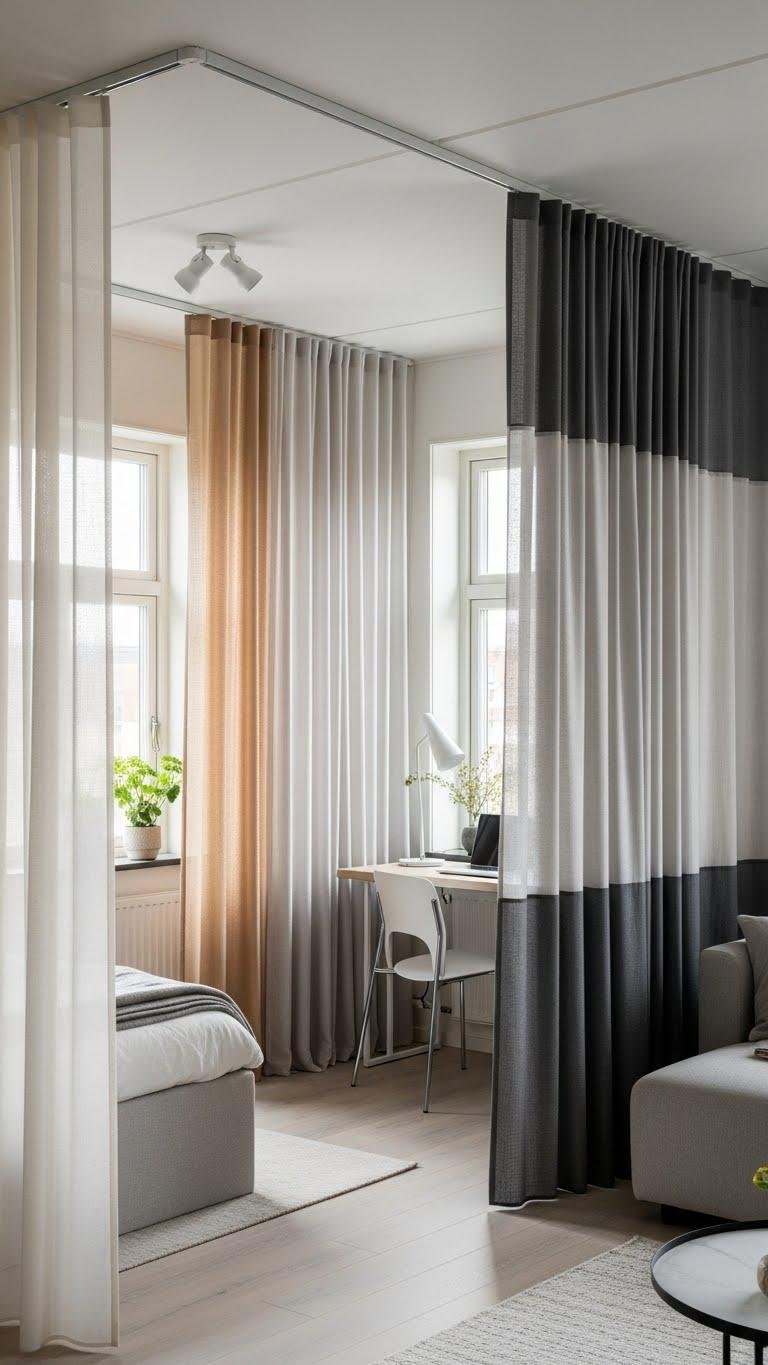
Suspended from ceiling tracks, floor-to-ceiling curtains let you redefine a studio’s layout instantly—pull them closed for privacy, or tuck them back to open the space. Use curtain zoning to create work, sleep, and lounge areas without walls. Choose light fabrics and layered drapery for texture and sound control. You gain adaptable boundaries that feel airy, intentional, and liberating.
Arrange Furniture to Maintain Clear Circulation
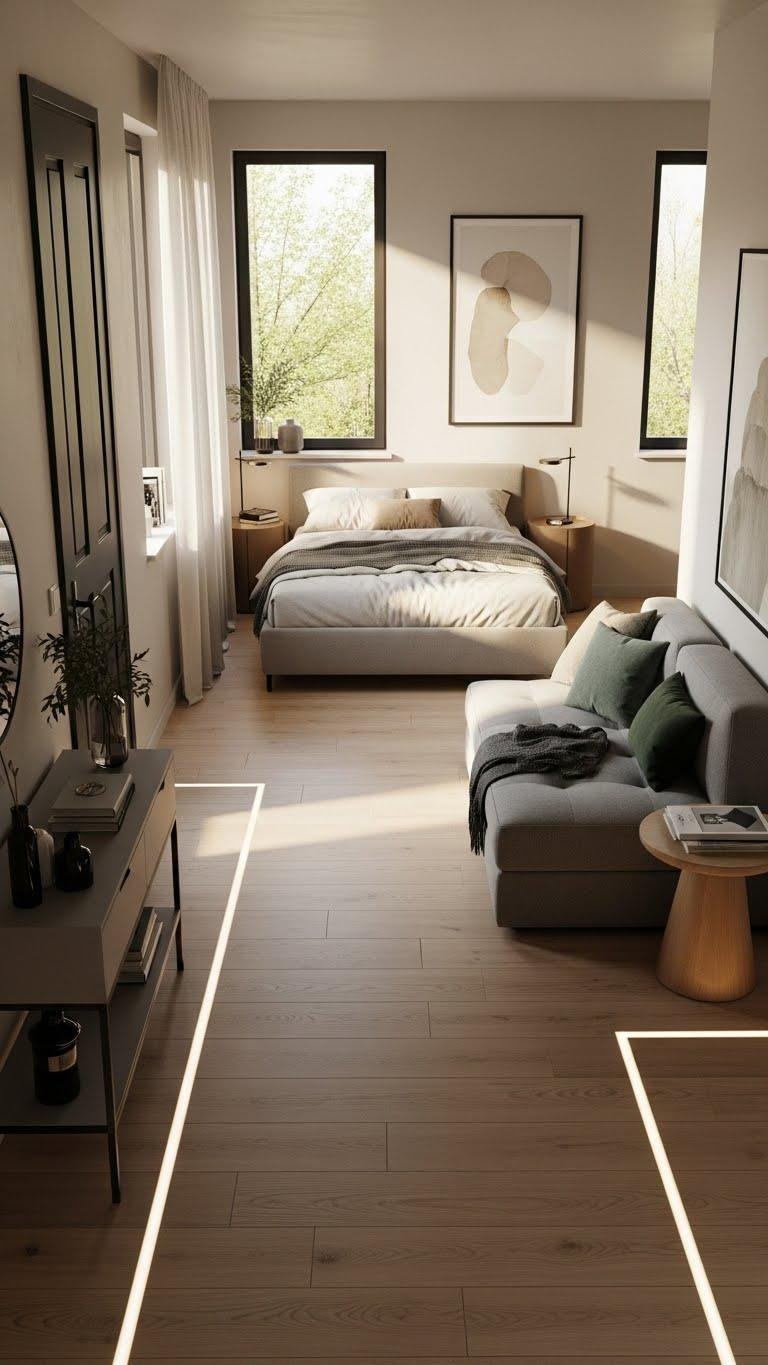
Think through how people will move and arrange your pieces so traffic flows naturally—leave clear pathways (at least 24–30 inches wide) between key zones like the bed, sofa, and entry.
Keep furniture low and modular, use diagonal placement to open sightlines, and add subtle pathway lighting to guide movement. Edit ruthlessly: remove excess pieces so every object earns its space and frees you.
Opt for Larger-Scale Art Over Many Small Pieces
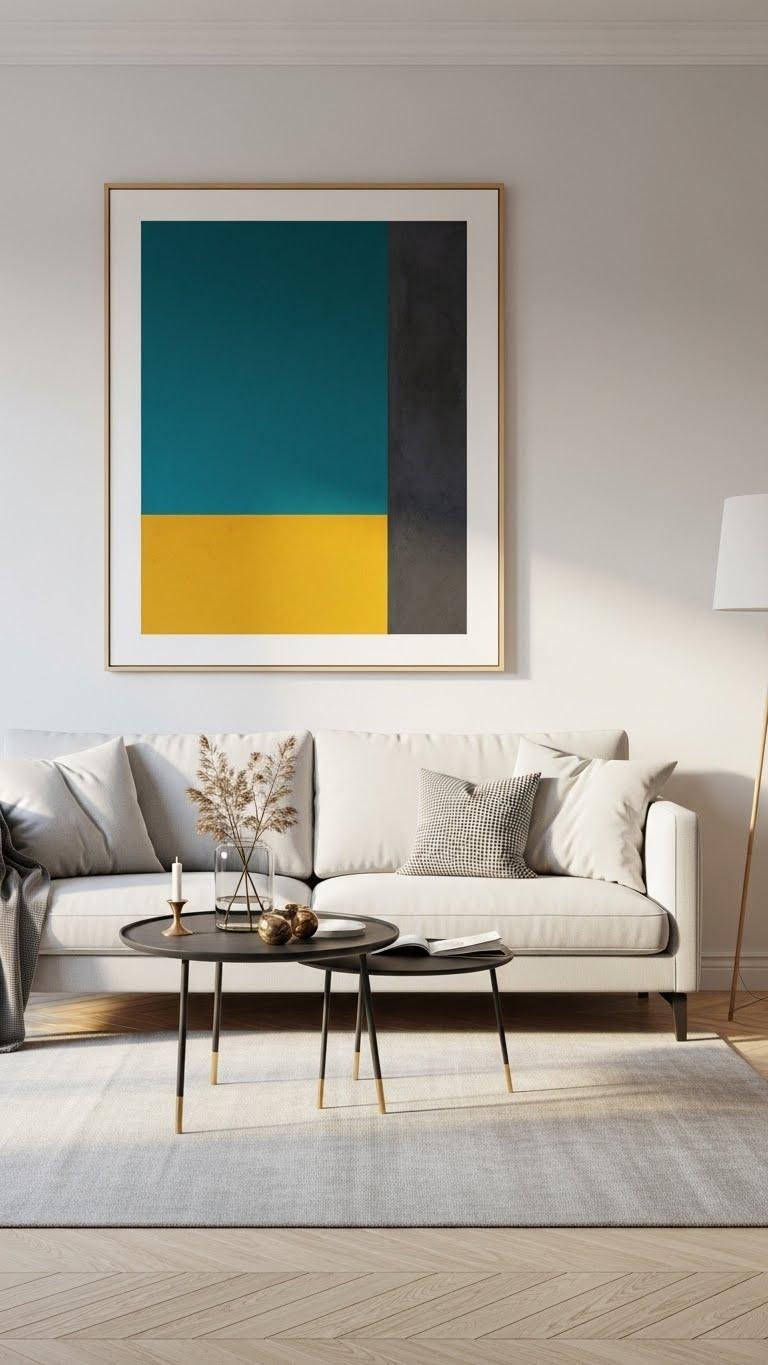
Choose one bold, larger-scale piece instead of clustering many small artworks — it anchors the room, creates a focal point, and makes a small space feel more cohesive and intentional.
You’ll free visual clutter by choosing oversized frames or single statement canvases that reflect your taste.
Hang art at eye level, center above furniture, and let one strong piece breathe so the room feels open and deliberate.
Stick to Small- to Medium-Scale Patterns
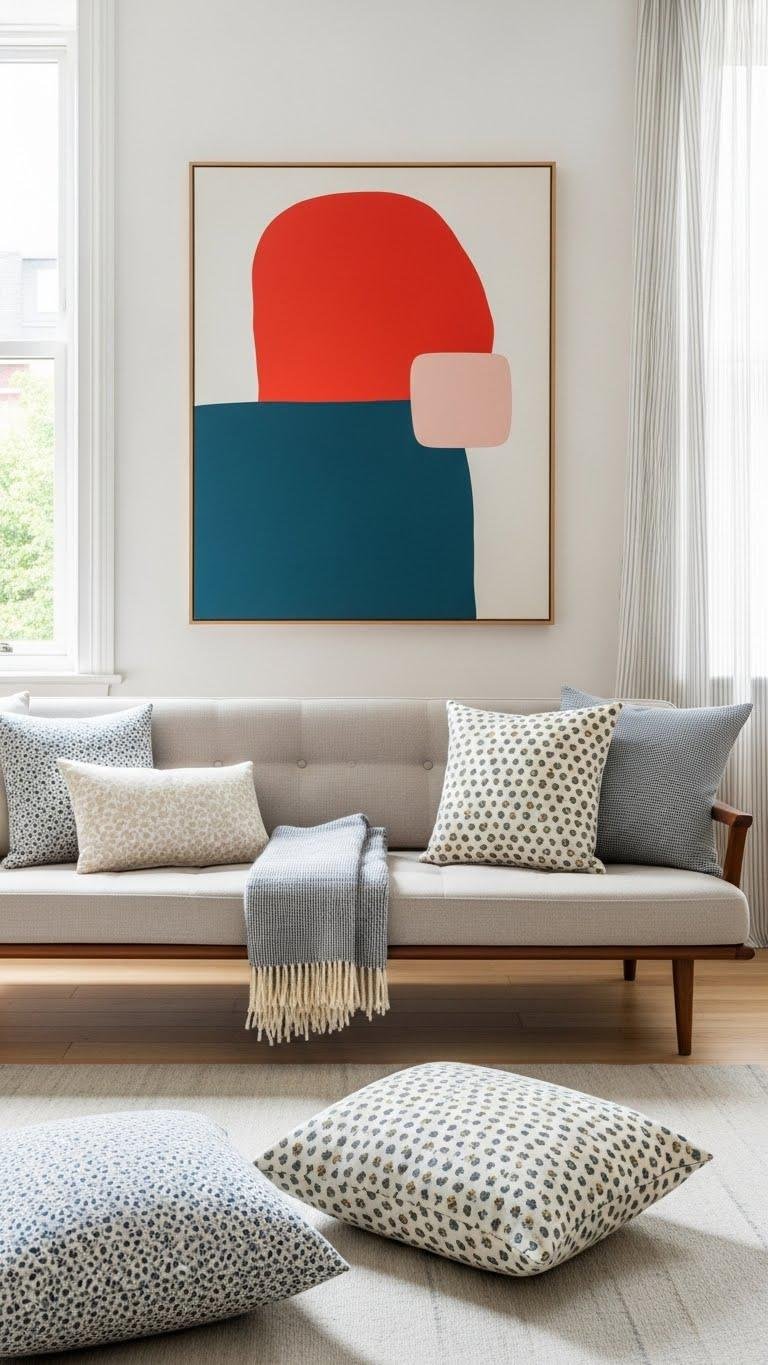
After you’ve committed to one oversized artwork, keep patterns in the rest of the room small to medium so textures and prints don’t compete with that focal piece.
Choose micro print fabrics, petite geometrics, and subtle stripes for cushions, throws, and curtains.
You’ll preserve visual breathing room, let the statement art shine, and enjoy a liberated, calm atmosphere without cluttered patterns.
Keep Flooring Continuous Across Areas
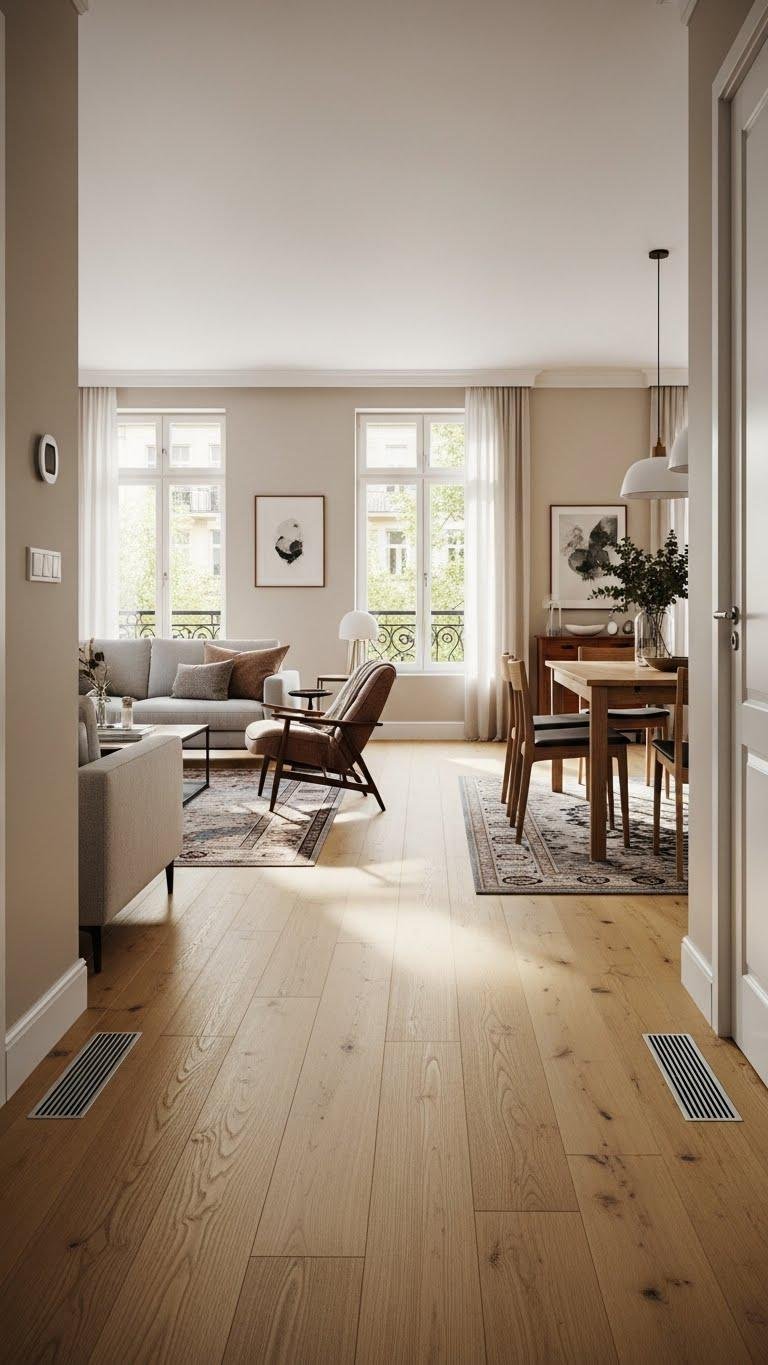
Often you’ll get a stronger sense of space by carrying the same flooring through adjoining rooms—continuous floors visually expand a small apartment, create a seamless flow, and make furniture placement feel intentional rather than segmented. Keep materials consistent, add layered warmth with heated flooring, and define zones with patterned rugs. You’ll preserve openness while expressing personal style and freedom in your layout.
Use Low-Contrast Trim and Baseboards
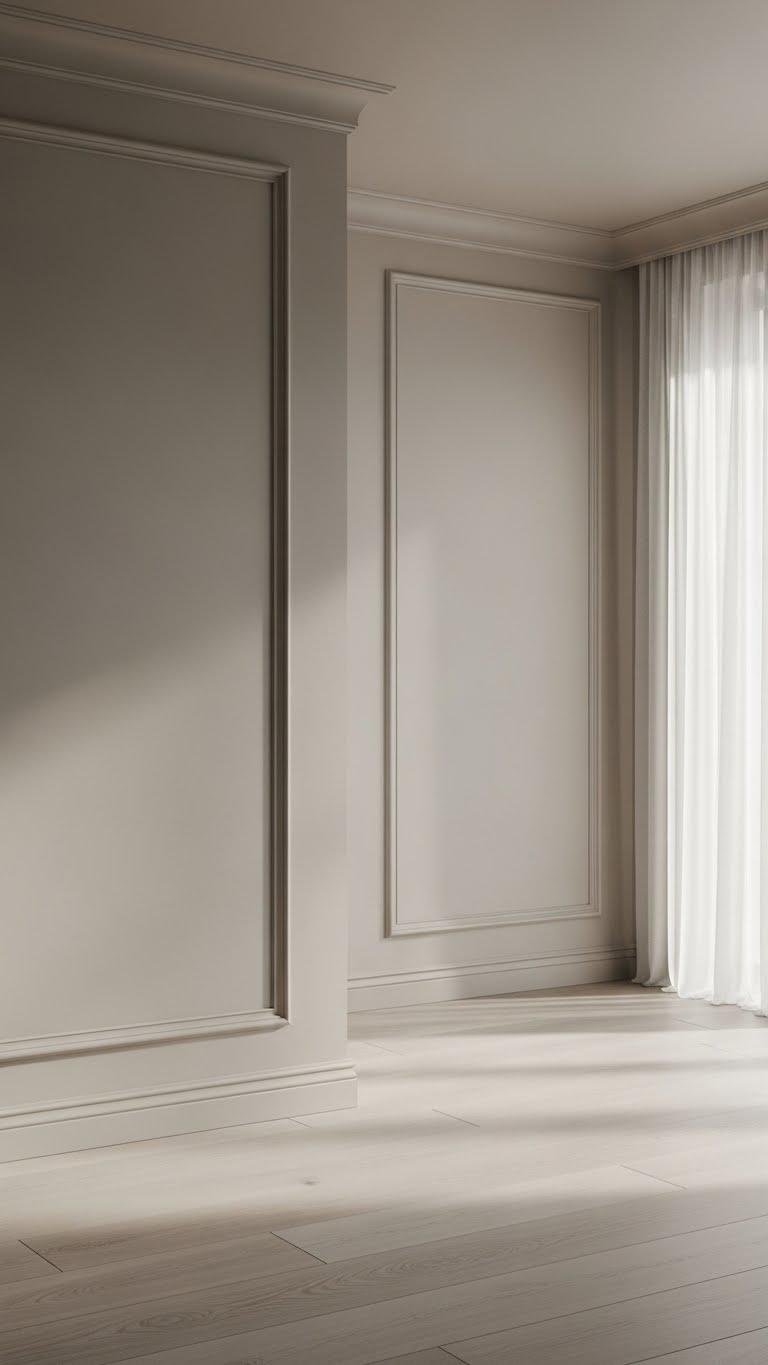
When you keep trim and baseboards close in tone to your walls, the room reads larger and calmer because your eye isn’t stopped by sharp lines. Choose matte trims or a low-profile finish with a subtle sheen to blur edges and let light flow.
Paint moldings just a shade lighter or darker than walls so spaces feel open, relaxed, and free.
Limit Your Palette to 2–3 Coordinating Colors
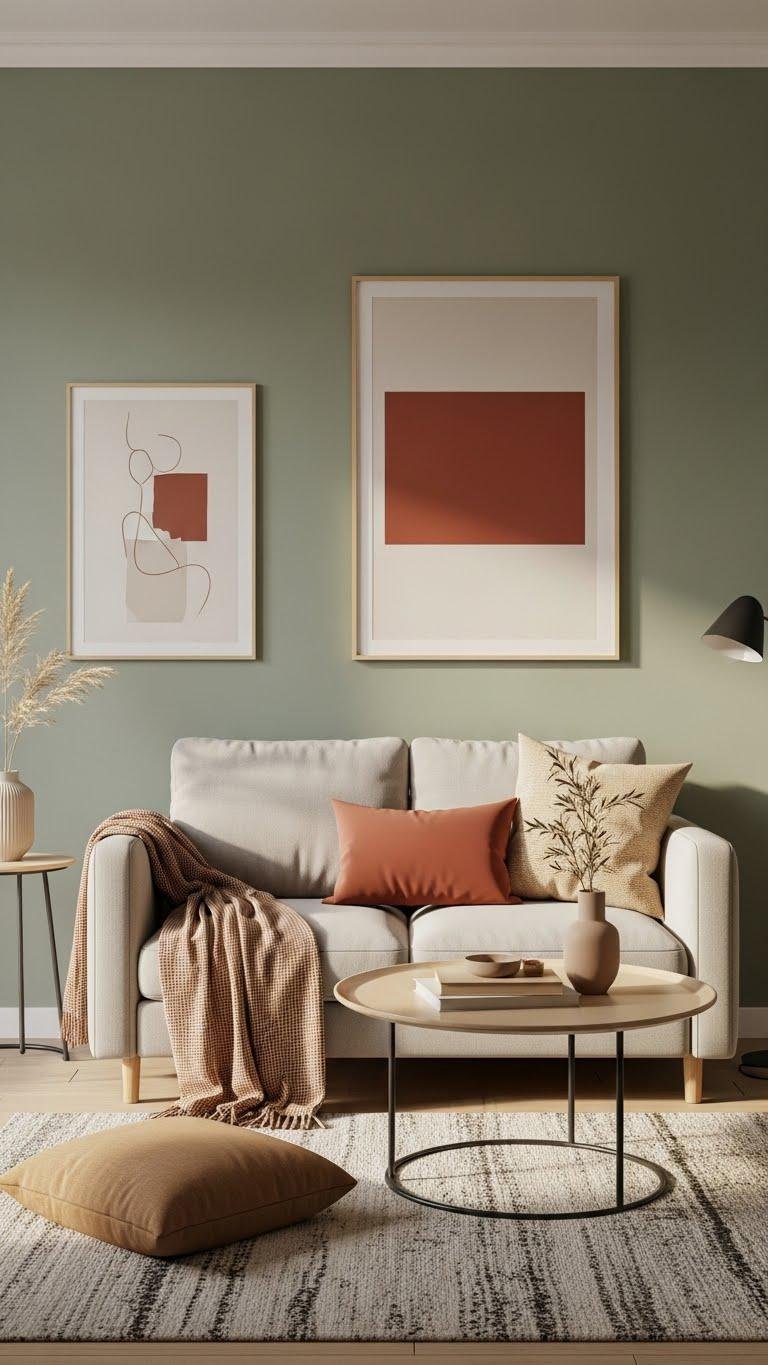
Choose just two or three coordinating colors and stick with them so your small apartment feels cohesive and calm instead of visually cluttered. You’ll feel freer moving through unified hues. Use a coordinated accent to add personality and practice tonal layering across textiles, art, and accessories. Be selective: limit patterns, repeat key tones, and let negative space amplify the palette for a serene, spacious result.
Try Renter-Friendly, Removable Solutions
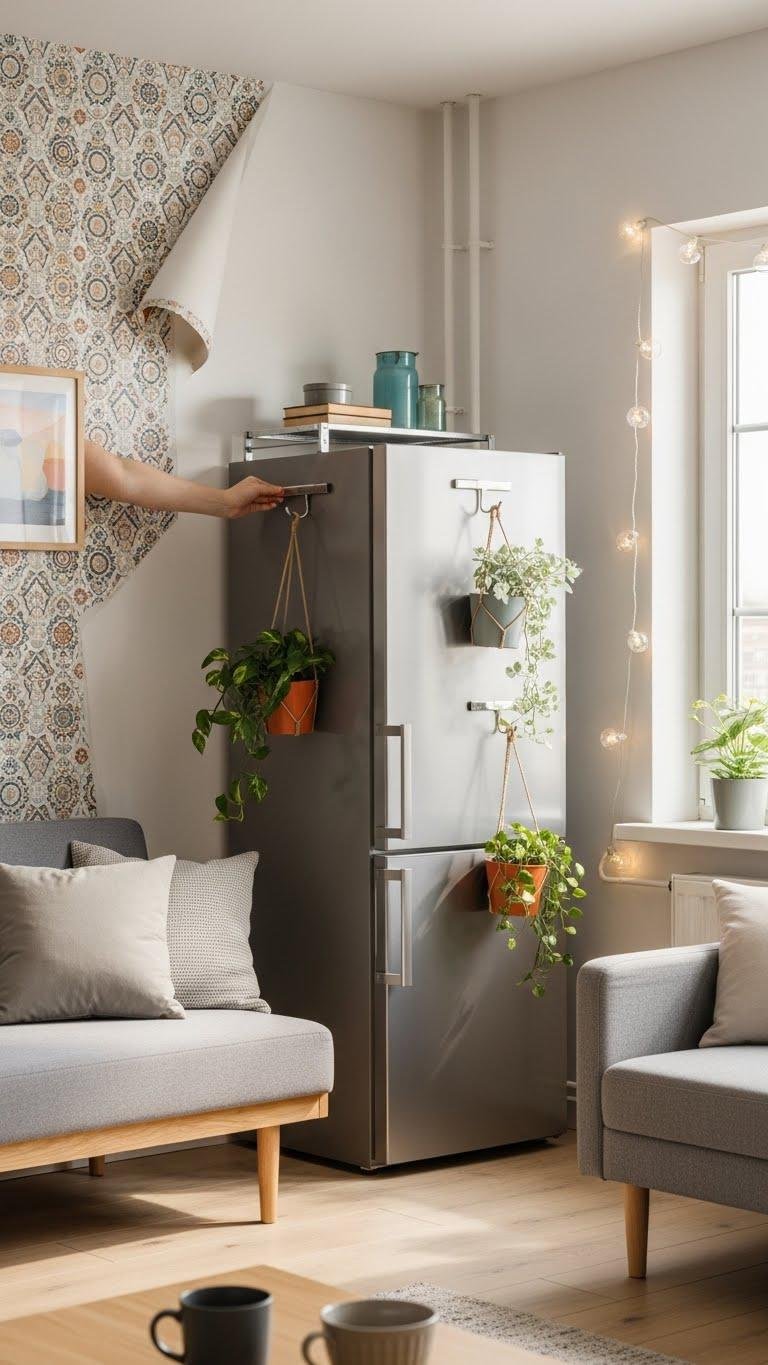
Don’t overhaul anything you can’t take with you—opt for removable solutions that lift the look without risking your deposit. You can refresh walls with temporary wallpaper, add texture and pattern, then peel away when you move.
Use magnetic hooks on appliances and metal surfaces to hang plants, art, or lights without drilling. These choices keep your space flexible, stylish, and fully portable.
Use Folding or Wall-Mounted Tables
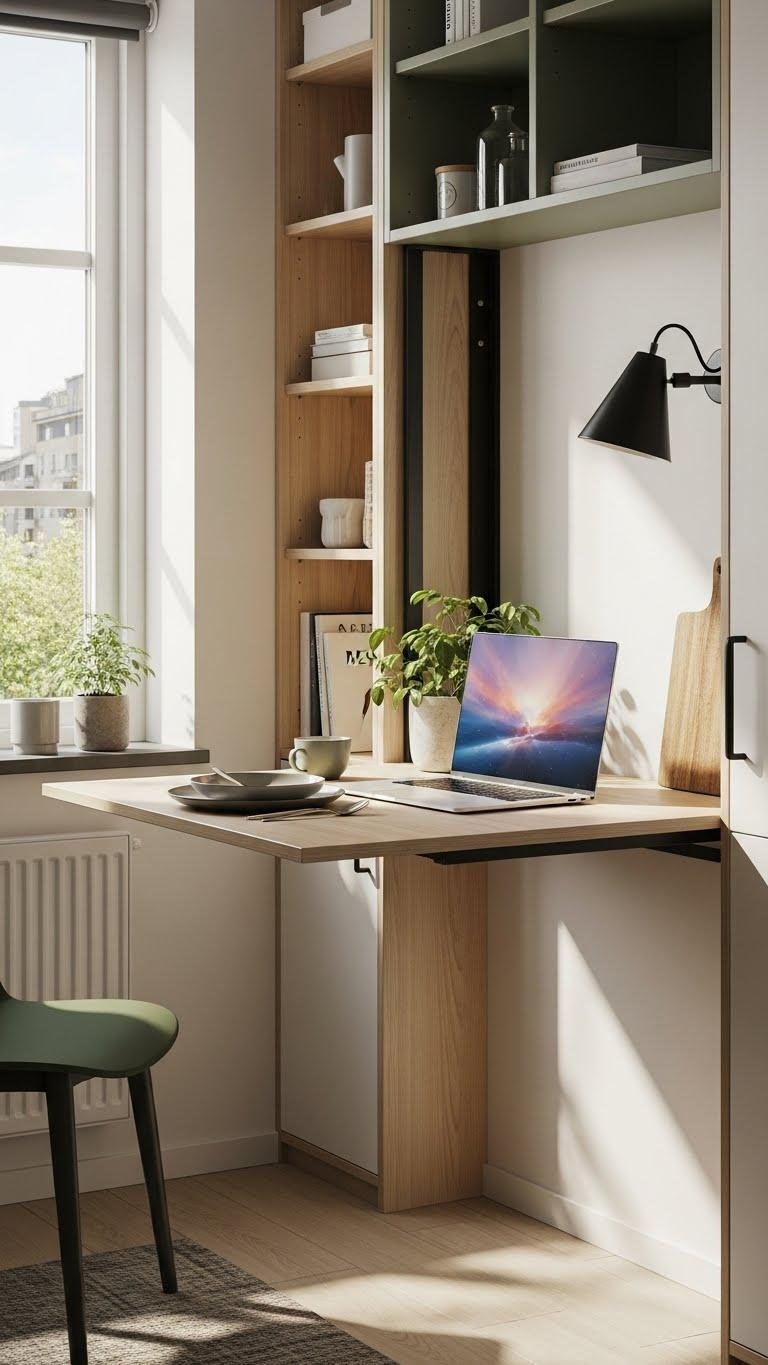
For tight spaces, folding or wall-mounted tables give you full function without the footprint: you can fold them down for dining, work, or hobby projects and tuck them away when you need open floor.
Choose streamlined fold down desks or stylish Murphy tables to free up movement, keep surfaces clutter-free, and adapt rooms instantly. Install at comfortable height and add simple storage.
Repurpose Items to Add Function Without Clutter
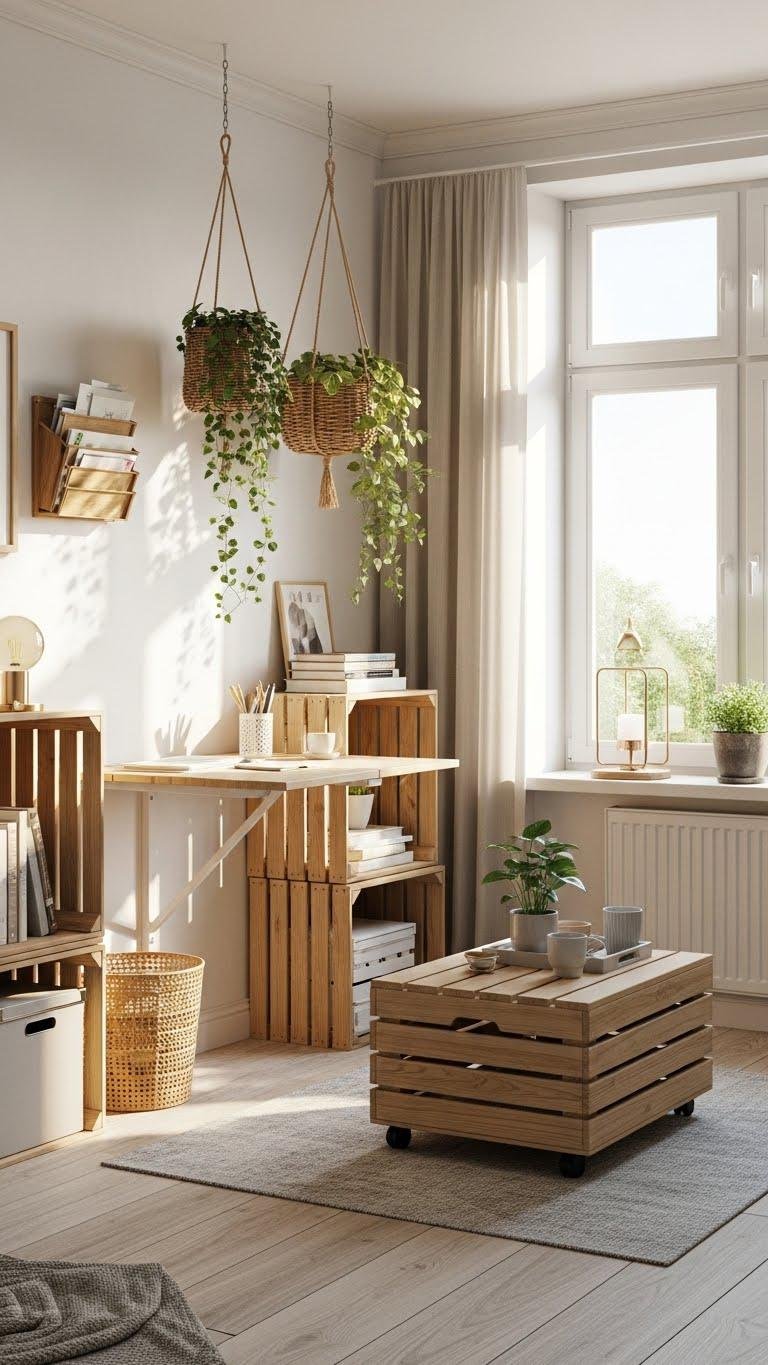
Once you fold away a wall-mounted table, look around for pieces that can pull double duty so the room stays useful without feeling crowded.
Choose upcycled crates as modular shelving or a rolling coffee table.
Mount hanging baskets for plants or mail to free surfaces.
Pick streamlined multipurpose items, embrace airy layouts, and keep choices intentional so your tiny space feels open and liberated.