
You’ll create calming shelves by editing intentionally: pick soft creams, warm woods, and muted sage, limit objects, and let negative space breathe between clusters. Use odd-numbered groupings, mix matte ceramics with textured baskets, and alternate book orientations for gentle rhythm. Keep top shelves decorative-only and hide clutter in matching woven containers. Start with that framework — there’s a simple set of 24 ideas to refine each shelf further.
Choose a Neutral Palette With Warm Wood Tones
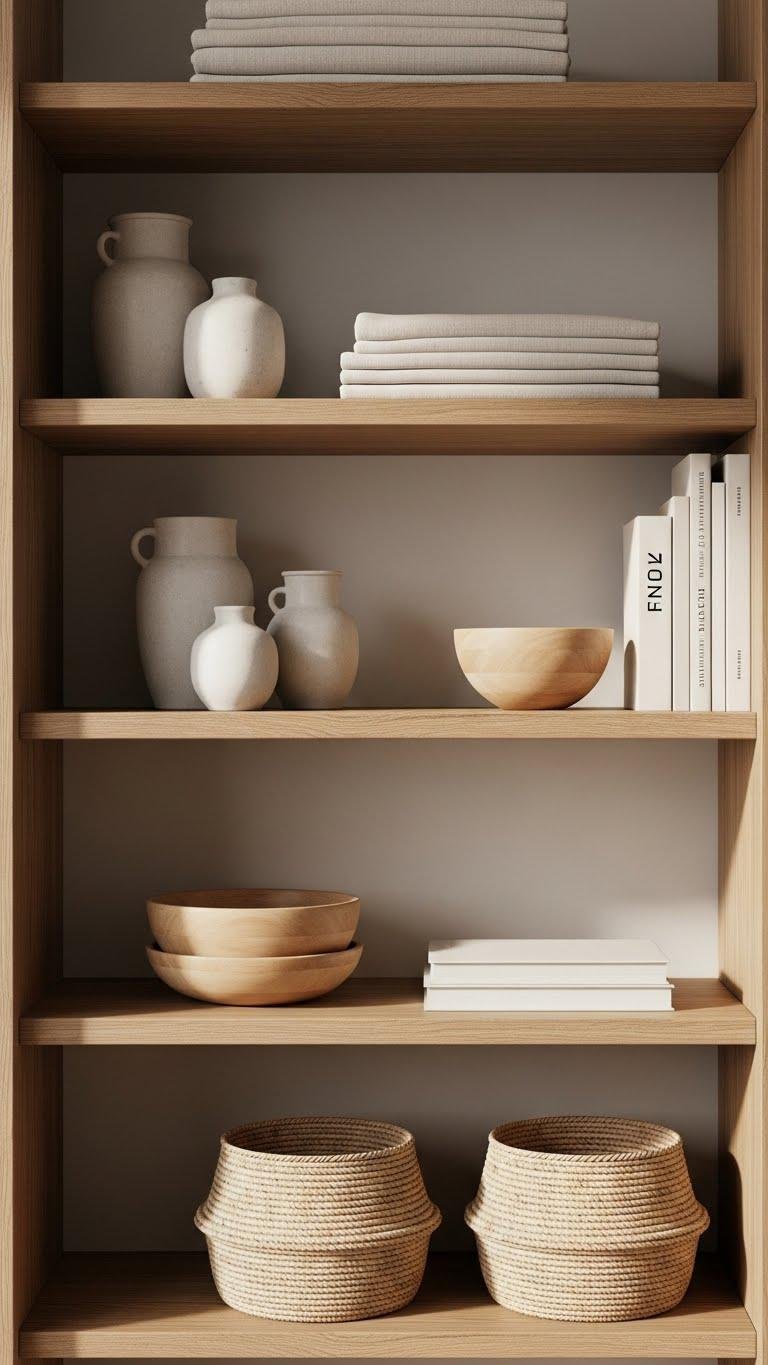
Start with a neutral palette and let warm wood tones do the heavy lifting; they anchor the shelf with natural depth while keeping the overall look calm and curated.
You’ll choose soft creams, stone grays, and warm timber to craft restraint. Embrace natural textures and muted contrasts, pairing linen, matte ceramics, and smooth wood so each piece breathes and you feel unconstrained.
Arrange Shelves Using Negative Space

When you leave deliberate breathing room between objects, each piece reads clearer and the shelf feels calm rather than cluttered. You create intentional negative margins and breathing zones, letting form and texture speak.
Place fewer items, vary heights, and step back to feel the rhythm. This curated restraint gives you freedom to refresh displays easily and keep the space peaceful and purposeful.
Group Objects in Odd-Numbered Clusters

Three is a simple rule that instantly brings balance: group objects in odd-numbered clusters so each arrangement feels intentional and lively rather than static.
You’ll create asymmetrical balance by varying heights and depths, letting negative space breathe.
Mix materials for subtle texture contrast, keep palettes muted, and arrange with restraint so each trio reads calm, curated, and free rather than cluttered.
Use Woven Baskets for Concealed Storage

Tuck woven baskets into open shelving to quietly hide clutter while keeping the look warm and textural.
You’ll choose natural fiber options that feel airy yet durable, aligning with a minimalist aesthetic.
Opt for baskets with hidden handles so surfaces stay clean and uncluttered.
Arrange a few varied sizes to maintain balance, giving you easy access and a liberated, cohesive shelf composition.
Incorporate Matte Ceramic Objects

Introduce matte ceramic objects to add quiet sculptural weight and tactile contrast to your shelves. Choose handmade matte pieces with simple forms and neutral tones so each item breathes. Mix sizes and a single speckled glaze to imply craft without clutter.
You’ll curate calm, keep visual flow, and enjoy objects that feel personal yet restrained—freeing your space and mind.
Limit Accent Color to One Muted Hue

Why choose a single muted hue for accents? You’ll create calm cohesion by limiting a muted accent to one gentle color, letting each piece breathe.
Curate objects with restraint, use tonal layering to build subtle depth, and avoid visual clutter. This focused approach frees you to rearrange confidently, keeping shelves minimal, balanced, and quietly expressive.
Layer With One Large Low-Contrast Artwork

When you layer a single large, low-contrast artwork behind your objects, it anchors the display without shouting for attention; the subtle tones create depth and let curated pieces sit comfortably in front.
You’ll embrace muted texture and soft contrast to keep the shelf serene, guiding the eye while preserving openness. Choose one calm piece, let it breathe, and arrange simply around it.
Lean Art Against the Shelf Back
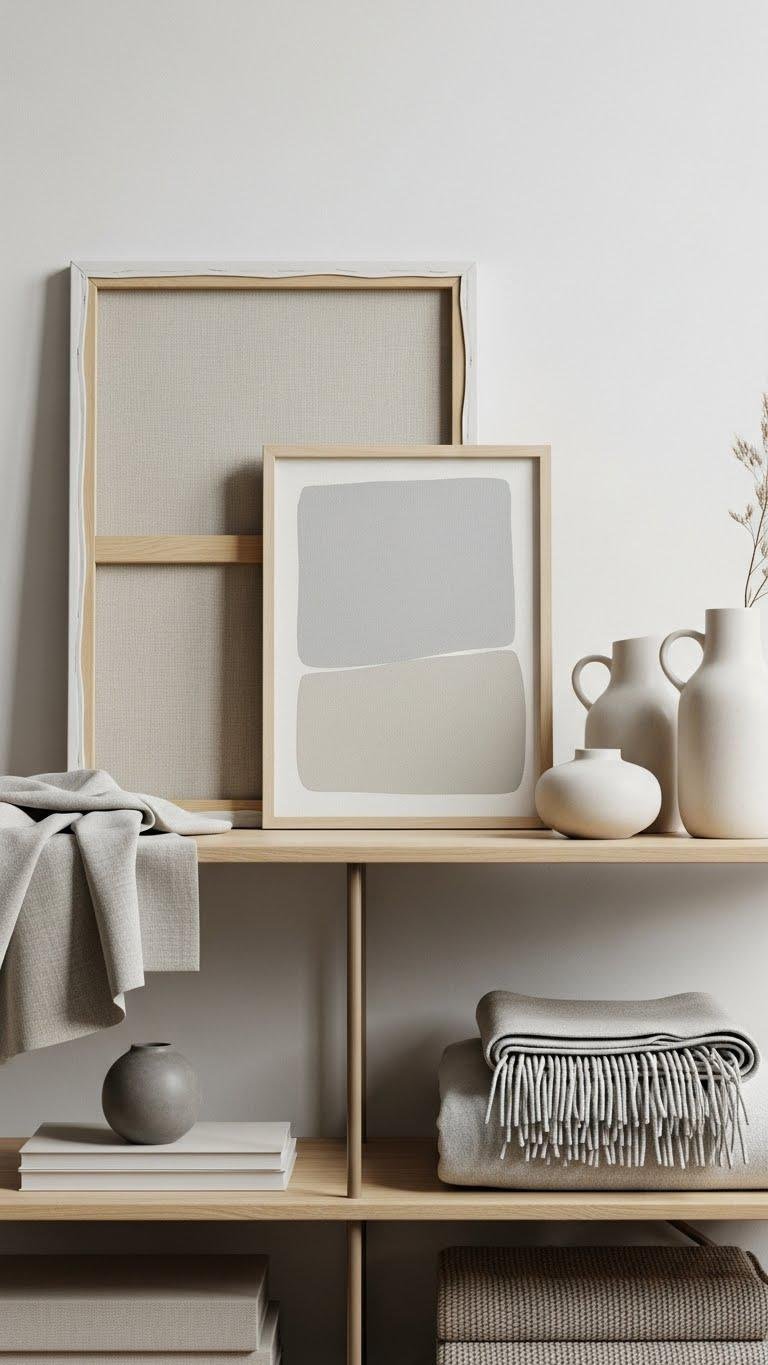
Lean a framed piece or unframed canvas against the shelf back to add instant depth without sacrificing openness. You’ll balance lean frames with low-contrast art and let soft textures—linen, matte ceramics, a wool throw—sit nearby.
Keep negative space intentional, rotate pieces easily, and choose a muted palette so the shelf feels curated, airy, and liberated rather than cluttered.
Add a Small Thin-Framed Mirror
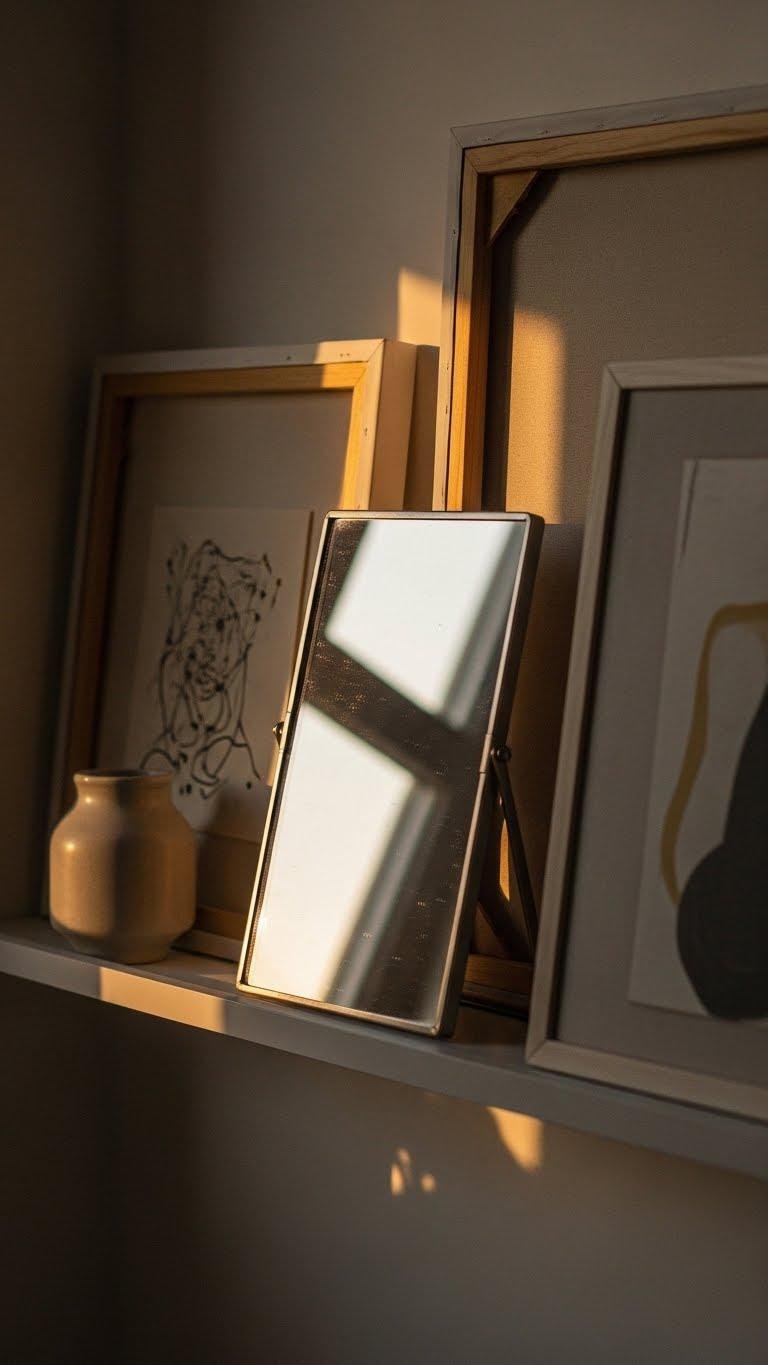
After leaning art for depth, slip a small, thin-framed mirror onto the shelf to amplify light and widen the visual field without adding bulk.
Choose a slender antique frame or matte metal to keep things effortless. Position it with a slight tilted reflection to catch morning sun and nearby objects, creating layered views that feel open, intentional, and quietly liberating.
Back Shelves With Soft Matte Paint or Subtle Wallpaper

If you want the shelf to feel intentional rather than cluttered, paint or paper the back in a soft matte hue or a subtle pattern to anchor the display and calm the eye.
Choose muted velvet tones or a pale scalloped trim wallpaper to create depth without fuss. You’ll edit objects down, letting texture and restrained color give the space breathable, effortless clarity.
Place Low-Maintenance Plants Strategically

When you add low‑maintenance plants to a shelf, think of them as living punctuation—small, deliberate accents that bring texture and life without fuss.
Place low water succulents in sunlit nooks, group a faux succulent mix with a single pot for balance, and leave breathing space around each piece.
You’ll enjoy a calm, uncluttered display that feels free and intentional.
Store Everyday Items Behind Closed Compartments
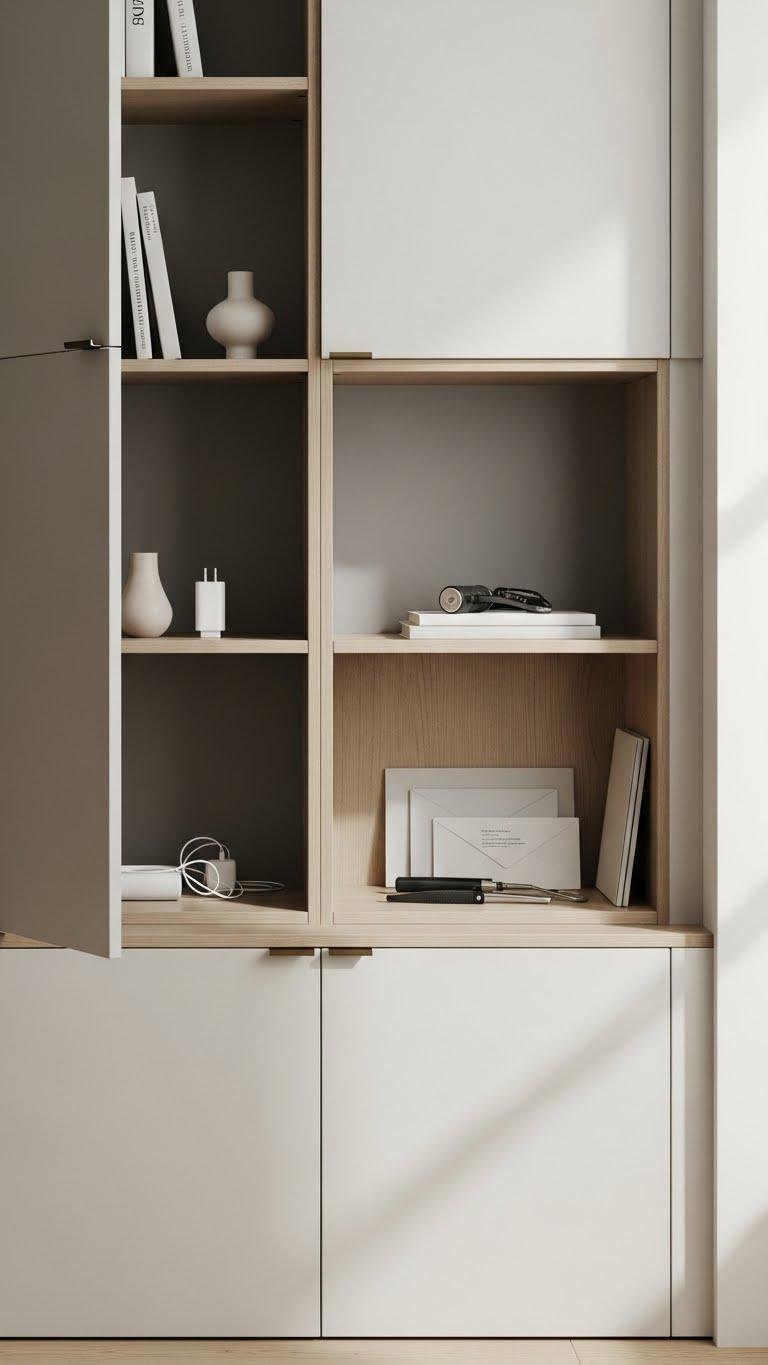
If you want your shelves to look calm and curated, tuck everyday clutter behind closed compartments so the visible surfaces stay intentional and serene.
You’ll reclaim space and ease by using hidden cubbies and simple cabinet fronts that hide chargers, mail, and small tools. Choose subtle hardware, maintain clear zones, and let the closed storage offer a sense of freedom and effortless order.
Use Matching Storage Containers for Visual Calm

Often you’ll find that matching storage containers instantly quiet a shelf’s visual noise, giving every item a deliberate place and a cohesive rhythm.
You’ll choose containers with subtle color coordination to free your mind and speed retrieval. Keep shapes simple, materials tactile, and use a discreet label system so you can maintain order without fuss, letting the shelf feel open and intentionally calm.
Fold Linen or Cotton Textiles on Lower Shelves
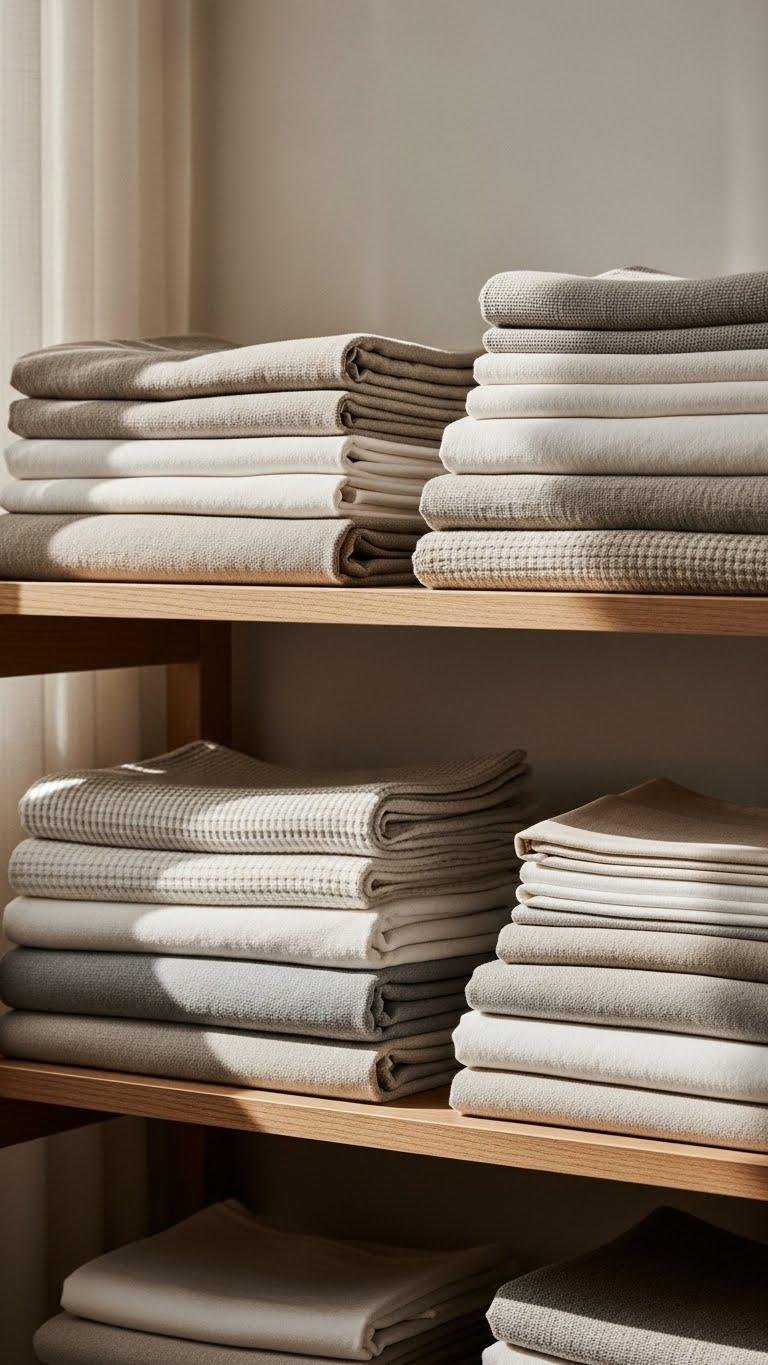
When you fold linen or cotton neatly and place it on lower shelves, the gesture grounds the overall composition and adds a soft, usable element to your display.
You’ll favor simple linen folding and mindful cotton stacking in neutral tones, creating calm, accessible layers. Tuck edges, keep gentle rhythms, and let tactile softness invite touch while maintaining an uncluttered, liberated aesthetic.
Keep Consistent Object Heights Within Groupings

Regularly group items by similar heights so your eye reads each cluster as a single, calm unit.
You’ll arrange books, vases, and boxes with varying stack heights but consistent top lines, creating a balanced visual rhythm.
Keep negative space intentional, limit contrast, and let each grouping feel inevitable.
This restrained approach frees you to edit boldly and live with fewer, more intentional objects.
Scale Objects to Shelf Dimensions

Think about how each object relates to the shelf around it: pick pieces that fit comfortably without crowding or looking lost. You’ll use scale models and simple proportion guides to choose heights and depths that breathe. Arrange taller items with low companions, leave negative space, and trust restraint. This curated, minimalist approach gives you freedom to edit until balance feels effortless.
Favor Matte and Satin Finishes Over High Gloss

Often you’ll find that matte and satin finishes quietly elevate a shelf’s composition by reducing glare and emphasizing form, texture, and color harmony.
You’ll choose soft touch finishes to invite handling and calm presence, pair them with muted metalwork for subtle contrast, and keep surfaces restrained.
This approach frees your display from visual noise, letting curated items breathe and the arrangement feel intentional.
Introduce One Tactile Focal Object per Shelf

Choose a single tactile object to anchor each shelf and let everything else support it; you’ll create a quiet point of interest that invites touch without overwhelming the composition. Pick a piece that offers tactile contrast — a woven bowl, smooth stone, or linen-wrapped book — so the item becomes a sensory anchor. Arrange sparingly, keep lines clean, and let each object offer freedom through calm restraint.
Maintain Clear Breathing Room by Adjusting Shelf Heights

When you raise or lower a shelf, you give each object room to breathe and the overall composition a calmer rhythm.
You’ll use adjustable brackets to fine-tune spacing, creating intentional airflow gaps that prevent cluttered sightlines. Adjust heights to showcase scale, simplify visual weight, and let pieces exist without crowding.
That restraint frees you to edit, collect deliberately, and enjoy a tranquil, airy display.
Reserve Top Shelves for Decorative-Only Pieces

After you’ve allowed each object room to breathe, think of the top shelf as a quiet stage for purely decorative pieces.
You’ll curate a minimal vignette: one sculptural object, a small plant, or an heirloom display item.
Rotate items for seasonal swaps to keep the view fresh.
This approach honors simplicity, gives you freedom, and keeps lower shelves practical.