
You’ll create an open-plan home that looks intentional, not accidental, by arranging zones with purpose and editing ruthlessly. Use anchoring rugs, low-profile furniture, and clear 30–36″ aisles to preserve sightlines, then layer lighting and textures so each area feels distinct yet related. I’ll show practical moves—from partial dividers to matching accents—that keep the space airy and calm, and a few placement rules that change everything.
Define Clear Zones With Furniture Groupings

When you arrange furniture to create distinct seating, dining, and work areas, you make an open plan feel intentional rather than chaotic.
You’ll define clear zones by orienting pieces for traffic flow, keeping sightlines open, and grouping at conversational scale so conversations feel natural. Choose versatile furnishings, align lighting, and leave breathing room—so you get freedom to move, adapt, and live without clutter.
Anchor Seating With Appropriately Sized Rugs

Often the easiest way to ground a seating area is with a properly sized rug that ties furniture into a single, intentional zone. You’ll choose sizes so front legs sit on the rug, or opt for corner rugs to define intimate edges. Combine neutral anchor pieces with layered textures—wool, jute, and a patterned top—so your space feels open yet intentionally composed.
Use Partial Dividers to Separate Functions
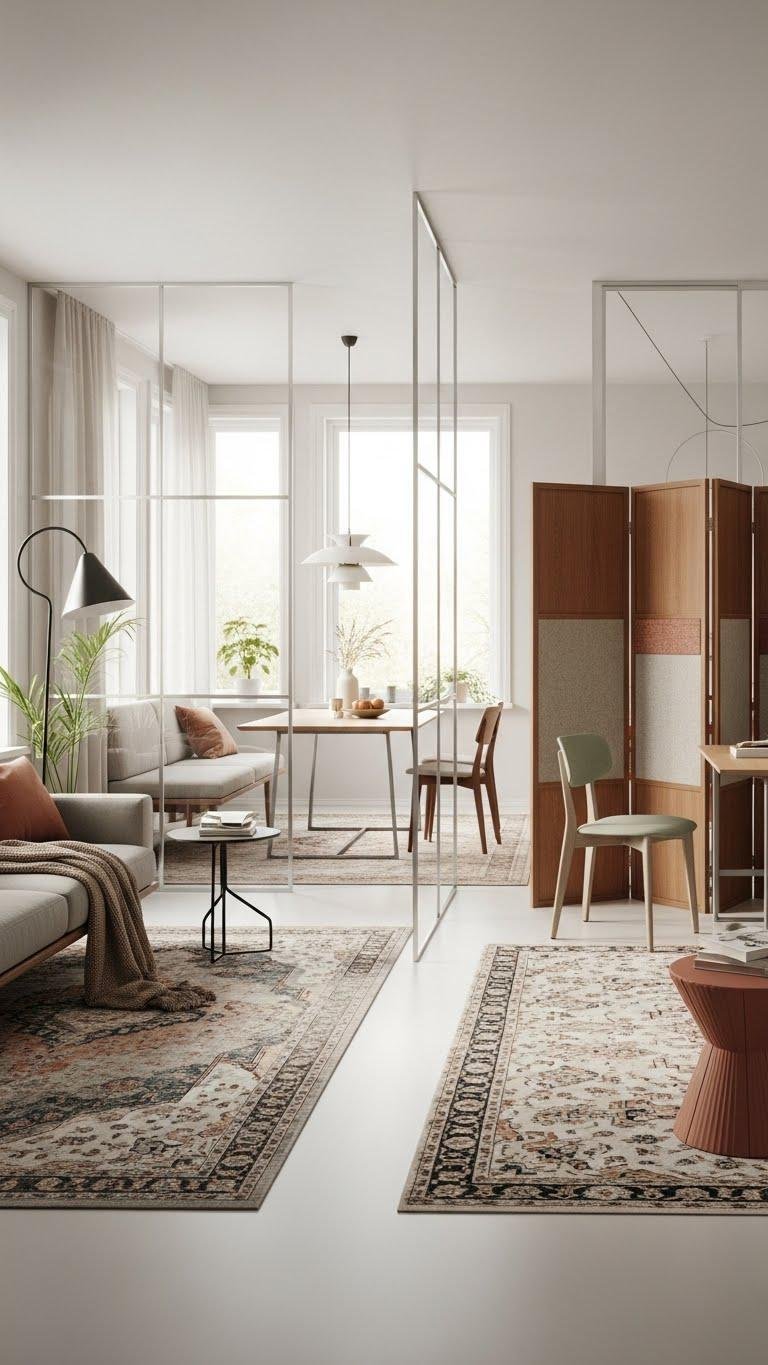
After anchoring your seating with the right rugs, you can keep the open feel while still carving out purpose-built zones by adding partial dividers. Use low-profile glass partitions to preserve sightlines and light, or elegant folding screens to introduce texture and movement.
Place them to define dining, work, or lounge areas without closing space, so you stay free to adapt layout instantly.
Create Vertical Zoning With Ceiling Fixtures

If you want rooms that feel purposeful from top to bottom, use ceiling fixtures to draw the eye and define each zone. Mix layered pendants over dining and reading nooks, recessed cans for circulation, and acoustic baffles above noisy areas.
You’ll create vertical boundaries without walls, control light and sound, and keep the open plan airy while letting each function breathe independently.
Align Major Sightlines on Deliberate Axes

Ceiling fixtures set vertical boundaries, but sightlines give an open plan its guiding geometry—so align major axes to choreograph movement and focus. You’ll arrange furniture and openings to reinforce sightline symmetry, letting views terminate at an axis focalpoint like a window, hearth, or art. This creates intuitive flow, confident direction, and breathable freedom without crowding sightlines or breaking rhythm.
Maintain a Restrained 3–4 Color Palette

When you limit your scheme to three or four coordinated colors, the room reads as confident and calm rather than noisy or fragmented. Choose a dominant neutral, a supporting muted jeweltones splash, and one or two monochrome accents for furniture and textiles.
That restraint lets zones breathe, keeps movement effortless, and gives you freedom to layer texture and shape without the chaos of competing hues.
Repeat Key Materials Across Zones

After you’ve settled on a calm 3–4 color palette, carry a few key materials—wood tone, metal finish, or textile—throughout the open plan to unify separate zones. Use natural materials and tonal repetition to anchor sightlines: repeat a walnut table edge, brass lamp, or linen throw so each area feels distinct yet connected.
You’ll gain cohesion without losing freedom.
Choose Complementary Furniture Silhouettes

Because your eye needs clear pathways, pick furniture silhouettes that speak the same visual language across zones—think low-profile sofas that echo the clean lines of your dining chairs and a reading chair whose backrest repeats the sofa’s curve.
You’ll favor proportional profiles to maintain flow, then introduce contrasting curves sparingly to add energy. Trust your instincts; keep shapes balanced and unforced.
Coordinate Trim and Finish Details Throughout

Carry the same eye for silhouette into the small details by coordinating trim and finishes so every edge and hardware piece feels intentional.
You’ll use consistent molding lines and matching hardware to tie rooms visually, choosing profiles and metals that repeat and resonate.
That restraint creates flow, opens sightlines, and gives you the freedom to layer color and texture without visual conflict.
Scale Furniture to the Room’s Proportions

When a room’s proportions guide your choices, you’ll avoid pieces that feel awkward or overpowering and create a balanced, comfortable layout. Choose right sized sofas and tables that leave clear pathways, opt for proportioned seating to anchor conversation areas, and pick scaled lighting that complements ceiling height.
Edit boldly—fewer, well-sized elements give you freedom to move and breathe.
Balance Heavy and Light Pieces

If you want a room that feels grounded without becoming heavy, balance dense, weighty pieces with lighter elements that give the eye places to rest. Place weighted art low on a wall to anchor a seating area, then counter with airy shelving and lightweight tables nearby.
Let contrast create openness; choose forms that breathe so you can move and live freely.
Ensure Ample Circulation Paths

Think through how people move and give them clear, unobstructed lines between key zones—entry, seating, dining, and work areas—so traffic never forces awkward detours. You’ll create intentional clear pathways that invite movement and freedom. Keep furniture low and aligned, leave unobstructed thresholds, and resist crowding. Measure aisles, allow 30–36 inches for flow, and edit objects that block sightlines.
Position Dining and Lighting to Relate to Seating

Pull dining and lighting into conversation with your seating so the room reads as a single, purposeful scene.
Center table placement relative to sofas and sightlines so dining feels connected, not tacked on.
Use pendant alignment over the table and toward seating to create layered zones.
You’ll maintain flow, sightlines, and a liberated, intentional layout that invites movement and conversation.
Fit Rugs to Seating and Dining Proportions

Anchor the room by sizing rugs to the furniture they serve: let the dining rug be large enough that chairs stay on it when pulled back, and choose a seating rug that extends under all front legs of sofas and chairs to unify the conversation area. You’ll use proportional padding to frame zones and patterned alignment to steer sightlines, creating open, airy freedom with confident, clean edges.
Layer Ambient, Task, and Accent Lighting

After you’ve defined zones with well-sized rugs, bring light in to sculpt those areas: layer ambient, task, and accent lighting so each zone reads clearly and functions effortlessly.
You’ll combine overhead ambient with focused task fixtures and directional accents, using dimmable layers to control mood.
Match color temperature across fixtures so the open plan feels cohesive, flexible, and free to adapt to any activity.
Add Soft Furnishings and Acoustic Treatments

Often overlooked, soft furnishings and acoustic treatments transform an open plan from echoing and sterile into warm, livable, and focused — you’ll use rugs, curtains, upholstered pieces, and wall/ceiling panels to absorb sound, define zones, and add tactile layers.
Choose thick area rugs, soundproof curtains, plush sofas and textured throws. Add cork panels for discreet absorption and sculptural warmth that frees movement and calm.
Zone Audio and Conceal Wiring

Bring audio into each zone deliberately and hide the wires that would otherwise clutter your clean open-plan lines. You’ll use invisible speakers for crisp sound without visual weight, zoning music to living, dining, and workspace.
Run feeds through cable raceways and in-wall conduits, keeping surfaces clear. This gives you freedom to move and entertain while preserving that uncluttered, airy aesthetic.
Integrate Built-In Storage and Benches

When you design built-in storage and benches into an open plan, you’ll reinforce flow and keep clutter out of sight while creating useful, sculptural seating and staging areas.
Use built in seating along traffic lines and beneath windows to anchor zones without walls. Carve discreet window storage and cubbies for books, gear, or baskets so your space stays liberated, tidy, and intentional.
Choose Multipurpose Furniture for Flexibility

Think in regards to pieces that work twice as hard: a sofa that converts to a guest bed, a coffee table with hidden storage, or a bench that folds out into a workspace keeps your open plan adaptable without adding visual clutter. You’ll choose convertible ottomans and nested tables to shift function fast, streamline sightlines, and keep freedom intact — smart, minimal, and fully functional.
Use Open Shelving With Curated Negative Space

Because open shelving shows everything at a glance, you’ll want to edit what’s visible so each shelf breathes—leave deliberate gaps between objects, balance stacks with single sculptural pieces, and mix textures to keep the display readable. You’ll use negative spacing to highlight form, create minimalist vignettes that feel intentional, and arrange items so each piece anchors airiness without looking sparse or cluttered.
Conceal Kitchen Appliances and Pantry Storage

Tuck away bulky gadgets and pantry clutter behind coordinated doors and drawers to keep your open concept kitchen looking streamlined and calm. You’ll hide microwaves, mixers, and clutter in a hidden appliance cabinet or a sleek pocket pantry so surfaces stay clear.
Choose uniform fronts, soft-close hardware, and purposeful lighting to preserve openness while granting you freedom, order, and effortless access.
Establish a Single Focal Point per Sightline

Anchor each sightline with a single, intentional focal point so your open layout reads as calm and purposeful instead of fragmented. You’ll choose one hero element per view — a fireplace, artwork, or sculptural lamp — and arrange furniture to direct attention. Use layered sightlines to guide the eye and introduce contrast accents sparingly so each moment feels liberated, clear, and confidently composed.
Mix Textures While Keeping Colors Cohesive

While you keep the palette tight, layer a variety of tactile finishes to create depth and warmth without breaking the visual flow. You’ll mix matte gloss contrasts—velvet cushions, satin cabinets, rough-hewn wood—alongside tactile wallcoverings and woven rugs so each surface reads intentional.
Keep hues unified, vary scale, and let texture do the zoning work; you’ll feel freedom without chaos.
Soften Utilitarian Items With Plants and Decor

Once you’ve let a repeating motif pull zones together, soften the practical pieces that can feel cold or cluttered by introducing plants and carefully chosen decor.
You’ll balance utility with warmth: cluster air purifying plants, add baskets for rhythm, and mask bulky machines with decorative appliance covers. Choose sculptural pots and minimal accents that free the space visually while keeping function immediate and intentional.