
You’ll craft a calm, lived‑in living room by layering warm ambers, soft taupes and muted greiges, then balancing tactile linens, bouclé ottomans and jute rugs for quiet depth. Keep furniture low and edited, anchor the space with a charcoal hearth or oak focal wall, and add sculptural brass lighting for amber pools of light. Follow a few simple rules and you’ll have a serene room that still feels intentional — here’s how to start.
Choose a Soft Beige or Cream Base

Choose a soft beige or cream base to anchor the room with warmth and light; these hues reflect natural light, make spaces feel larger, and create a calm backdrop for texture and color accents. You’ll lean into warm taupe walls or a creamy plaster finish to free the space visually, letting art, plants, and furniture breathe while keeping the mood open, airy, and effortlessly inviting.
Layer Textures With Throws and Rugs

Layer different wood tones to add warmth and visual interest without breaking a neutral scheme. You’ll mix oak, walnut, and ash to create calm rhythm; vary grain direction to guide the eye and imply movement.
Keep silhouettes simple, let finish contrast—matte against satin—define pieces, and choose a dominant tone to anchor the room so you feel free to swap accents seasonally.
Use Monochromatic Off‑White Variations

After you’ve warmed the room with mixed woods, soften the overall look by working in a range of off‑white shades that keep the palette light without feeling flat.
Choose soft whites and warm ivories in paint, textiles, and ceramics to create depth through subtle contrast.
You’ll enjoy a serene, airy space that feels open, intentional, and free from visual clutter.
Introduce Subtle Pattern Through Pillows

When you introduce pillows with delicate patterns—think tiny geometrics, soft ikat, or faint stripes—you add visual interest without breaking the room’s calm. You’ll use pattern layering sparingly: mix solid textures with a pillow or two featuring geometric embroidery to anchor the palette. Choose breathable fabrics, muted hues, and relaxed placements so the sofa feels open, airy, and effortlessly personal.
Add a Statement Neutral Rug

A statement neutral rug can anchor the seating area and pull those subtle patterned pillows together without stealing the show.
Choose textures that offer high‑pile drama or low‑profile weave for contrast, and let muted tones carry your mood.
You’ll use geometric layering with rugs or subtle motifs to define zones, create flow, and keep the room calm yet adventurous.
Bring in Natural Fiber Accents

Bring in natural fiber accents to ground your neutral living room with organic texture and quiet warmth.
You’ll layer jute rugs and a woven light pendant to create gentle movement without clutter. Add a sisal pouf for flexible seating and tactile contrast, and choose linen throws and rattan trays to keep the palette airy.
These elements free the space while staying calming and curated.
Anchor the Room With a Deeper Tone

When you anchor the room with a deeper tone, you give the neutral palette a deliberate focal point that feels grounded and intentional.
Choose a deep charcoal wall or a slate anchor piece—like a fireplace surround or large rug—to add weight without closing the space. Pair with light textiles and metallic accents so the room breathes, yet stays bold and free.
Opt for Clean‑Lined, Minimalist Furniture
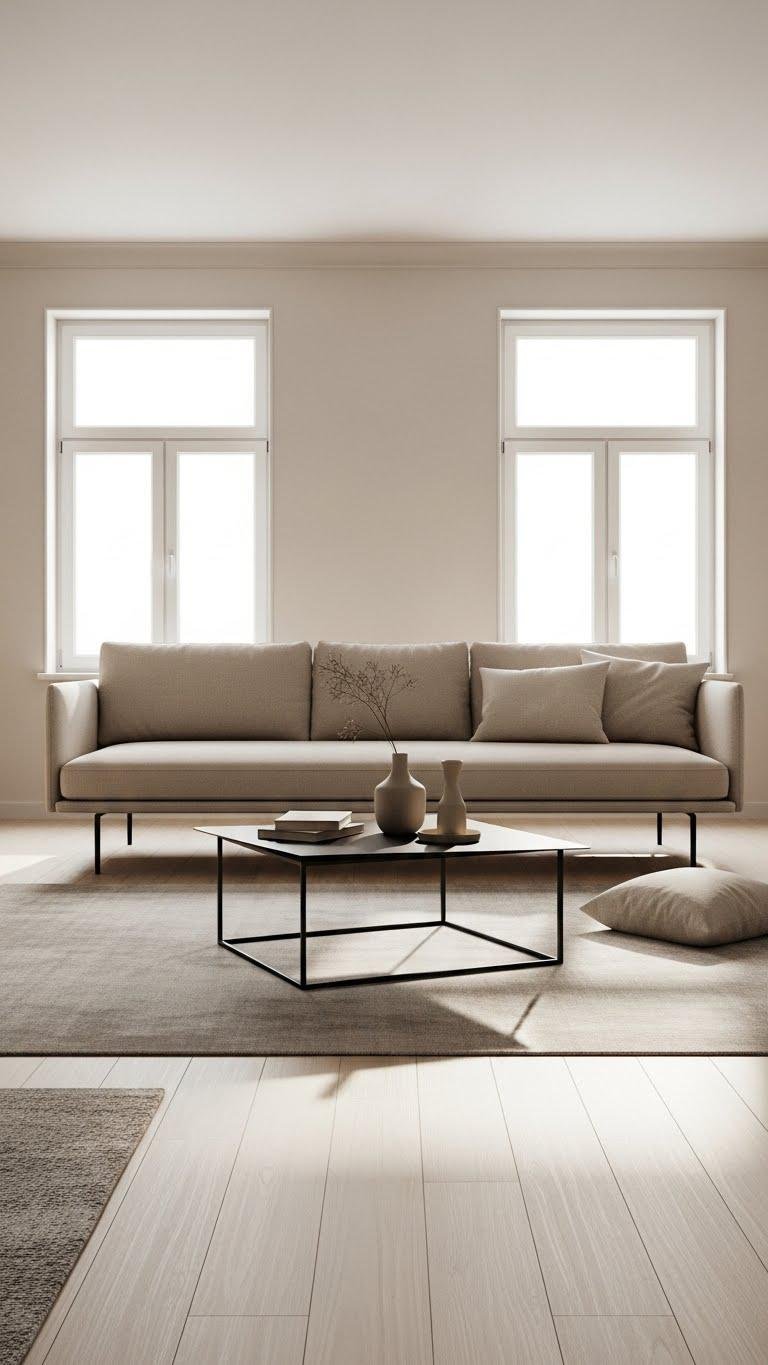
Choose furniture with crisp silhouettes and pared‑back details to keep your neutral living room feeling spacious and intentional. You’ll favor slim profile sofas that float the room and free movement, paired with angular coffee tables for sculptural focus.
Select low‑visual bulk pieces in light woods or matte metals, let texture—not clutter—define warmth, and keep sightlines clean so you feel unencumbered and calm.
Create Conversational Seating Groupings
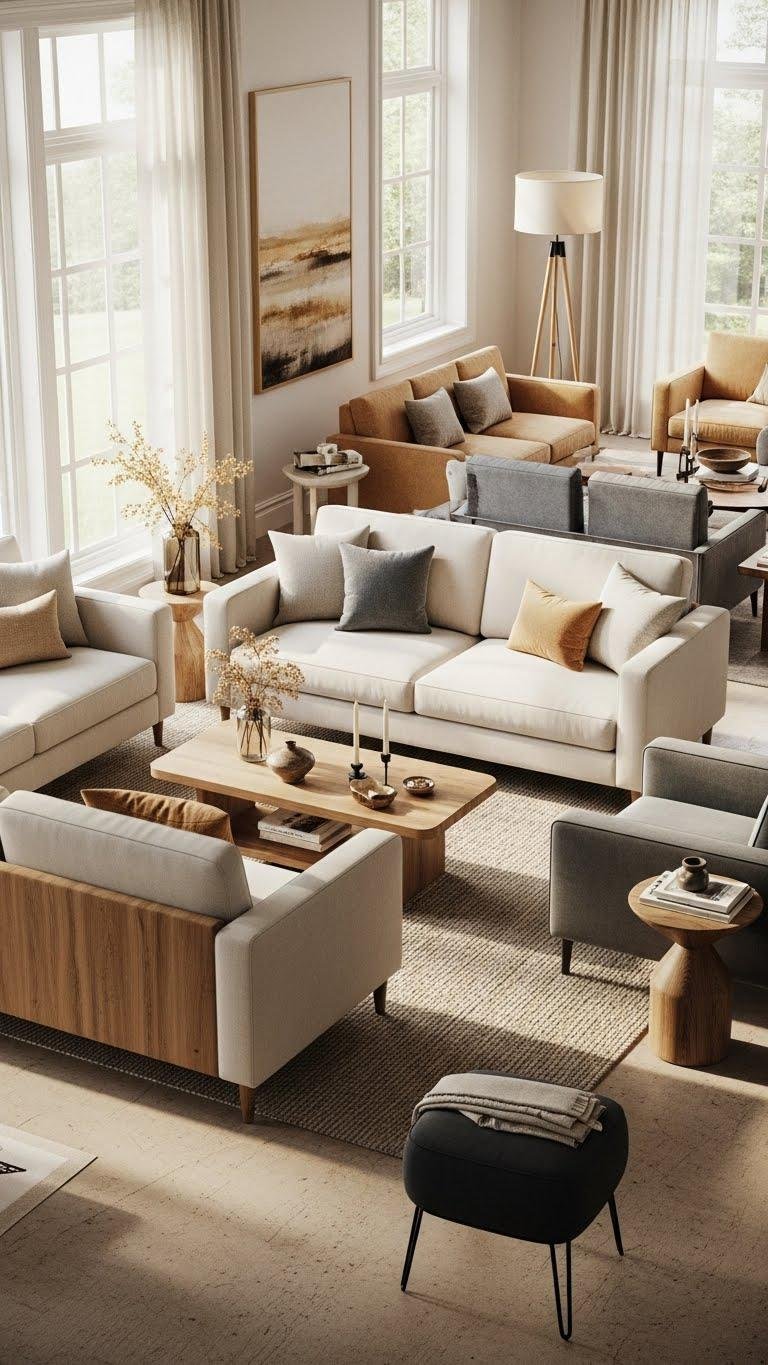
Arrange seating to encourage face-to-face conversation and easy movement through the room. Position sofas and chairs in angled seating to create pockets for intimate conversation without blocking pathways. Use a low-profile coffee table and varied seat heights to keep sightlines open. You’ll want flexible pieces you can shift quickly, fostering a calm, airy layout that invites relaxed, unforced interaction.
Include Multipurpose Furniture for Clutter Control

Maximize calm by choosing multipurpose pieces that hide clutter without sacrificing your room’s airy feel. You’ll love a modular ottoman that stores throws, a convertible coffee table that stashes books and doubles as a surface, and a foldaway desk that tucks away when you need open space. These hidden storage solutions keep sightlines clear, letting your neutral palette breathe and you feel free.
Display Textured Ceramics and Stoneware

After you’ve cleared surfaces with multipurpose pieces, bring warmth back with textured ceramics and stoneware that add tactile interest without cluttering the room.
You’ll select pieces with subtle handmade glazes and organic shapes, placing a couple of minimalist vases and a low bowl on open shelving or a console. Let negative space highlight texture, creating calm, unforced presence and practical beauty.
Use Terracotta or Pale Olive Accents

Bring warmth into a neutral scheme with terracotta or pale olive accents that feel grounded and intentional.
You’ll layer sunbaked clay pottery, woven throws, and matte vases to anchor the room without overpowering it.
Pale olive cushions and art add sage whispers of color that free the space, inviting relaxed movement and quiet confidence while keeping the palette serene and uncluttered.
Hang Ombré or Scenic Neutral Wallpaper

As a subtle focal point, ombré or scenic neutral wallpaper lets you introduce depth and atmosphere without stealing the room’s calm.
Choose an ombre gradient that fades from warm sand to soft gray, or a scenic mural with muted horizons.
You’ll create a sense of openness and movement while keeping a restrained palette, letting furniture and airflow define your relaxed, free space.
Layer Lighting With Warm Color Temperatures

Often you’ll rely on a single overhead light, but layering warm color temperatures gives the room depth and a lived-in glow.
You’ll mix table lamps, floor lights, and wall sconces set to soft dimmers so scenes shift with your mood. Choose amber LEDs for cozy highlights and indirect washes. The result feels open yet intimate, calm without stiffness, and utterly yours.
Choose Statement Fixtures in Neutral Materials

When you pick fixtures that make a quiet statement in neutral materials, they anchor the room without shouting for attention. Choose pieces in antique brass and marbled ceramic to add texture and warmth while keeping tones muted. You’ll balance scale and simplicity: a sculptural lamp, pared-back sconce or low-profile chandelier. These choices feel deliberate, free, and endlessly adaptable to shifting moods.
Add Houseplants for Biophilic Contrast

Against a backdrop of warm greige and tactile linens, introduce houseplants to bring crisp biophilic contrast and a sense of living movement.
You’ll choose sculptural fiddle leaf figs, compact snake plants and air purifying pothos to cleanse and calm. Mix heights, ceramic pots and trailing varieties on shelves and in hanging baskets so the room breathes, feels free and remains effortlessly serene.
Place a Subtle Fireplace or Candle Display

Although you want the warmth to feel effortless, position a low-profile fireplace or grouped candle display so it reads as a gentle anchor rather than a centerpiece. You’ll choose a scented pillar or wickless LED grouping, keep mantel minimalism with sparse objects, and tuck matchstick holders into a drawer. Let soft glow and clean lines offer calm, flexible ambiance without claiming the room.
Select Muted Artwork or Large‑Scale Pieces

After anchoring the room with a soft glow from a low-profile fireplace or candle cluster, bring in muted artwork or a single large-scale piece to reinforce calm without competing for attention. You’ll curate a neutral gallery of textured canvases and muted figuratives that breathe. Choose scale and simple frames to give the space openness, letting art signal freedom while maintaining serene restraint.
Rotate Seasonal Textiles for Refreshing Change
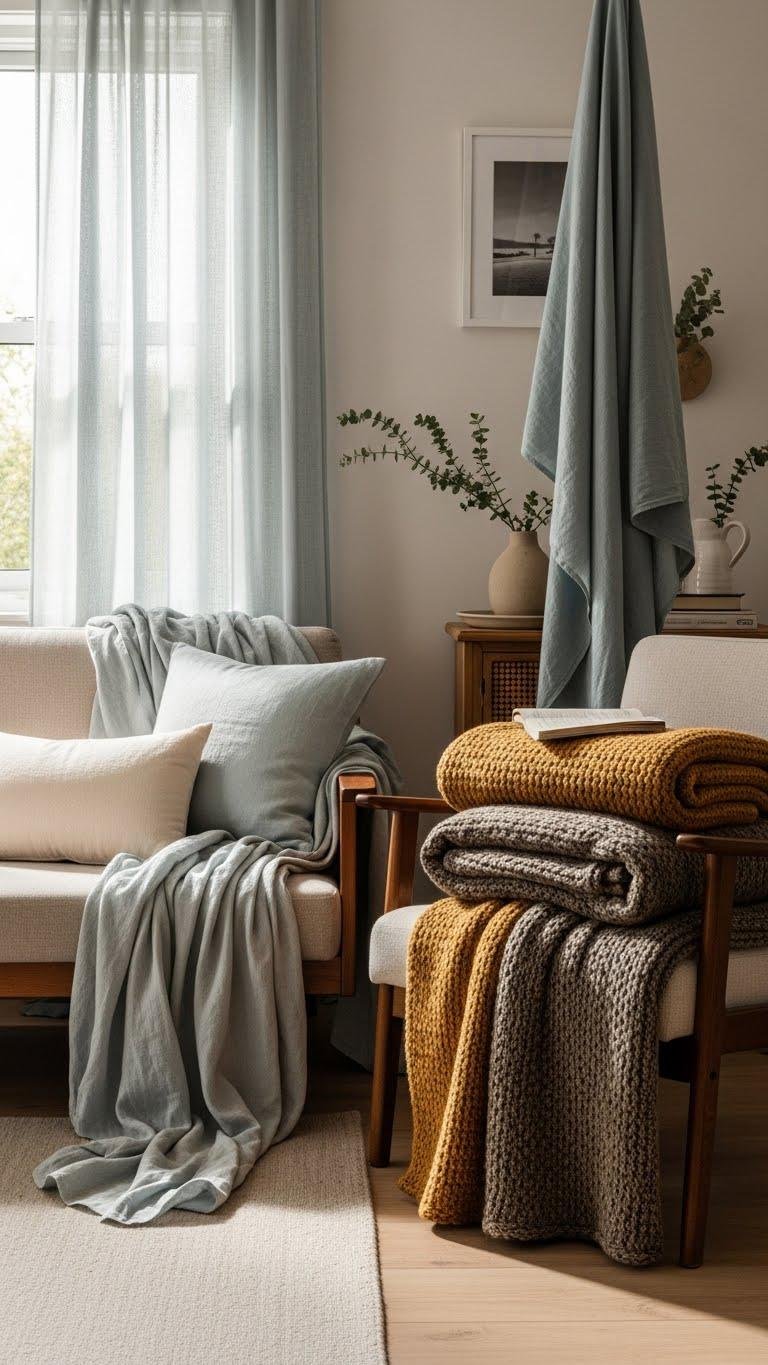
Swap out textiles seasonally to give the room an immediate, low-effort refresh that feels thoughtful rather than fussy.
You’ll embrace seasonal swaps—lighter linens and breezy throws in summer, plush wools and textured weaves in winter—so the space breathes with you.
Thoughtful fabric rotation keeps a neutral palette lively, effortless, and liberating without overwhelming the calm you’ve created.
Maintain Thoughtful Negative Space

Once you rotate textiles to match the seasons, pull back and let negative space do some of the work. You’ll practice measured spacing: leave room around key pieces so each element reads clearly.
Treat floors, walls and tabletops as breathing surfaces that invite movement and calm. Edit decor ruthlessly, keep sightlines open, and let simplicity create a liberating, restful atmosphere.
Use Tonal Contrast to Create Subtle Drama
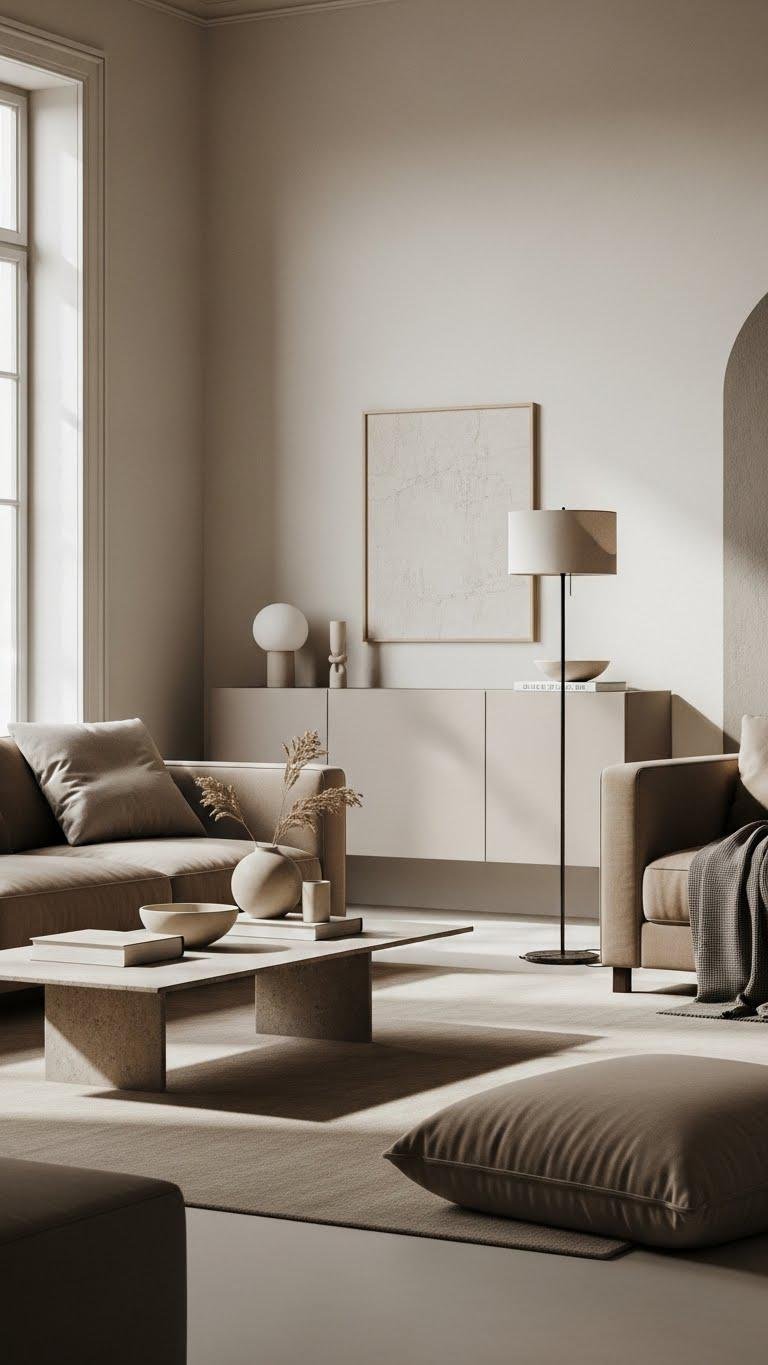
Although neutral schemes favor calm, introducing measured tonal contrast lets you add subtle drama without breaking the serenity.
You’ll work with layered neutrals—ivory, warm taupe, deeper greige—to guide the eye. Use texture and scale to emphasize planes, creating soft shadowing that reads like depth rather than clutter. The effect feels deliberate and freeing, inviting movement while keeping the room quietly composed.
Limit Accent Colors to Small, Intentional Touches
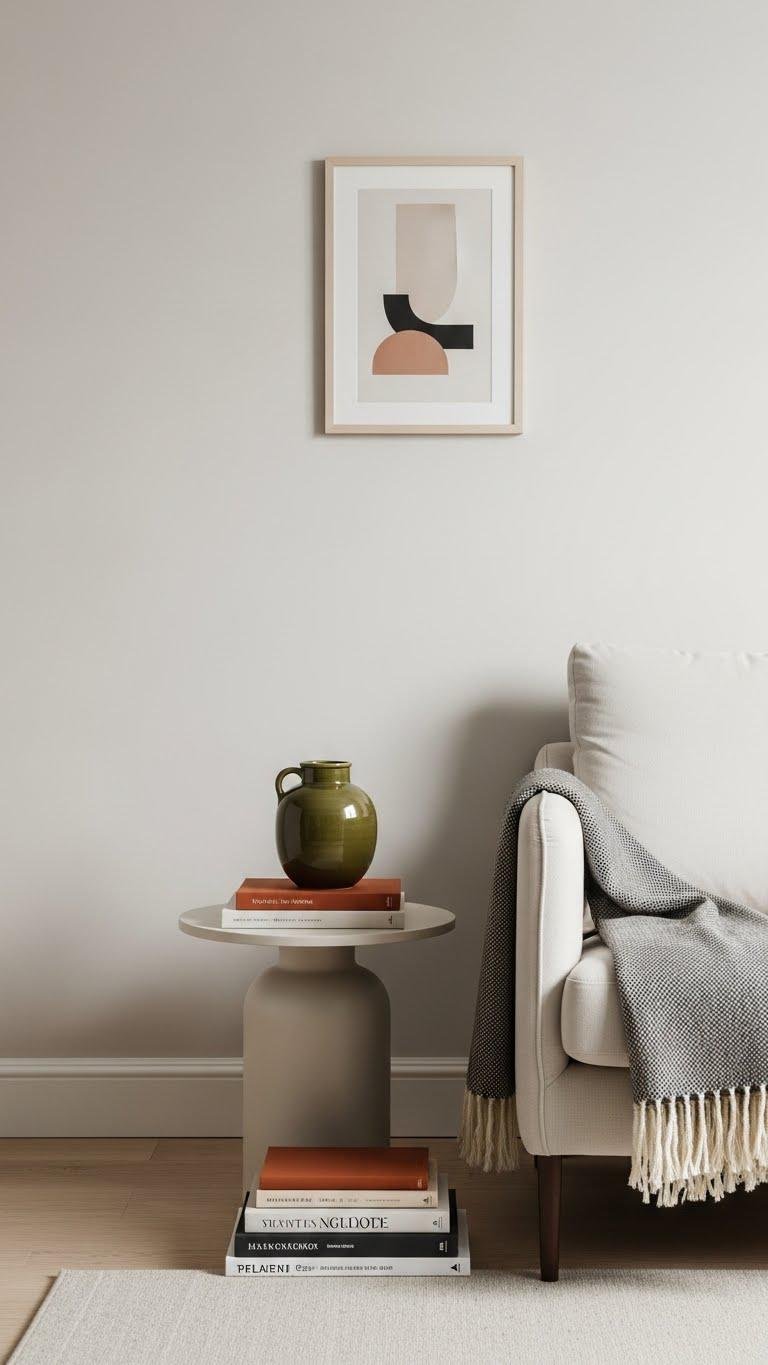
Bring a single accent hue in sparingly and let it punctuate the neutral field—think a hand-thrown ceramic in deep olive, a stack of coffee-table books with a russet spine, or a narrow throw draped over an armchair—so each small element reads as intentional rather than decorative noise.
You’ll practice accent restraint, use tiny swatches and micro accents for focal pops that feel effortless and freeing.