
You’ll create a calm, livable bedroom by starting with a warm neutral base and adding layered textures, low-profile furniture, and soft, dimmable lighting. Think warm greige walls, linen bedding, a nubby wool throw, and a simple jute rug for tactile depth. Small touches—matte paint, satin trim, woven accents, and a few low-maintenance plants—finish the space. Keep going to see 26 practical ways to make it feel quietly restored.
Choose a Warm Neutral Base Color
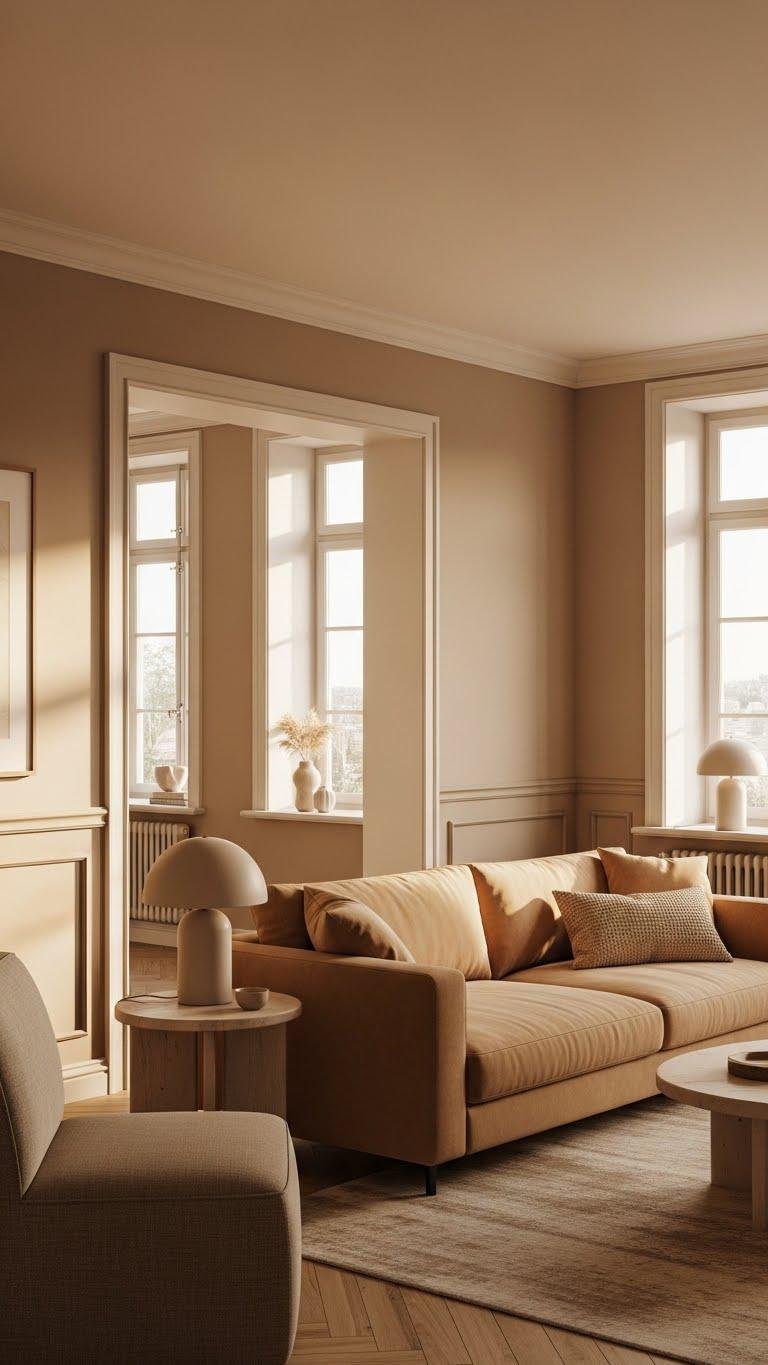
Start by picking a warm neutral as your room’s foundation—think creamy beige, soft taupe, or a warm greige—so everything else feels cohesive and inviting.
Choose sun kissed taupe or toasted almond for walls or larger pieces; they anchor light, calm movement, and simplify choices.
Keep finishes matte, trims slightly lighter, and let furniture shapes and negative space give the room freedom.
Layer Textures for Cozy Depth
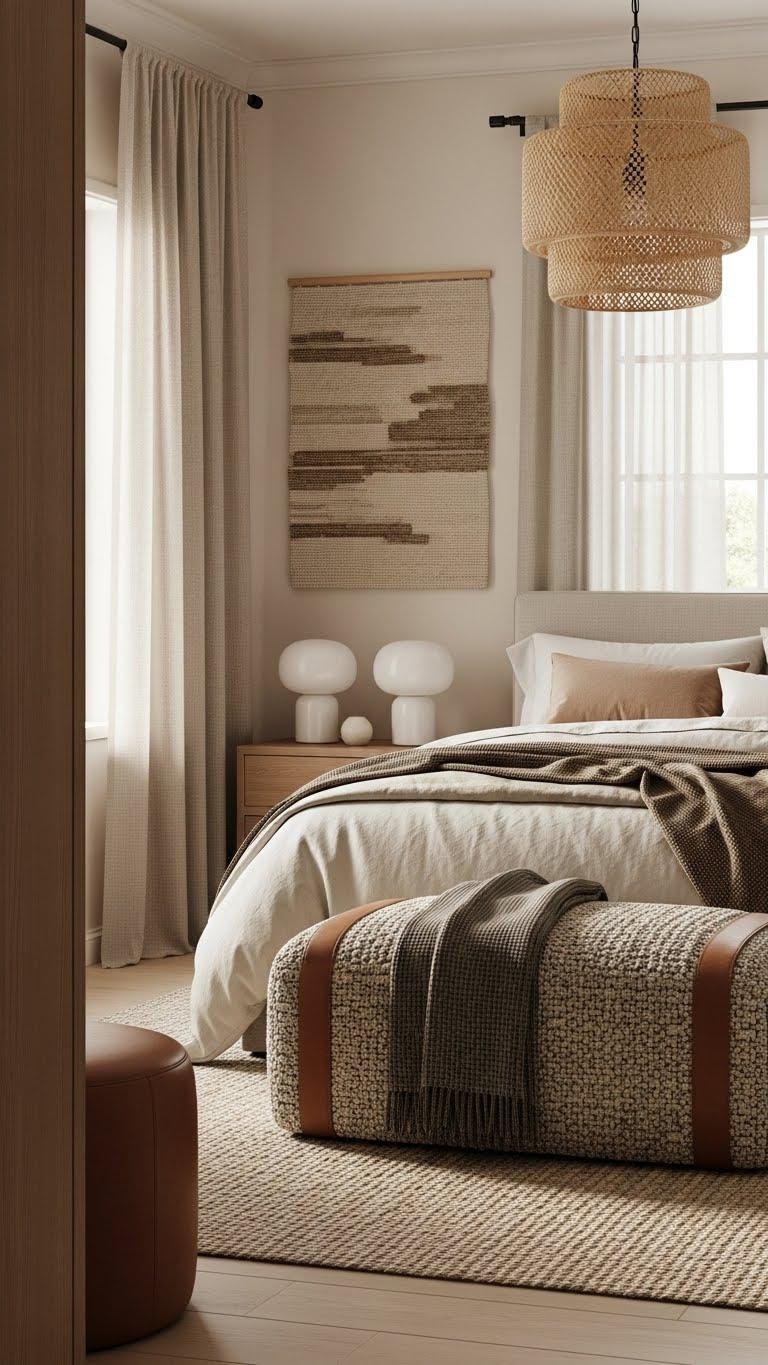
Once you’ve settled on a warm neutral base, build cozy depth by layering varied textures—think nubby wool throws, linen curtains, a low-pile jute rug, and matte ceramic lamps. Add woven wallhangings for vertical interest and tactile contrast, place a boucle ottoman at the foot of the bed, and mix smooth wood, soft leather, and matte metals so your bedroom feels calm, free, and inviting.
Introduce Green-Based Neutrals
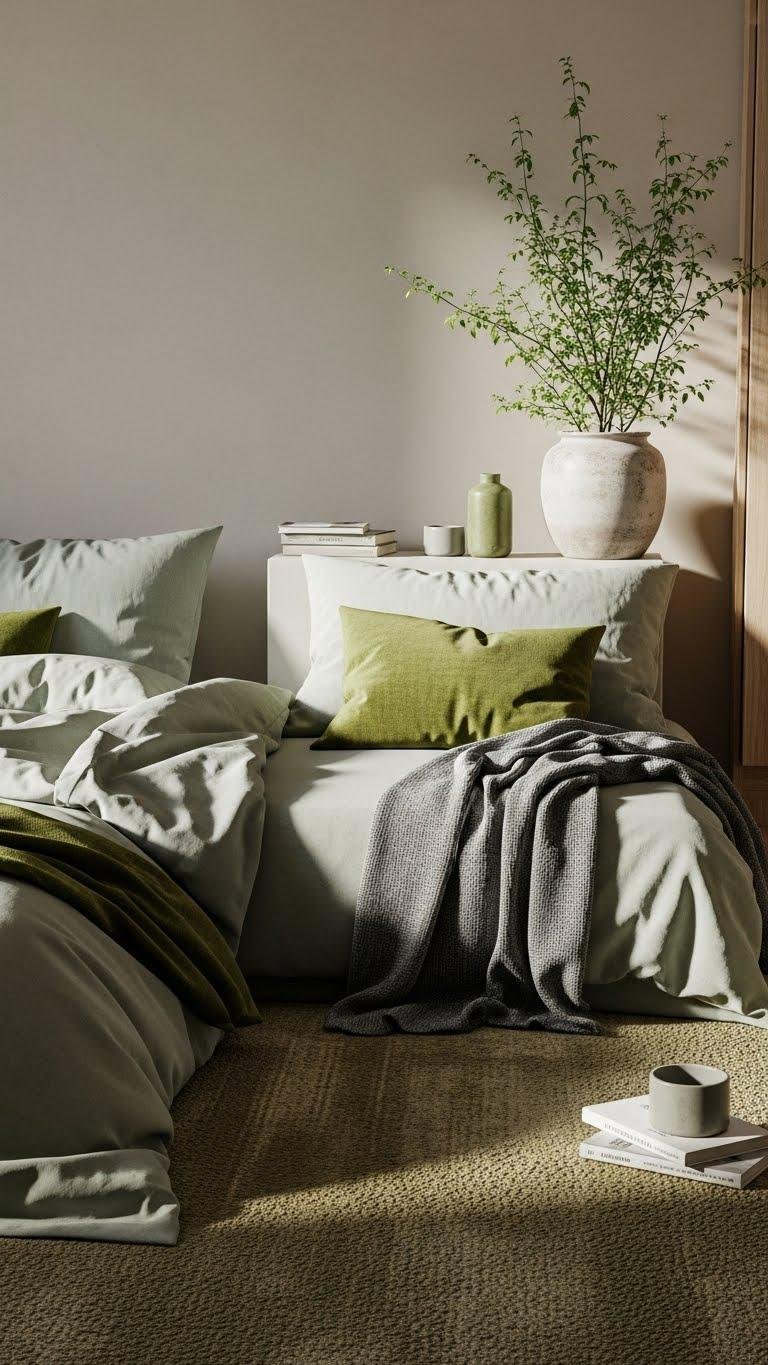
Introduce green-based neutrals to bring a quiet, organic warmth into the room—think soft sage, muted olive, and grayed moss that read as neutral but carry subtle life.
Choose bedding or a rug with sage undertones, add moss accents through pillows or a planter, and keep lines simple. You’ll create a calm, free-feeling space that still feels grounded and alive.
Use Creamy Off-Whites to Brighten Small Rooms
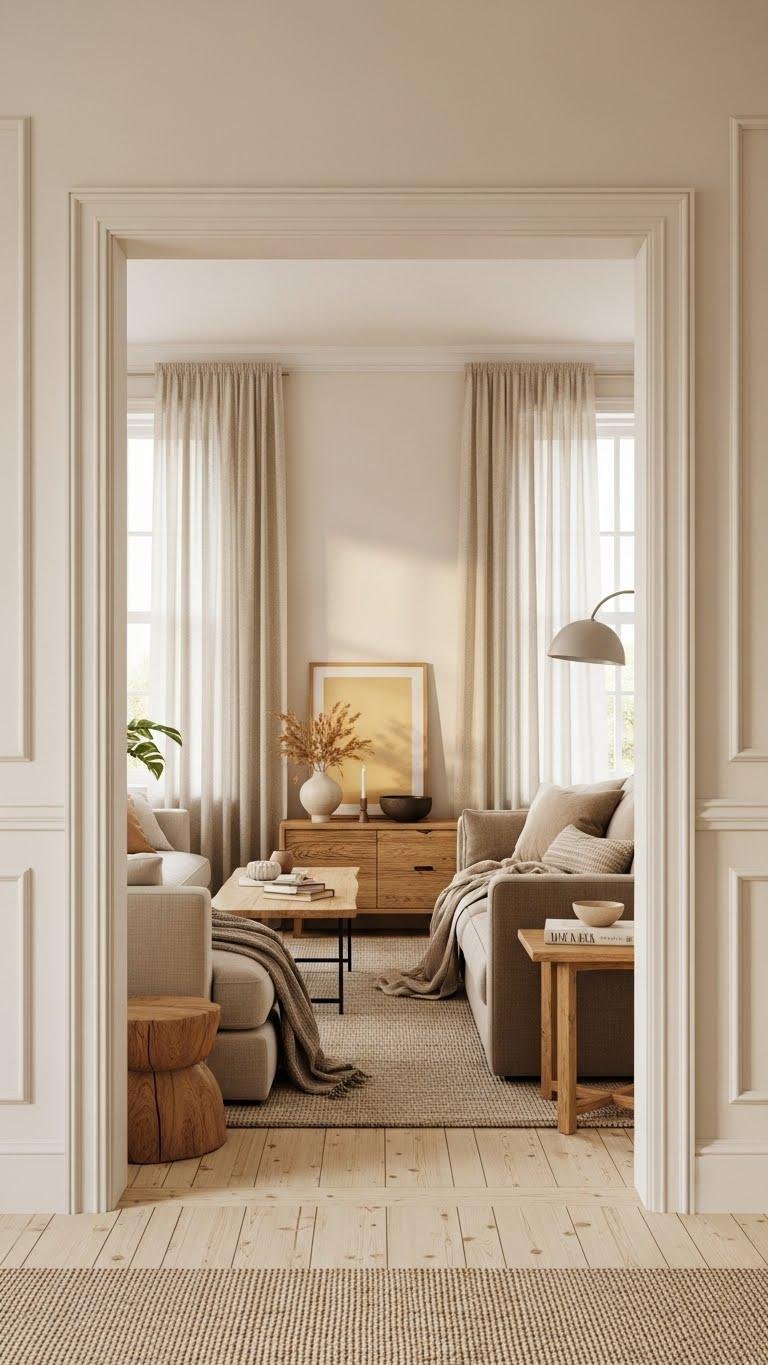
Framing a small room with creamy off-whites instantly lifts the space and keeps it feeling airy without the starkness of pure white.
You’ll layer warm neutrals, pair wood tones and a hint of soft yellow for sunlight warmth, and choose linen curtains to diffuse light. Keep furniture low-profile, add a textured rug, and leave breathing space so the room feels open and free.
Incorporate Blue-Gray for a Spa-Like Feel
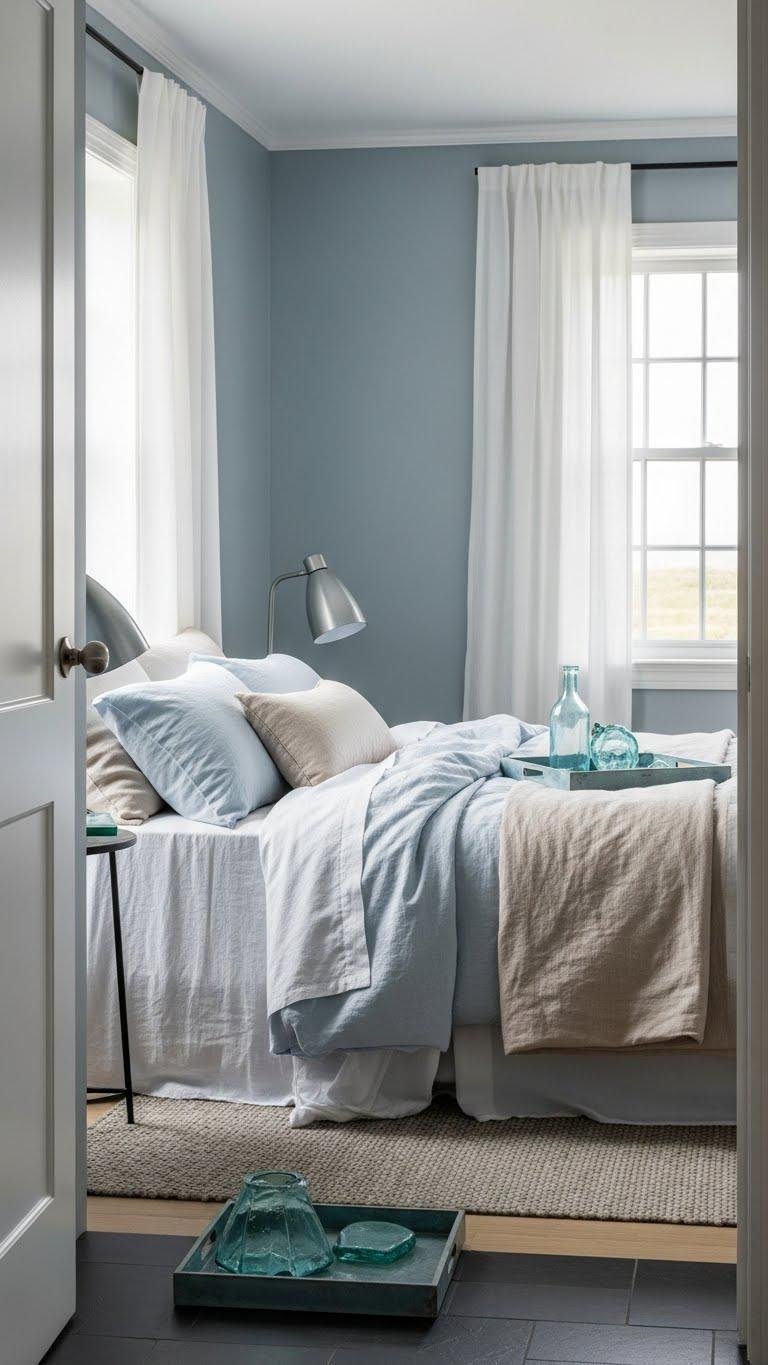
Soothing blue-gray walls and textiles will give your bedroom a spa-like calm without feeling chilly. Choose airy curtains, linen bedding, and a rug that grounds the room.
Accent with sea glass accents and matte metallics for a fresh, coastal vibe. Consider slate ceramic tiles for a small entry or tray surface to add cool texture.
Keep lines simple to stay free and uncluttered.
Add Deeper Tonal Accent Walls
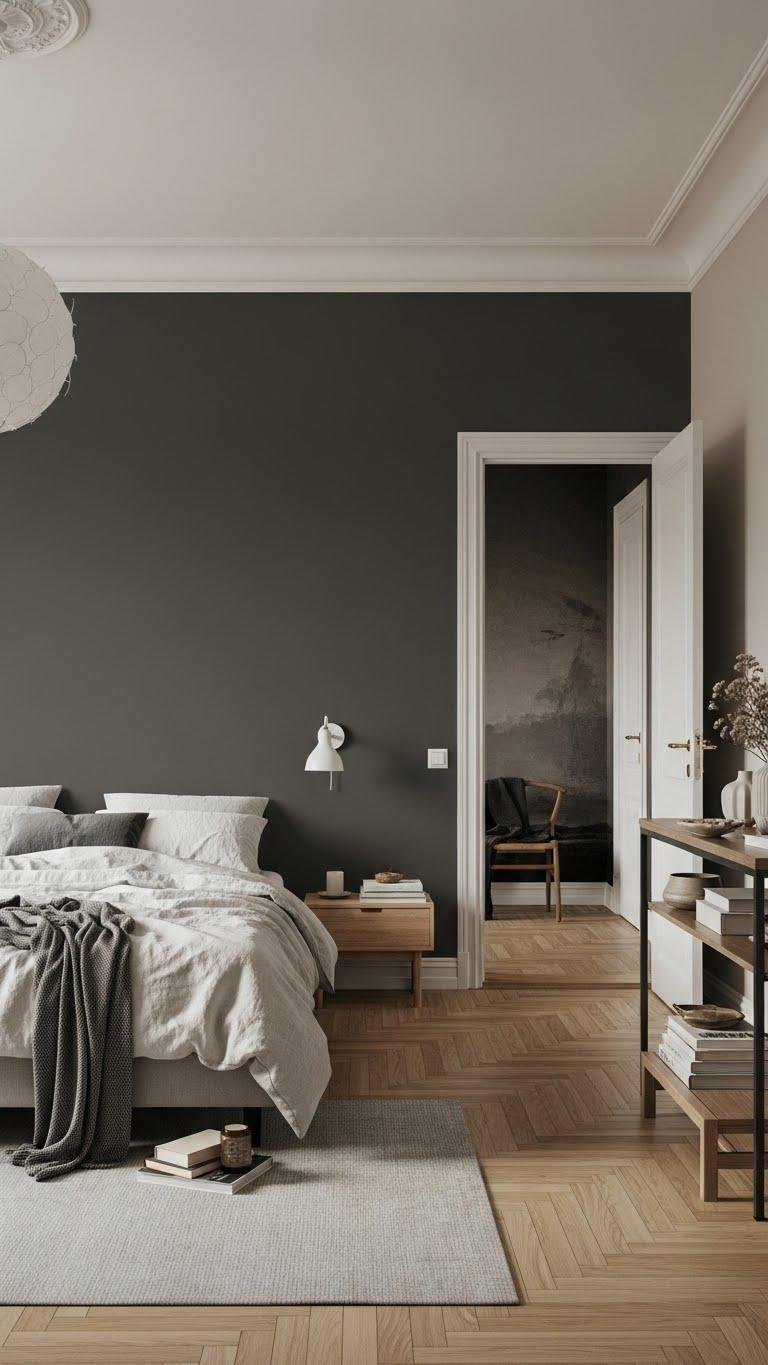
When you paint one wall in a richer, deeper shade of your neutral palette, it instantly anchors the room and adds depth without overwhelming the calm.
Choose a moody mural or matte charcoal for drama, or install deep wainscoting for tactile contrast. You’ll create a liberated retreat that feels intentional and grounded—pair with light linens and uncluttered surfaces to keep the space airy.
Opt for Low-Profile Beds and Upholstered Headboards
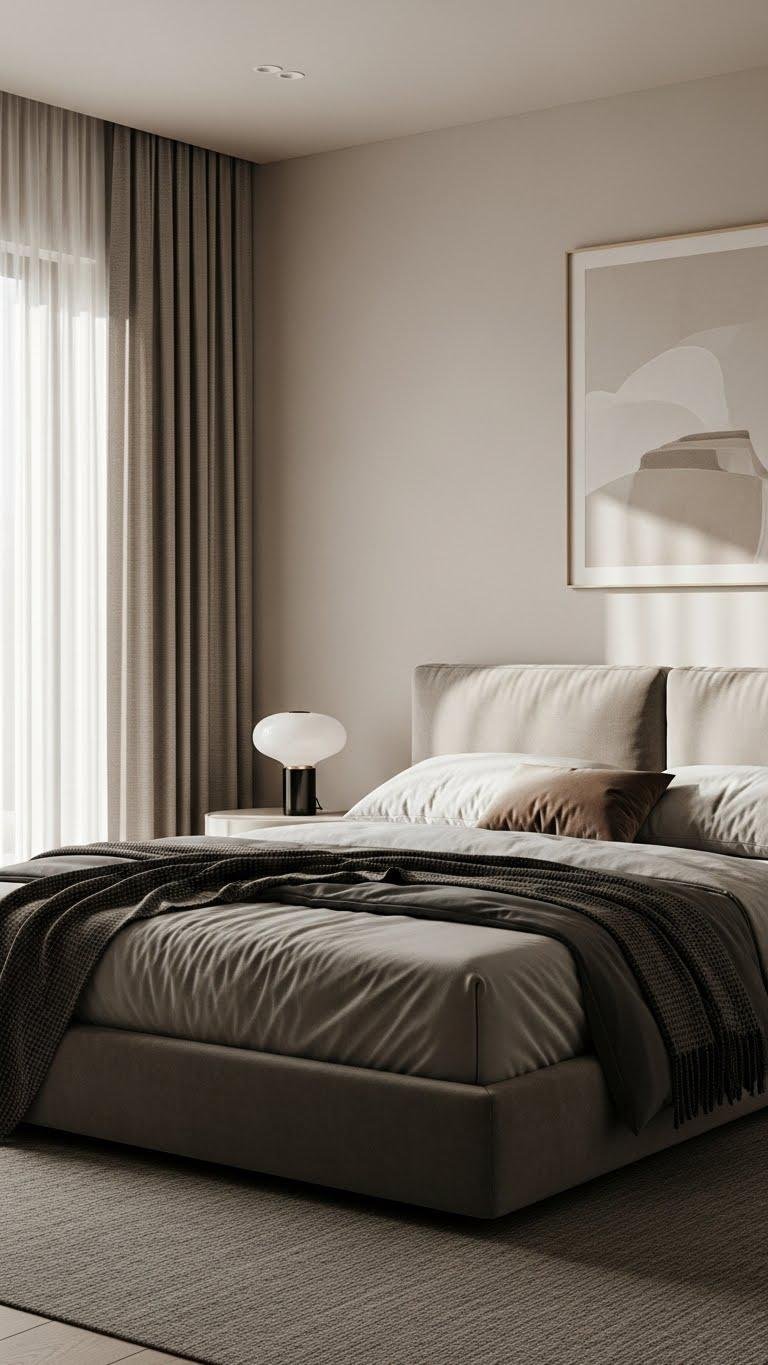
Choose a low-profile bed with an upholstered headboard to keep your neutral bedroom feeling airy and intentionally layered. You’ll embrace low profile elegance while grounding the room. Pick clean lines, subdued tones, and tactile fabric for subtle contrast. The upholstered comfort invites relaxation without fuss, so you’ll wake calm, move freely, and keep surfaces uncluttered for a serene, liberated space.
Mix Natural Fiber Bedding and Throws
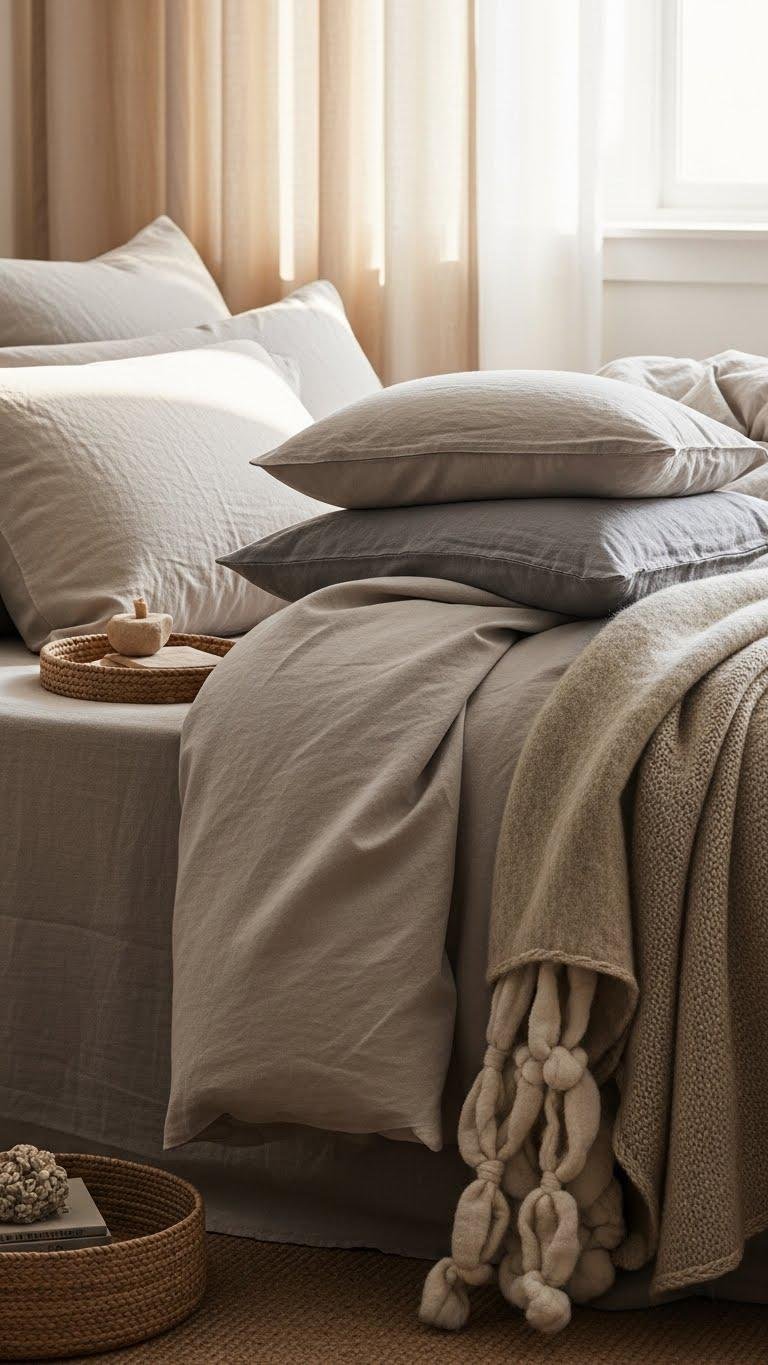
Layering natural fibers—linen sheets, cotton duvet covers, and a chunky wool or cotton throw—gives your neutral bedroom texture and breathability without adding visual clutter. Choose organic linen for sheets to feel light and lived-in.
Mix a soft cotton throw and a wool blanket for warmth, and add subtle jute accents on a bedside tray or basket to keep the space grounded and free.
Layer Rugs to Define Zones
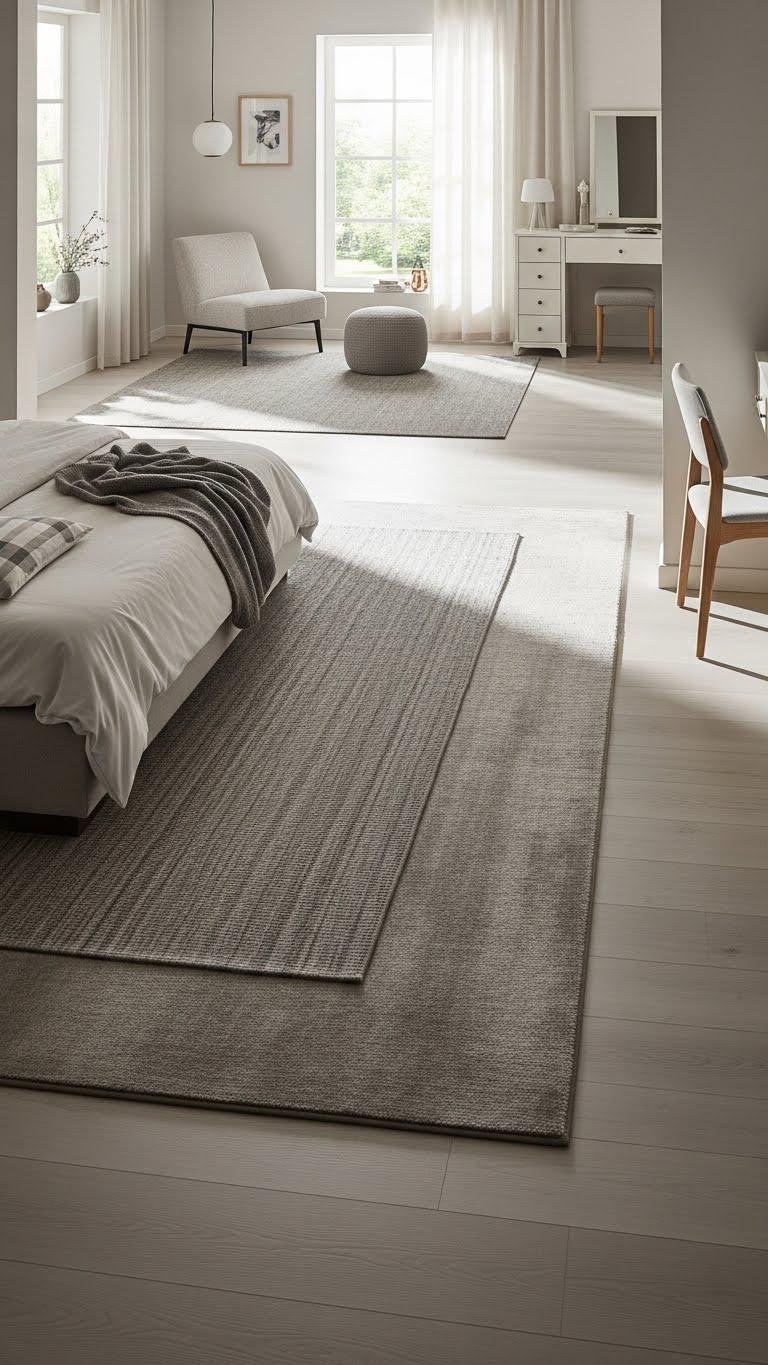
Start by placing a large, low‑pile rug as the anchor and add a smaller, textured rug on top to carve out distinct zones—think sleeping, seating, and dressing—without breaking the calm neutral palette. You’ll use rug placement and pile contrast to create clear zone delineation, giving visual separation between areas. Keep patterns subtle and edges aligned for effortless freedom and flow.
Select Warm Timber Nightstands and Storage
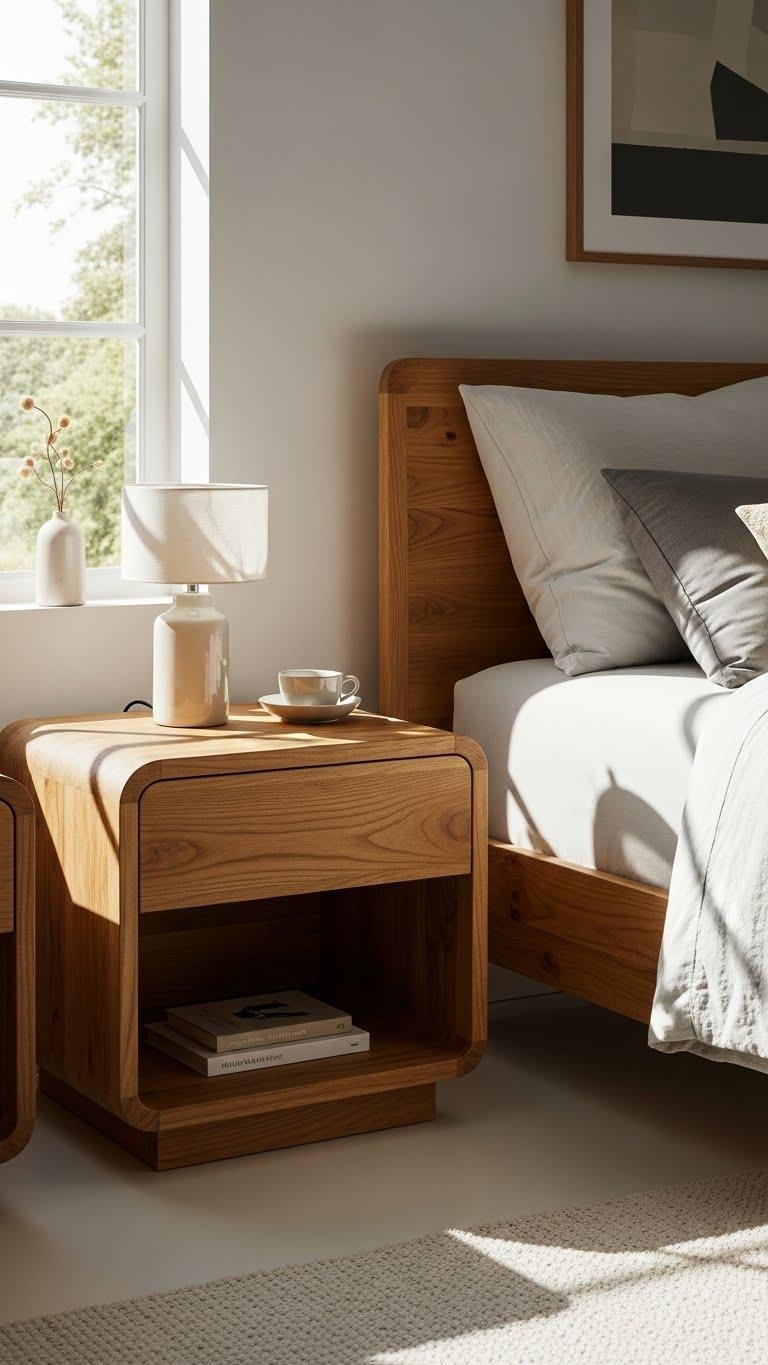
A pair of warm timber nightstands instantly grounds a neutral bedroom and brings tactile warmth without upsetting the calm palette; pick pieces with simple silhouettes and visible grain so they read as natural accents rather than ornament.
Choose reclaimed teak for character, low profiles that free visual space, and rounded silhouettes to soften corners. Use one drawer and open shelf to keep essentials reachable and clutter minimal.
Install Minimalist Built-In Storage
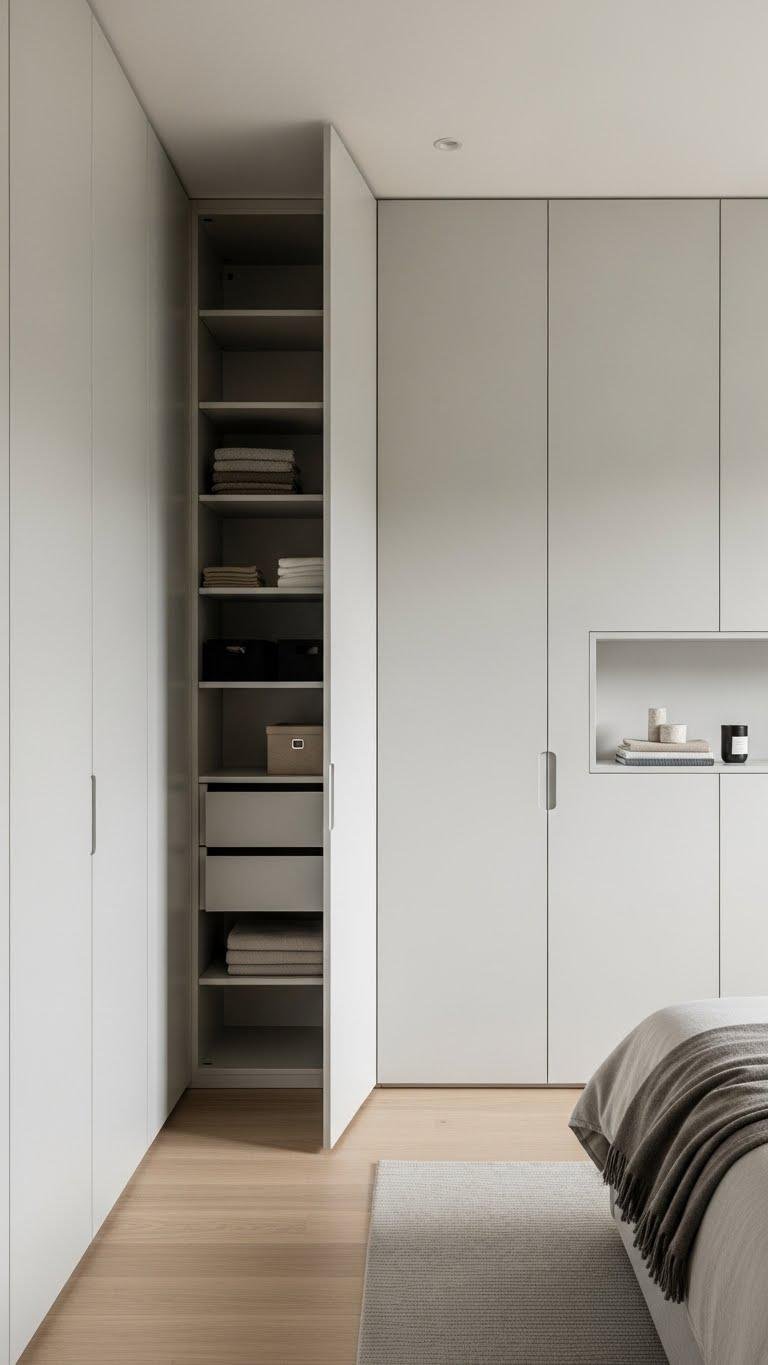
Think built-ins that disappear into the room: slim, floor-to-ceiling storage with clean panels and recessed pulls keeps belongings out of sight while preserving your calm palette. You’ll specify modular panels and concealed hardware so lines stay uninterrupted and maintenance is simple.
Install a narrow wardrobe, hidden linen cubbies, and a shallow wall niche to free floor space and keep your sanctuary uncluttered, open, and effortless.
Choose Multipurpose Furniture for Clutter Control
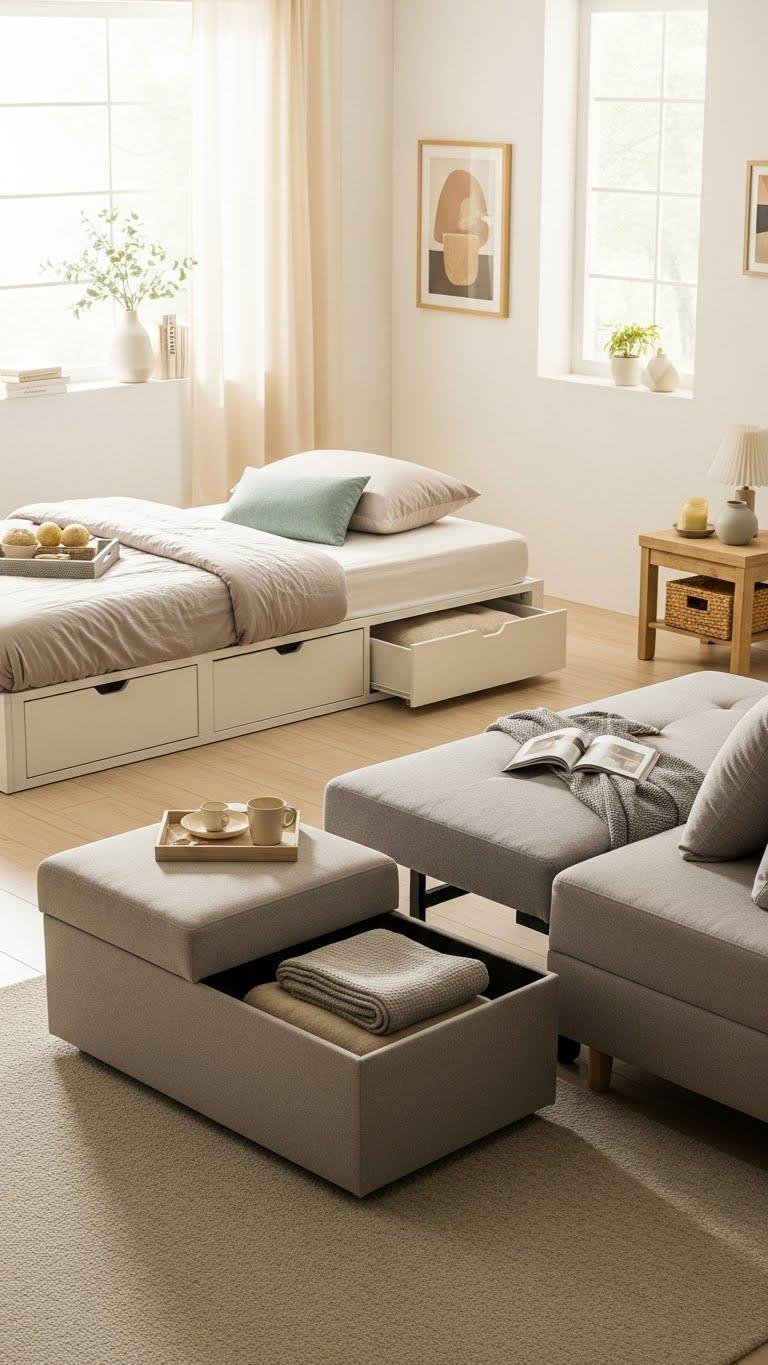
When built-ins tuck away bulk and keep surfaces clear, your next step is to choose furniture that works harder for you. Pick pieces with hidden storage—beds with drawers, ottomans that open—so you stash extras without visual noise.
Opt for convertible seating that doubles as a lounger or guest bed. These choices free your space and your mind, keeping the room calm and uncluttered.
Create Symmetry With Paired Nightstands and Lamps
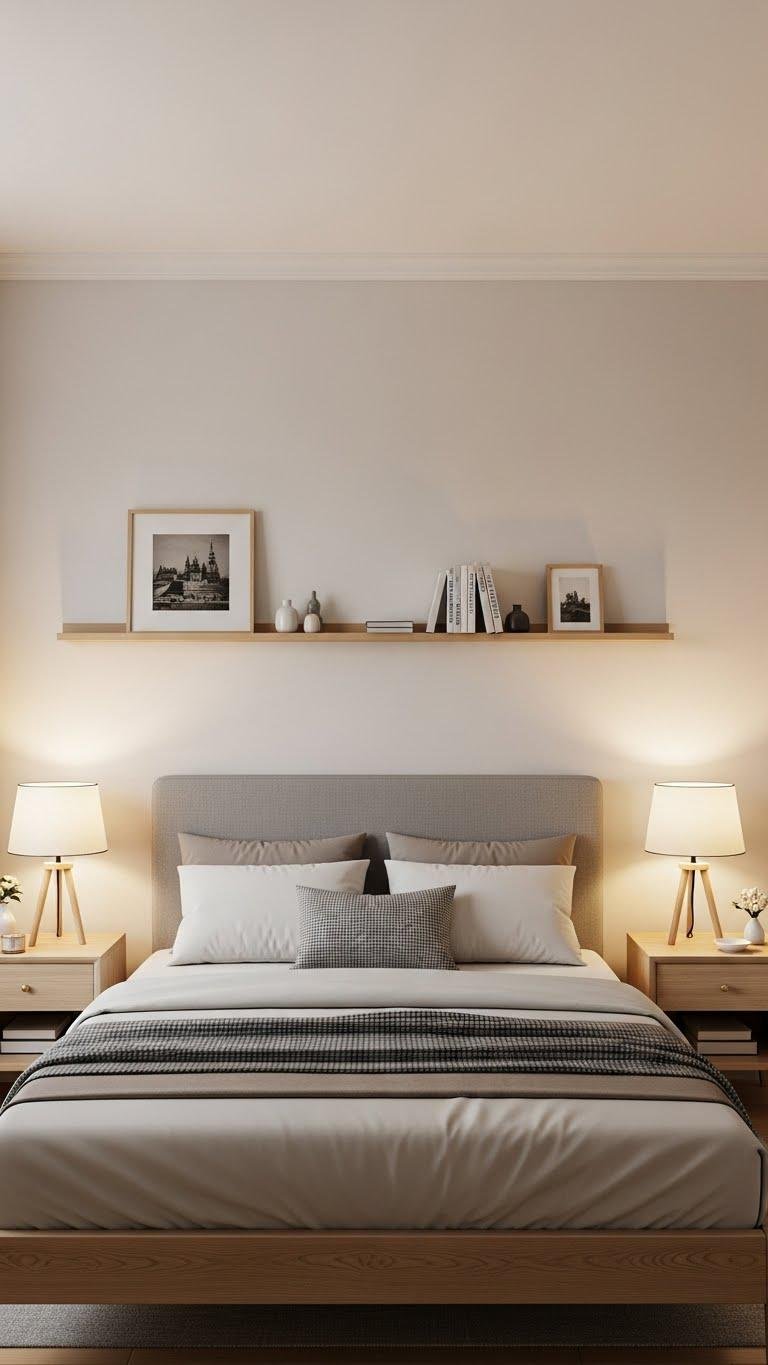
Pair matching nightstands and lamps to flank your bed instantly brings balance and a finished look to a neutral bedroom.
You’ll choose matching bedside tables that echo simple lines and natural tones. Arrange decor sparingly, keep surfaces uncluttered, and set balanced lamp heights so light feels even. This symmetry creates calm, lets you move freely, and frames the bed as a restful focal point.
Use Warm Color-Temperature Bulbs (2700–3000 K)
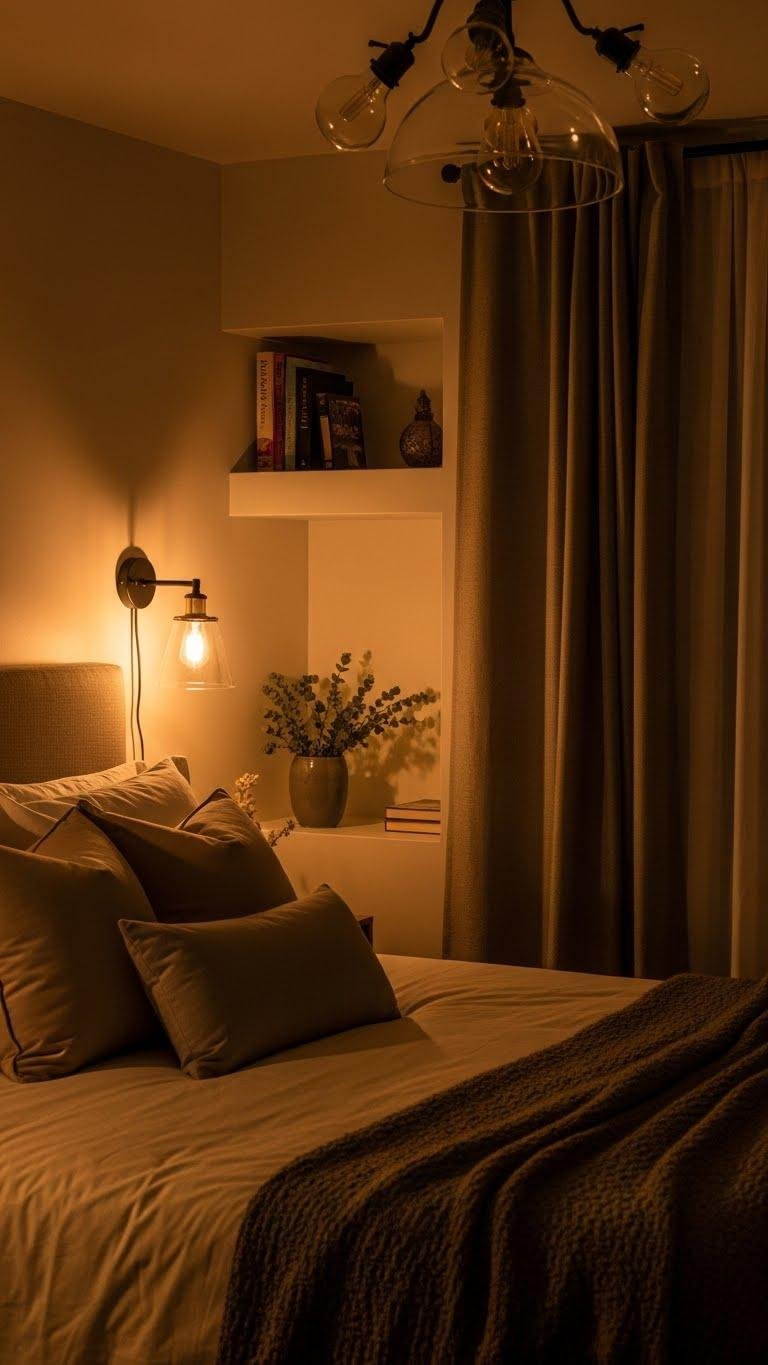
Often you’ll find that warm 2700–3000 K bulbs make neutral bedrooms feel instantly more inviting, casting a soft amber glow that flatters beige, taupe, and gray fabrics.
Choose bulbs with high color rendering so tones stay true. Think about bulb placement: bedside, reading nook, and overhead layers that you control.
You’ll create a calm, freeing atmosphere without harsh white light.
Add Soft Diffusers and Fabric Shades
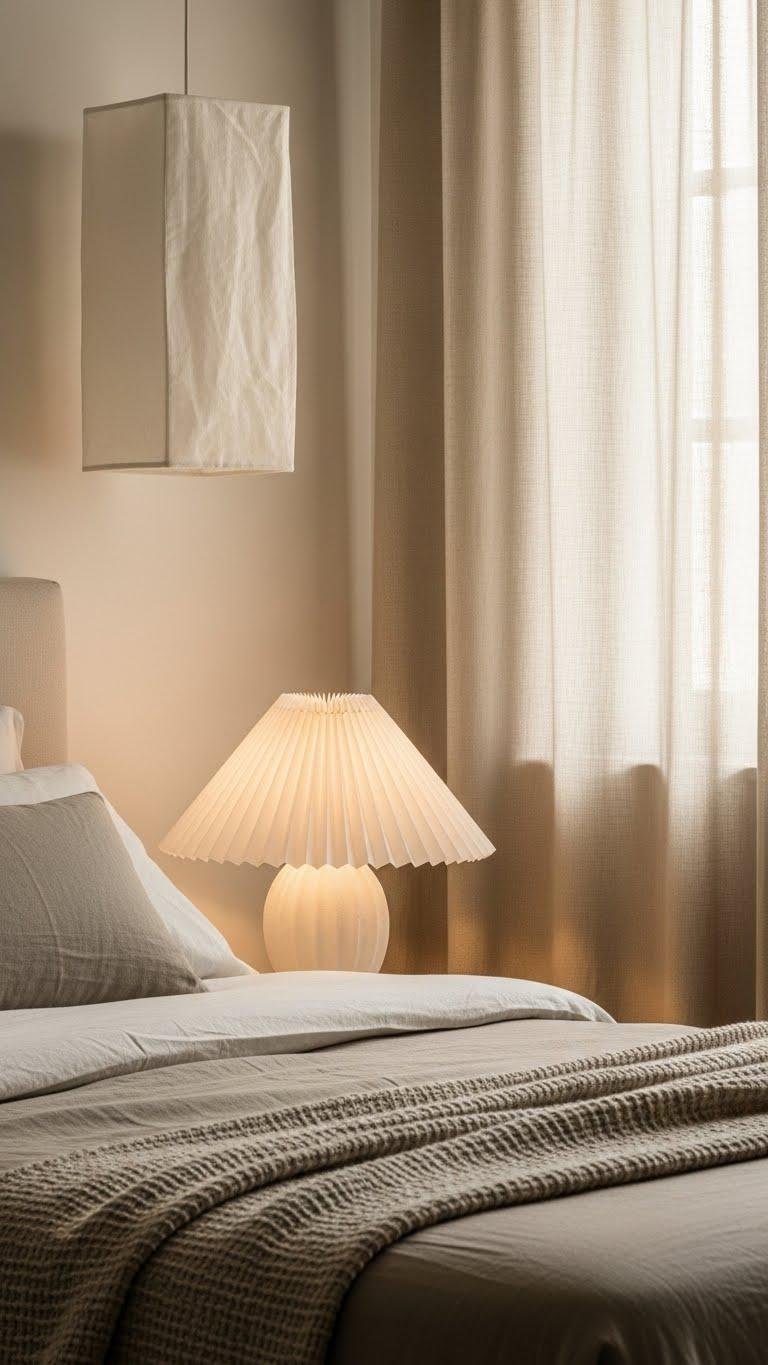
Once you’ve set a warm, high-CRI light source, soften its edge with fabric shades and diffusers to keep light gentle and even.
Choose linen diffusers to mute glare and reveal texture; pair them with pleated shades for sculptural interest.
You’ll get calm, layered illumination that feels effortless.
Swap harsh fixtures for tactile fabrics and reclaim a freer, softer bedroom mood.
Include Low-Level Night Lighting Solutions
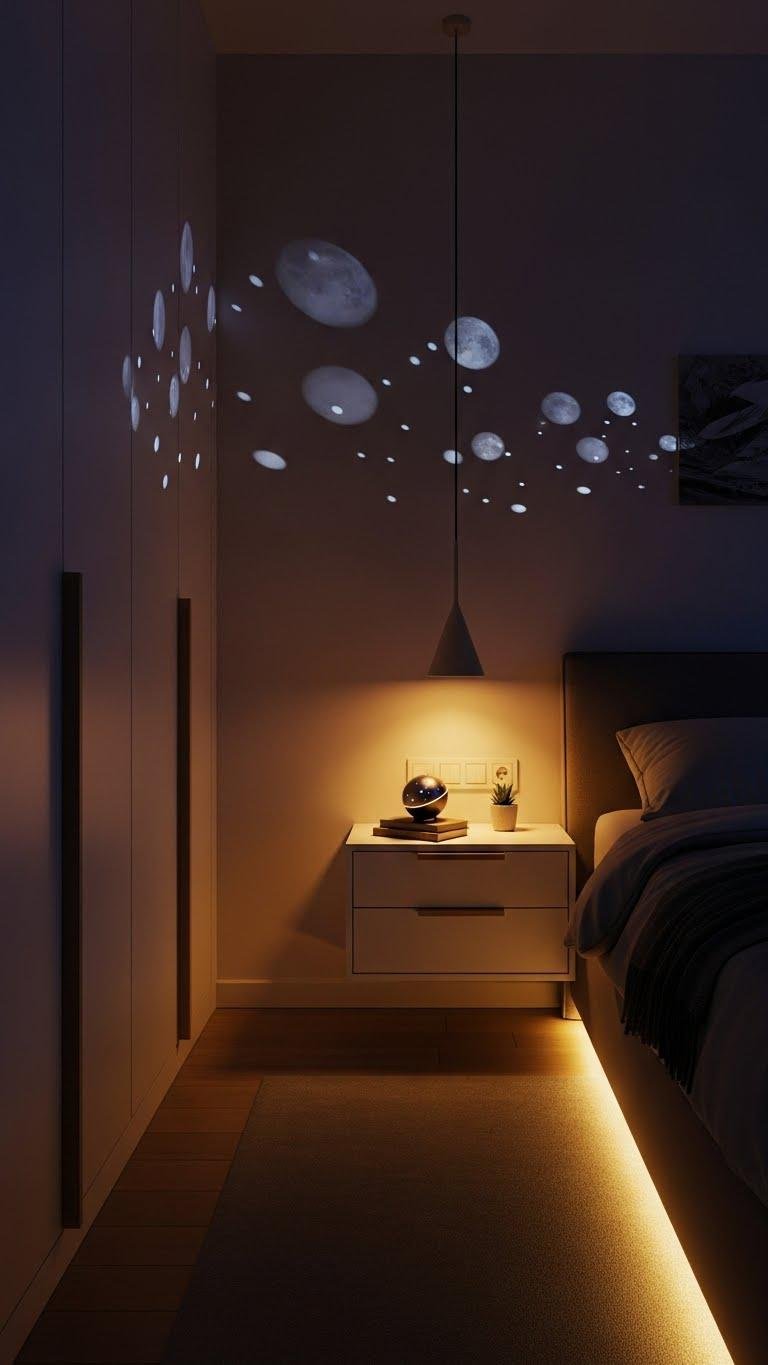
When you dim the overhead bustle and add low-level night lighting, the room stays navigable without jolting you awake; soft, directional fixtures guide your path, protect your night vision, and preserve a tranquil mood.
Install recessed toe boards along closets and under beds for subtle floor glow, and place a moonlight projector for gentle, movable ambiance.
You’ll move freely and sleep undisturbed.
Bring in Houseplants for Biophilic Calm
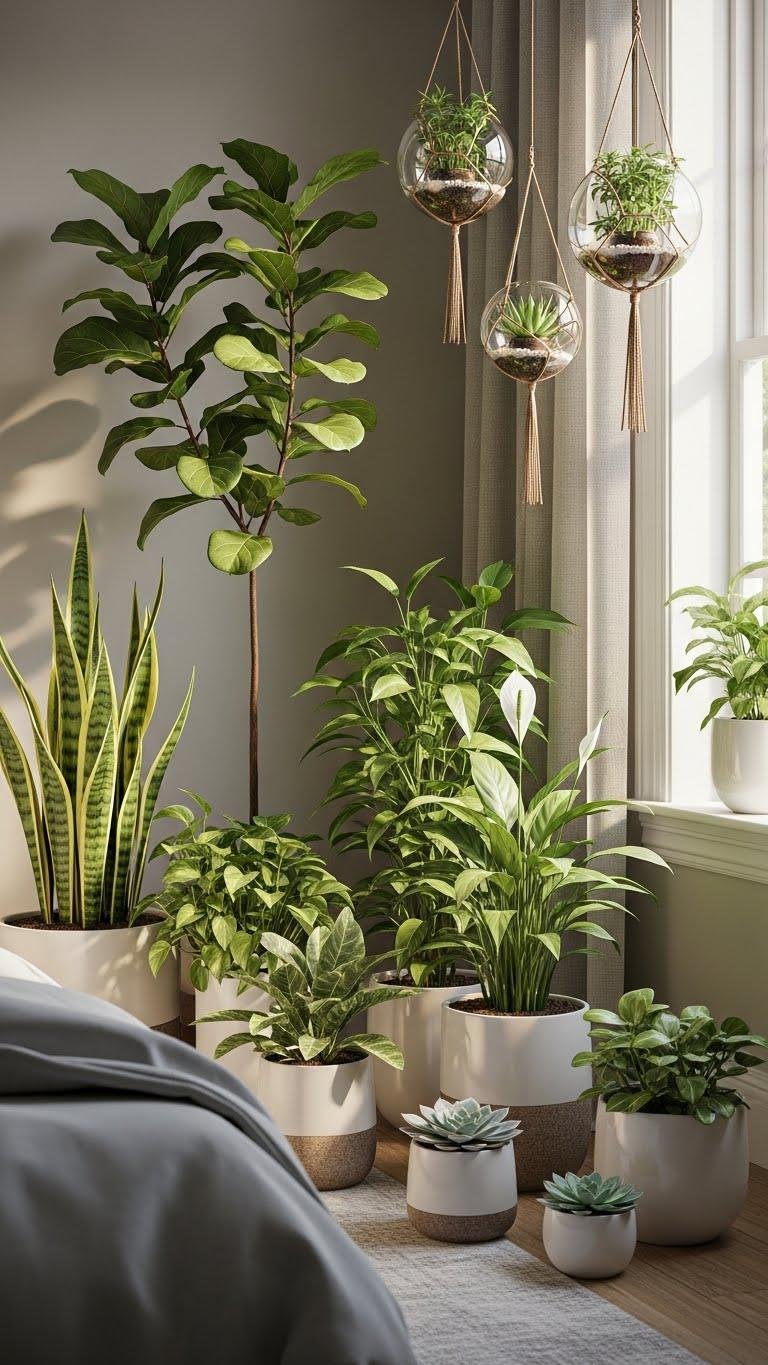
Bringing houseplants into your bedroom adds a quiet, living layer that softens hard lines and lifts the room’s neutral palette.
Choose low-maintenance greenery in air purifying pots to cleanse and calm, and suspend hanging terrariums for sculptural lightness.
Group varied heights near windows, rotate plants for growth, and keep simple care routines—water, light, occasional feed—to maintain a free, uncluttered oasis.
Hang Muted-Tone Art and Textured Wall Treatments
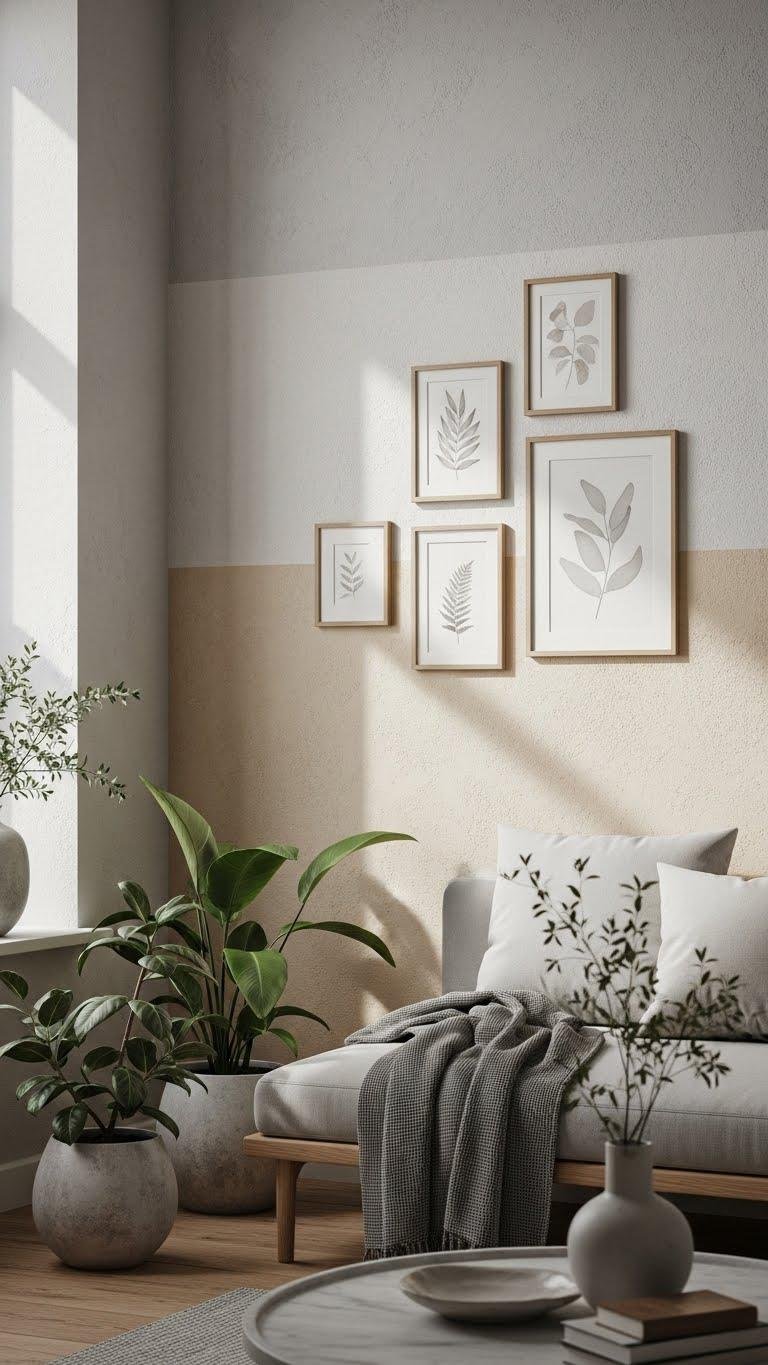
While plants add life and softness, your walls set the room’s mood—muted-tone art and textured treatments keep that calm going without stealing focus.
Choose a muted gallery of simple prints, align frames casually, and layer a linen wash or soft plaster for depth. You’ll create a peaceful, unfussy backdrop that lets you move freely and unwind without visual clutter.
Introduce Warm Metallic Accents
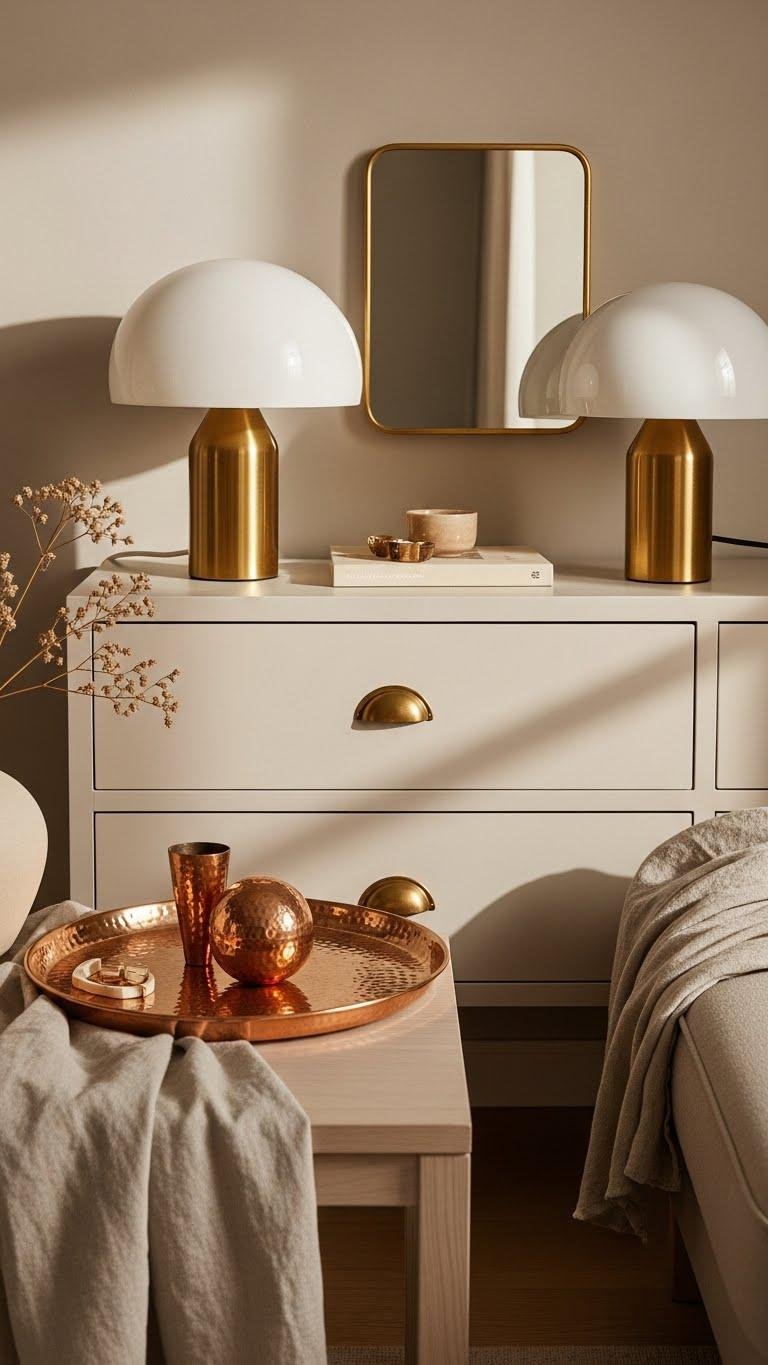
Add a few warm metallic accents to lift the neutral palette without overpowering it. Place brass accents like lamp bases, drawer pulls, or a slim mirror frame to catch light and create calm. Add a hammered copper tray or small sculpture for tactile shine and movement. You’ll keep the room grounded by limiting pieces and pairing metals with soft wood and linen textures.
Use Subtle Patterns and Textural Throw Pillows
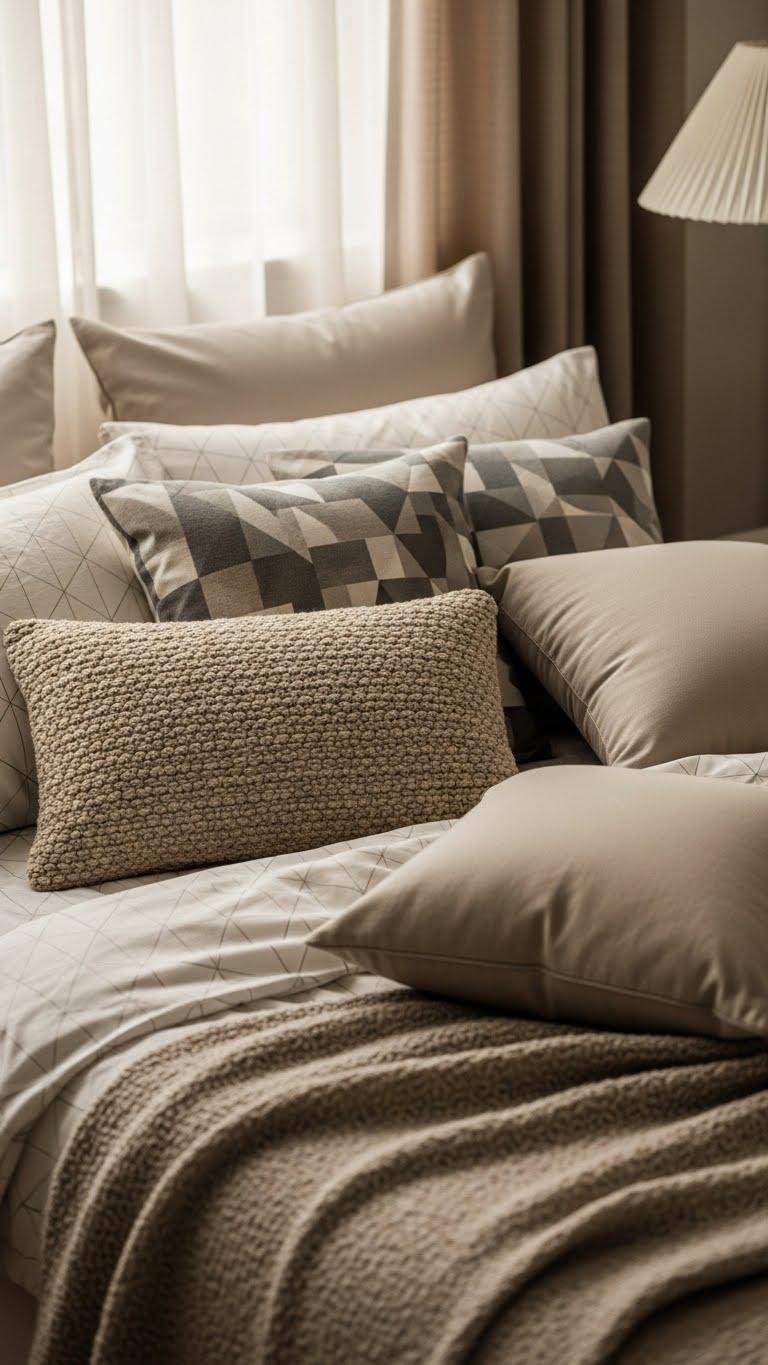
Layer subtle patterns and textured pillows to give your neutral bedroom quiet depth and tactile interest. You’ll mix muted geometric prints with soft solids, anchoring the bed with a woven boucle cushion for cozy contrast. Choose a restrained palette, vary scales, and scatter two or three pillows to invite lounging. The result feels calm, lived-in, and free — effortless comfort without clutter.
Select Low-VOC Paints and Responsible Textiles
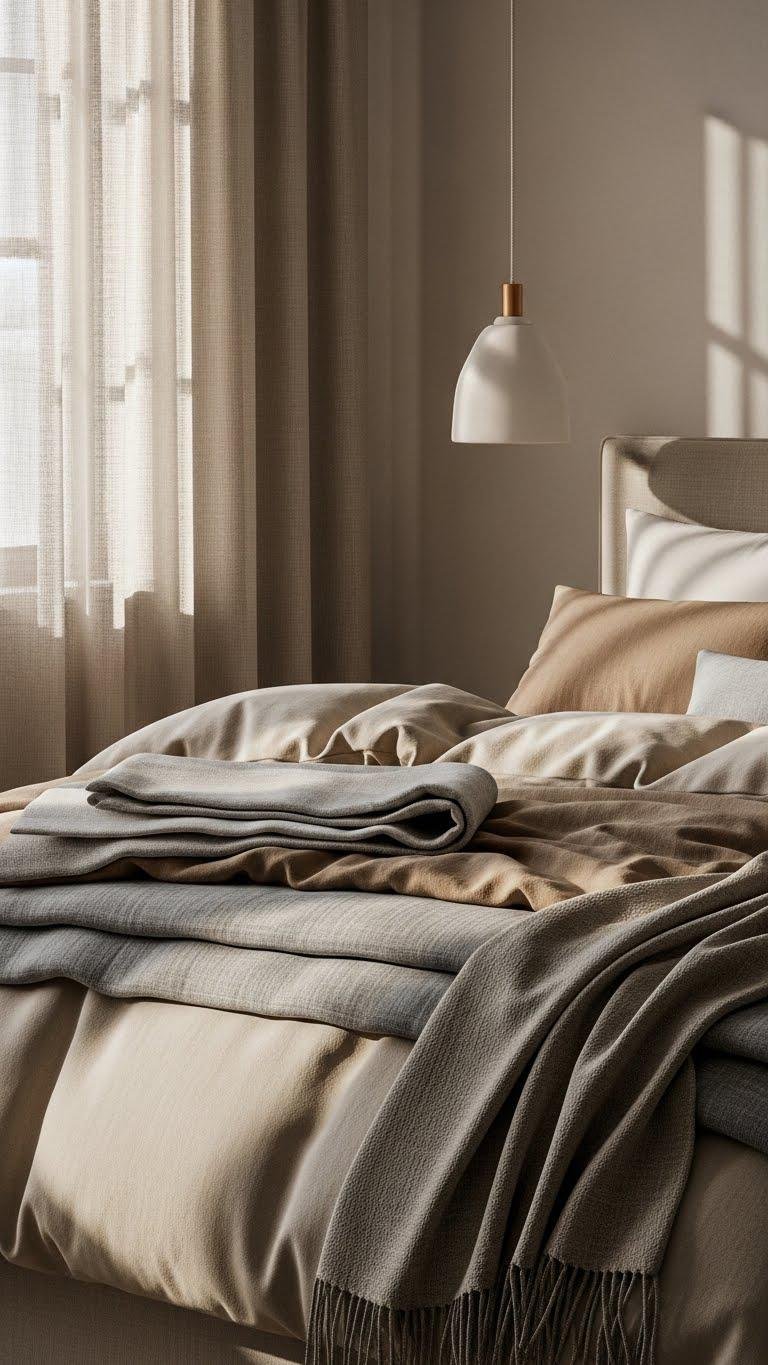
Start by choosing low-VOC paints and responsibly sourced textiles so your neutral bedroom feels as healthy as it looks.
You’ll prefer breathable linen, organic cotton and pieces dyed with natural dyes; they age softly and free you from chemical smells.
Mix recycled polyester throws for durability and easy care.
Keep palettes muted, textures layered, and materials honest so the space stays calm and liberating.
Use Satin Finishes for Trim and High-Touch Surfaces
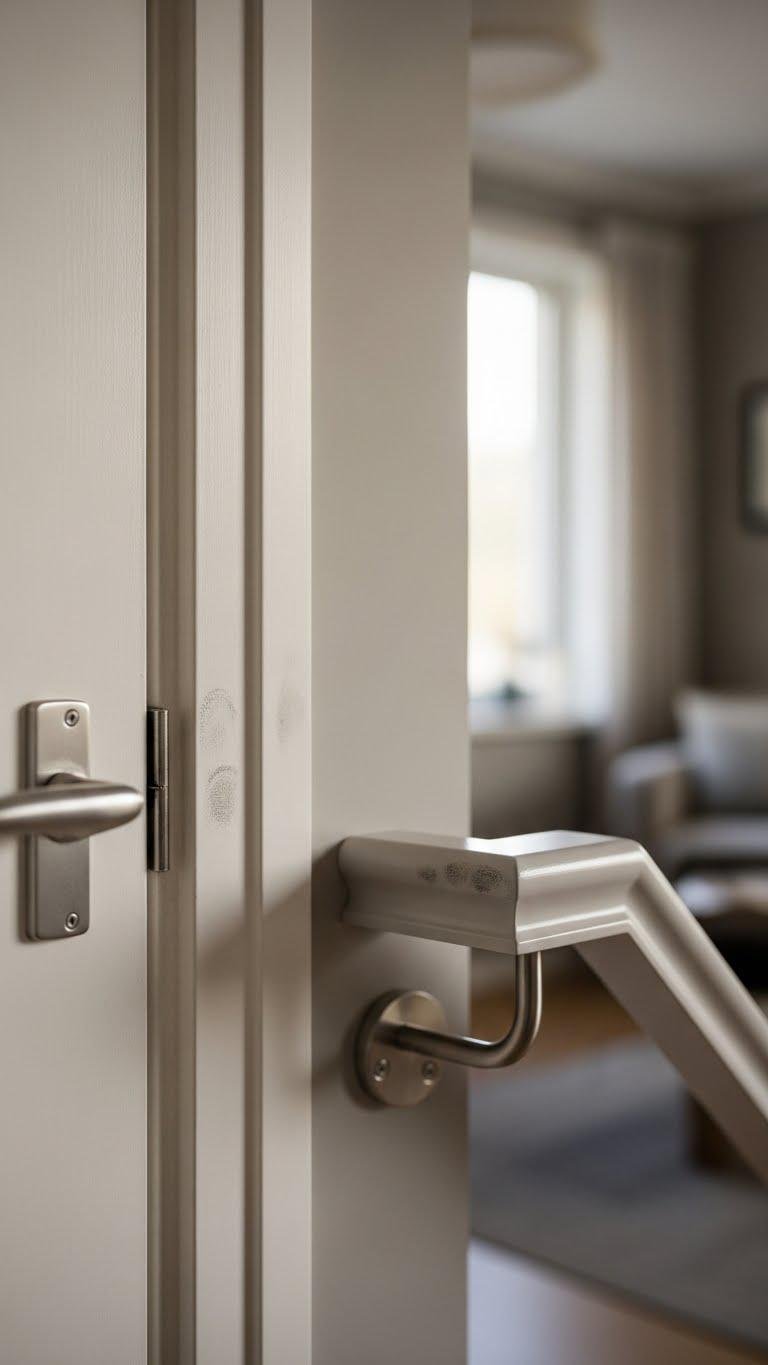
When you want trim and high-touch areas to look crisp without showing every smudge, choose a satin finish: it gives a subtle, velvety sheen that’s tougher to clean than matte but far less glossy than semi-gloss.
You’ll balance satin vs. gloss by prioritizing trim durability and touch friendly finishes, gaining reflective subtlety that reads clean, calm, and lived-in without constant upkeep.
Employ Small-Room Strategies With Light Neutrals
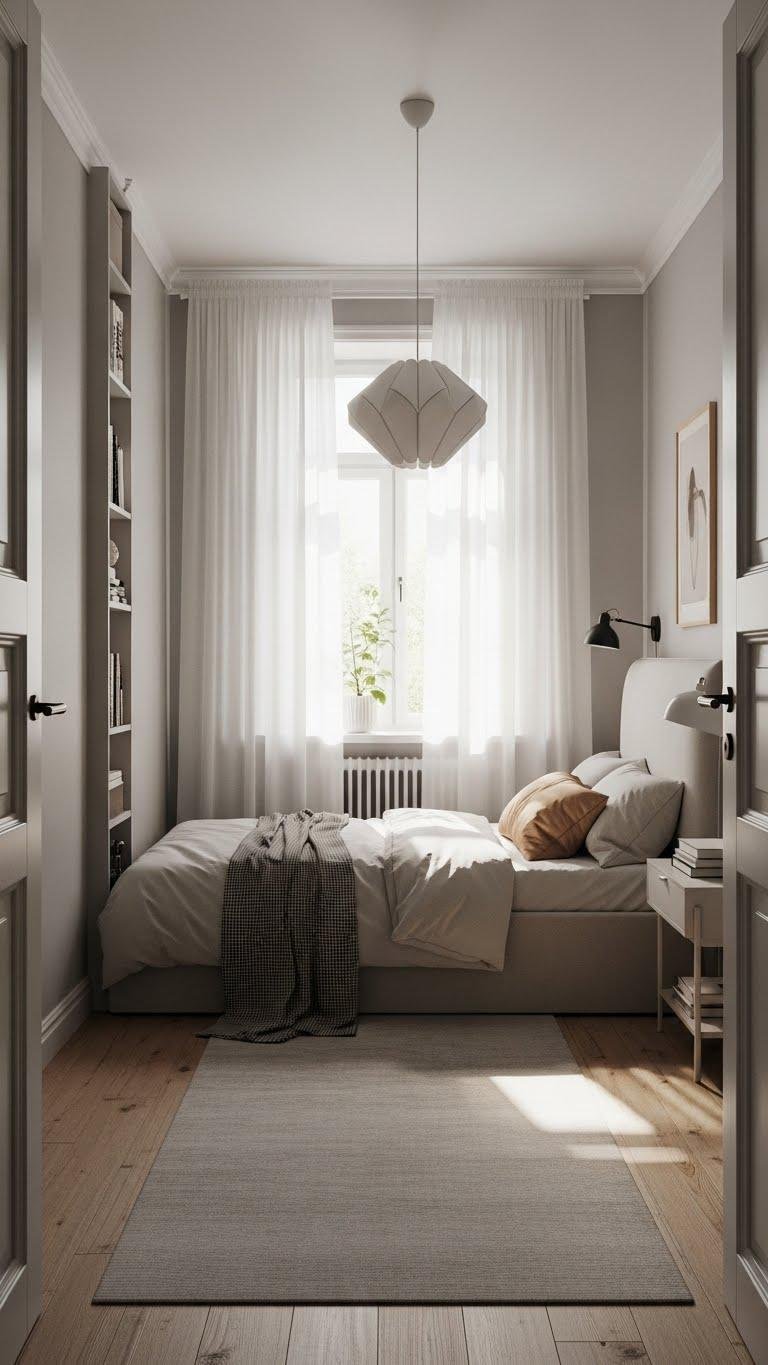
Often, you can make a small bedroom feel larger by leaning on light neutrals—soft whites, pale grays, and warm beiges reflect light and create visual space.
Use sheer curtains and low-profile furniture to maximize light.
Paint trims a shade lighter, run rugs lengthwise, and try vertical tricks like narrow shelving or tall headboards to draw the eye up and free your floor area.
Layer Scents and Soft Furnishings for Sensory Calm
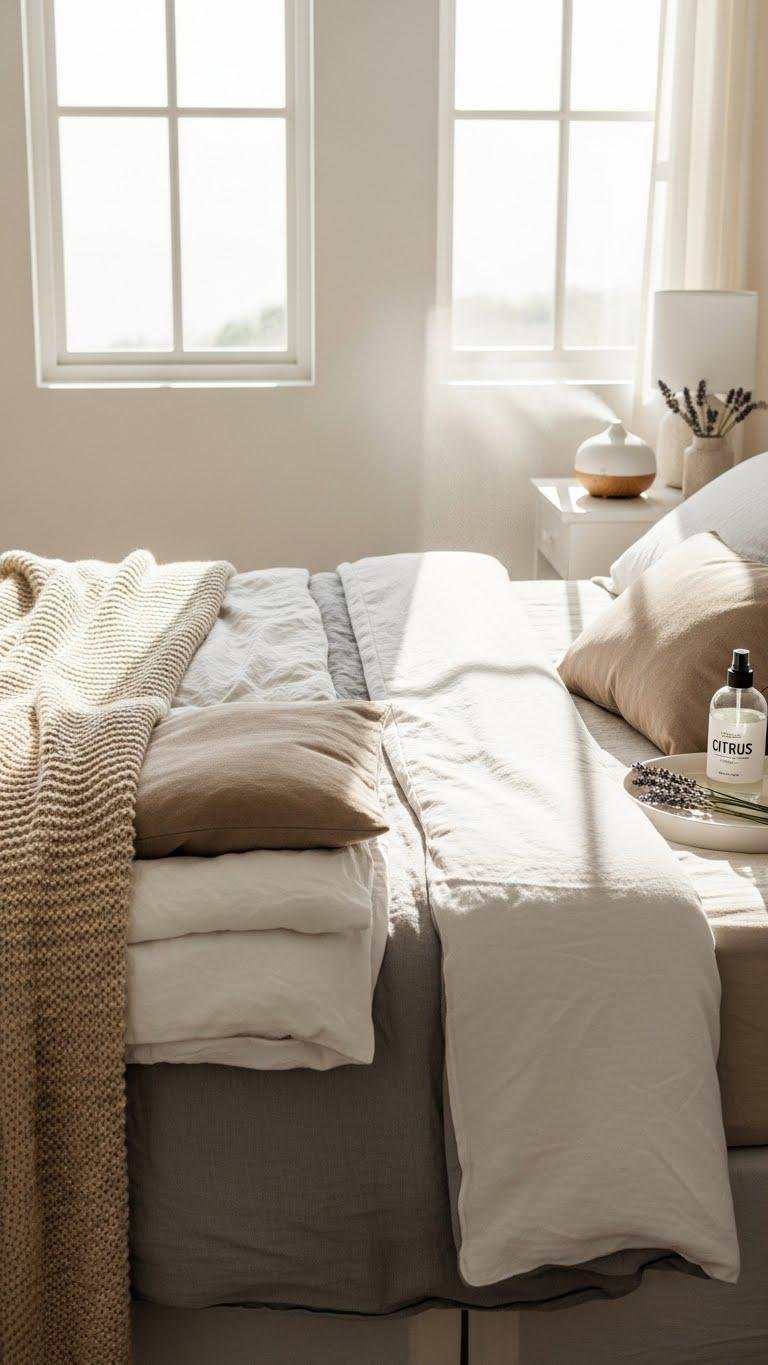
Light, neutral colors open the room; now bring the rest of the senses into play to make it feel restful. You’ll use aromatherapy layering—diffuse lavender, add a citrus pillow mist—while arranging soft throws and linen sheets. Create tactile contrast with a chunky knit, smooth cotton, and a suede cushion. These simple choices let you design a calm, liberated bedroom that feels intentional.