
You want a small space that actually breathes, not one full of furniture pretending to help. Choose pieces that multitask, keep sightlines open, and lean on light tones and vertical storage to stretch the room. I’ll show you 22 practical, stylish moves—compact furnishings, clever hidden storage, and visual tricks—that make tight floors feel generous, and you’ll be able to pick what fits your life and layout.
Choose Multifunctional Furniture to Maximize Space

When space is tight, pick pieces that pull double duty: a sofa bed that entertains, a coffee table with hidden storage, or a dining bench that tucks away.
You’ll love transformable ottomans that stash blankets and become extra seating, and modular sleeperbeds that reconfigure for guests or work.
Choose streamlined finishes, mix textures, and keep layouts flexible so your space breathes.
Select Scaled Pieces That Fit the Room Proportions
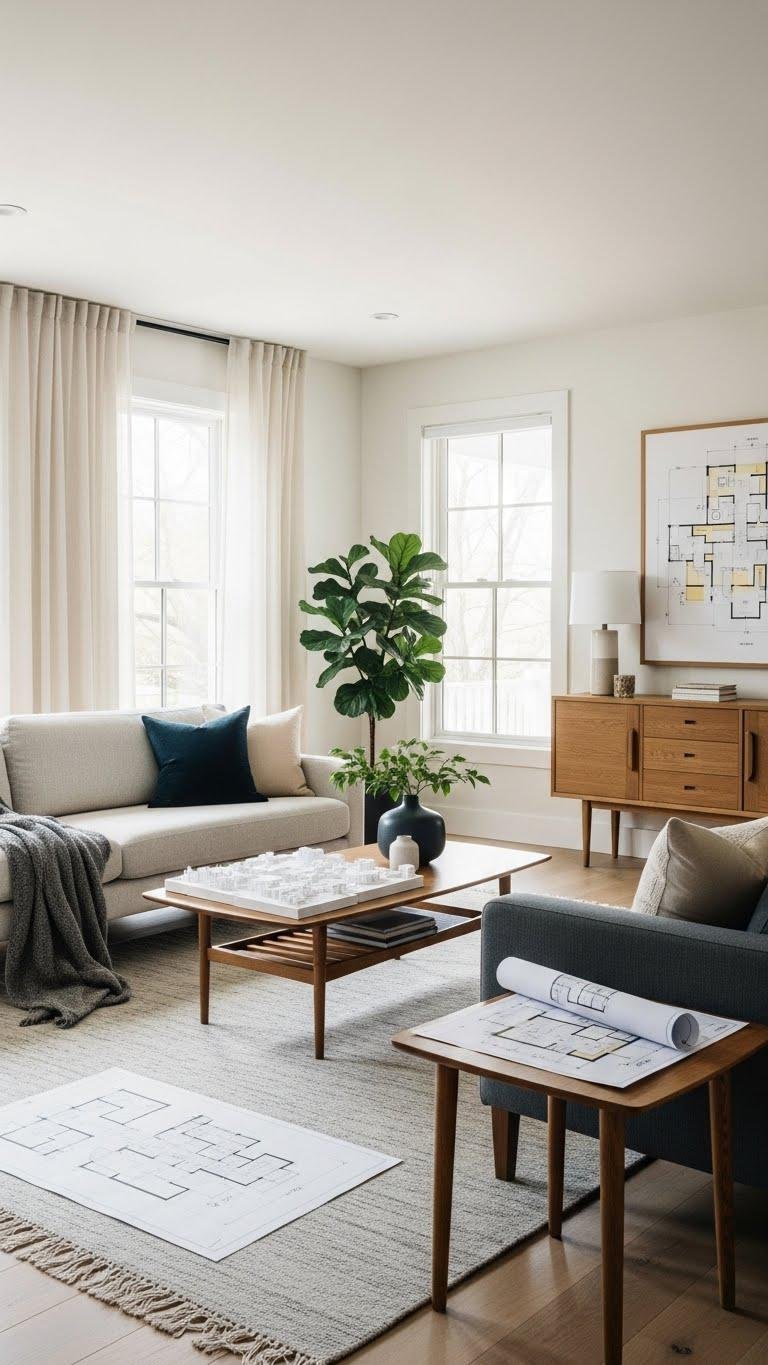
Although a room might feel roomy at first glance, choosing pieces that truly fit its proportions keeps it from tipping into cramped or underfurnished, so measure, visualize, and prioritize scale over trends.
You’ll use scale models and proportion sketches to plan focal pieces, opt for restrained silhouettes, and edit boldly.
Choose items that let you move, breathe, and live freely without clutter or compromise.
Favor Furniture With Visible Legs or Floating Designs

After you’ve nailed scale, keep the room airy by choosing furniture with visible legs or floating profiles—these pieces let light and sightlines pass beneath, so the space reads larger and cleaner.
You’ll prefer mid century legs on sofas and slim tables, mix clear acrylics for visual lightness, and pick streamlined silhouettes that free movement and mindset, proving less bulk equals more freedom.
Install Built‑In or Wall‑Mounted Storage Units

Tap into vertical space by installing built‑in or wall‑mounted storage that disappears into the architecture and instantly declutters sightlines.
You’ll gain freedom with tailored shelving, drawers and hidden niches framed by custom doorways.
Integrate slim acoustic panels to tame sound without bulk.
Choose crisp finishes and minimal hardware so storage reads as calm architecture, not clutter, keeping compact rooms airy and functional.
Use Foldable or Stackable Seating for Flexibility

Built‑in storage frees visual space, so pairing it with foldable or stackable seating keeps rooms both tidy and endlessly adaptable.
You’ll choose compact stools and folding benches that tuck away, summon extra seats instantly, and declutter sightlines. Opt for lightweight materials and slim profiles to preserve flow, mix textures for personality, and enjoy a liberated, multiuse space that shifts with your plans.
Maintain a Unified Paint Palette Across Connected Areas

When rooms flow into one another, keeping a unified paint palette will instantly calm sightlines and make a compact home feel larger; choose three to five related hues—a main wall color, a trim/ceiling shade, and one or two accent tones—and repeat them through connected spaces so shifts read as intentional rather than accidental.
You’ll create cohesive passages and tonal continuity that let freedom-filled layouts breathe.
Use Light Neutral Tones to Reflect Light and Expand Space
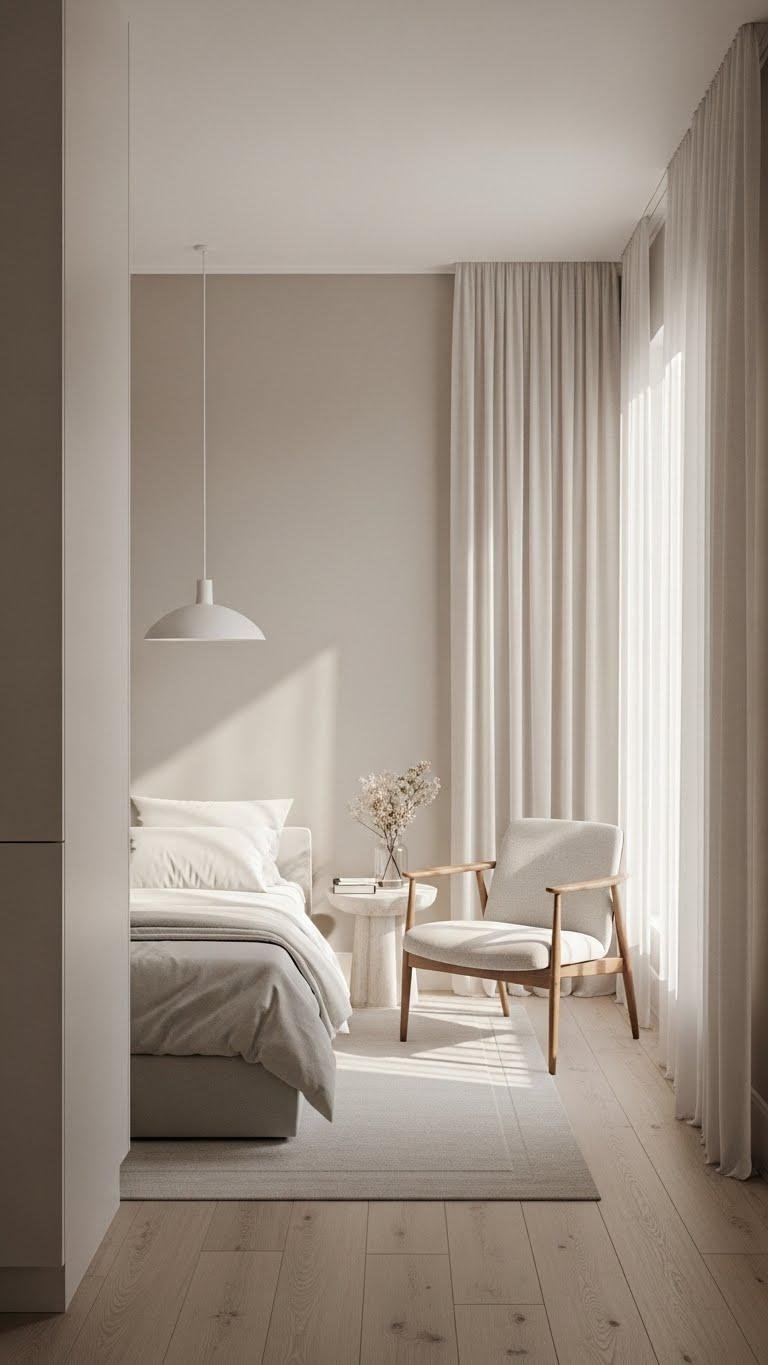
Because light neutrals bounce daylight and blur edges, choosing them is the quickest way to make a compact room feel airier and visually larger. Opt for soft beige walls, pale linens, and minimal trim so surfaces meld. Let sheer curtains diffuse sun without blocking views. You’ll create a calm, liberated backdrop that maximizes brightness and movement, making small spaces feel open and effortless.
Introduce Restrained Accent Colors to Define Zones
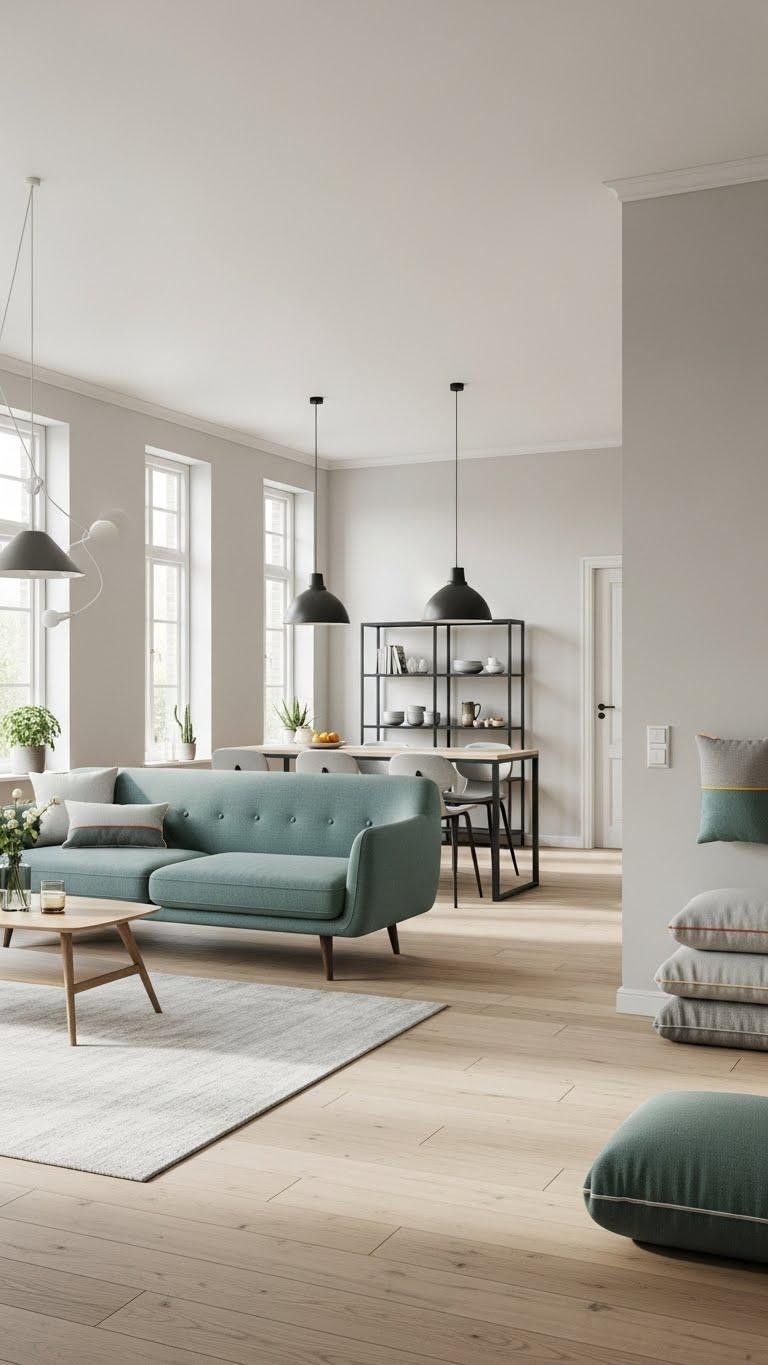
After you’ve set a light, neutral foundation, introduce a few restrained accent colors to quietly define zones without cluttering the calm. You’ll use subtle color anchors—like a muted teal sofa or charcoal kitchen shelf—to suggest purpose.
Apply accent trims sparingly on cushions, frames, or a single wall. This keeps the space airy, intentional, and flexible for whatever freedom you choose.
Match Trim and Flooring Tones for Visual Continuity

If you want a compact space that reads larger and more intentional, match your trim and flooring tones to create uninterrupted visual flow—light oak trim with pale floors, or a soft charcoal baseboard with deeper-stained boards, for example.
You’ll cultivate warm wood appeal while keeping rooms airy. Choose subtle variation for cohesive contrast, letting materials unify sightlines so you feel freer in every corner.
Create Soft Zone Transitions With Rugs and Subtle Shades

Define Areas With Lighting Groups Instead of Walls

Layered rugs and soft shade shifts set the scene, but light is what actually sculpts a compact space for different uses. You’ll define zones without walls by grouping fixtures into mood zoning clusters: a task lamp for work, warm accent pendants over dining, and dimmable tracks for lounging.
This lets you control atmosphere, keep openness, and move through areas freely.
Use Open Shelving or Narrow Dividers as Semi‑Transparent Boundaries
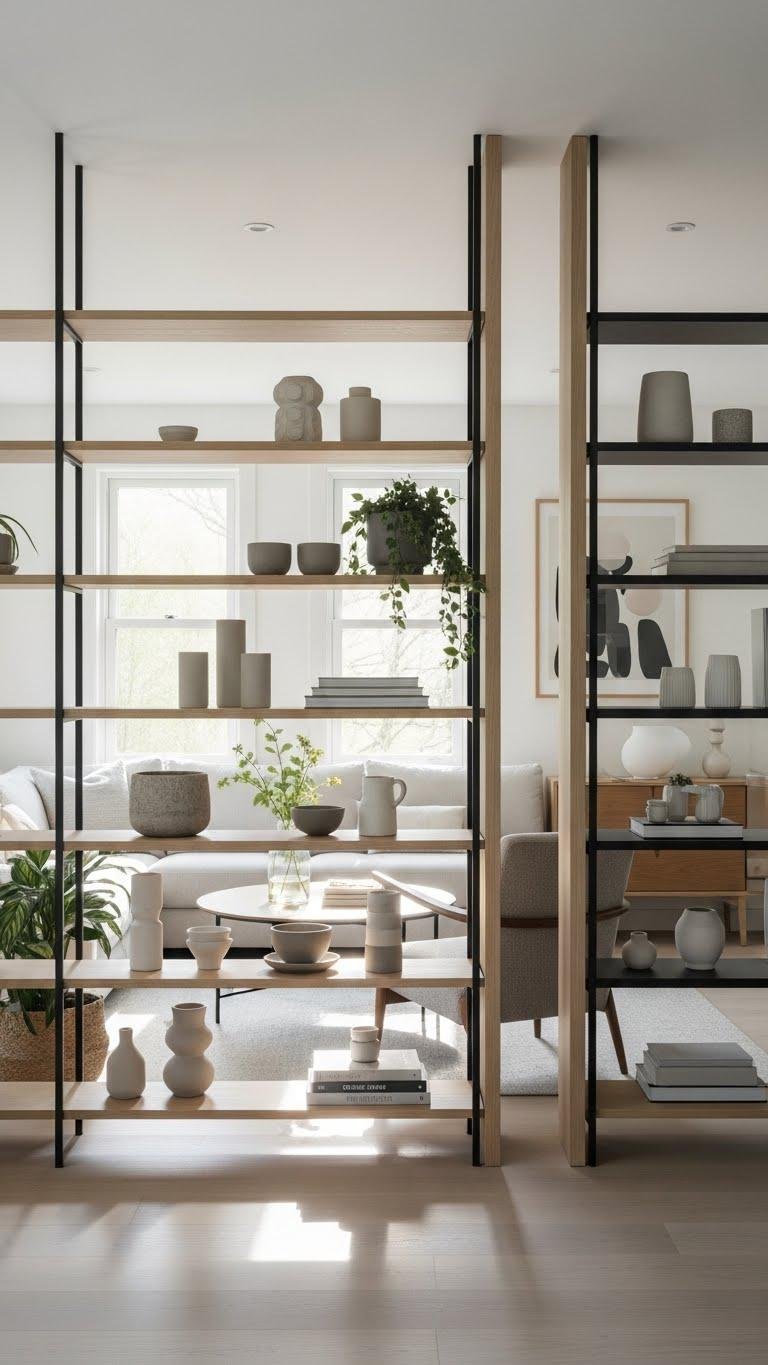
Bring in open shelving or slim dividers to carve out zones that feel airy rather than boxed in.
You’ll keep sightlines open while defining function: use open shelving to display curated objects, plants, or books, and narrow dividers to suggest separation without imposing.
Choose lightweight materials, minimal profiles, and staggered styling so spaces breathe, stay flexible, and reflect your free, modern aesthetic.
Arrange Furniture to Preserve Clear Circulation Paths

Open shelving and slim dividers give rooms definition without blocking movement, so carry that same mindset into furniture layout to keep circulation effortless.
Place pieces to respect clear pathway widths, angle sofas and slim tables to open sightlines, and avoid blocking doors or windows.
You’ll maintain smooth traffic flow, feel freer in compact spaces, and keep design airy and intentional.
Add Fold‑Away Partitions for Occasional Privacy

Fold away panels give you privacy on demand without wrecking a compact room’s flow.
You’ll install sleek panels on recessed tracks or hang temporary textiles that fold cleanly when not needed.
Choose light fabrics or slatted screens to keep sightlines and air moving, then tuck them away to reclaim space.
It’s flexible, stylish, and made for spontaneous freedom in small rooms.
Maximize Natural Light With Lightweight Window Treatments

By choosing lightweight window treatments—sheer panels, gauzy linens, or slim roller shades—you’ll let daylight fill a compact room while retaining privacy and a soft, airy look.
Opt for sheer thermal fabrics to boost insulation without bulk, and mix in patterned privacy panels for personality.
Mount high and close to the ceiling to elongate sightlines, keeping the vibe free, bright, and effortlessly modern.
Use Mirrors to Bounce Light and Double Perceived Space
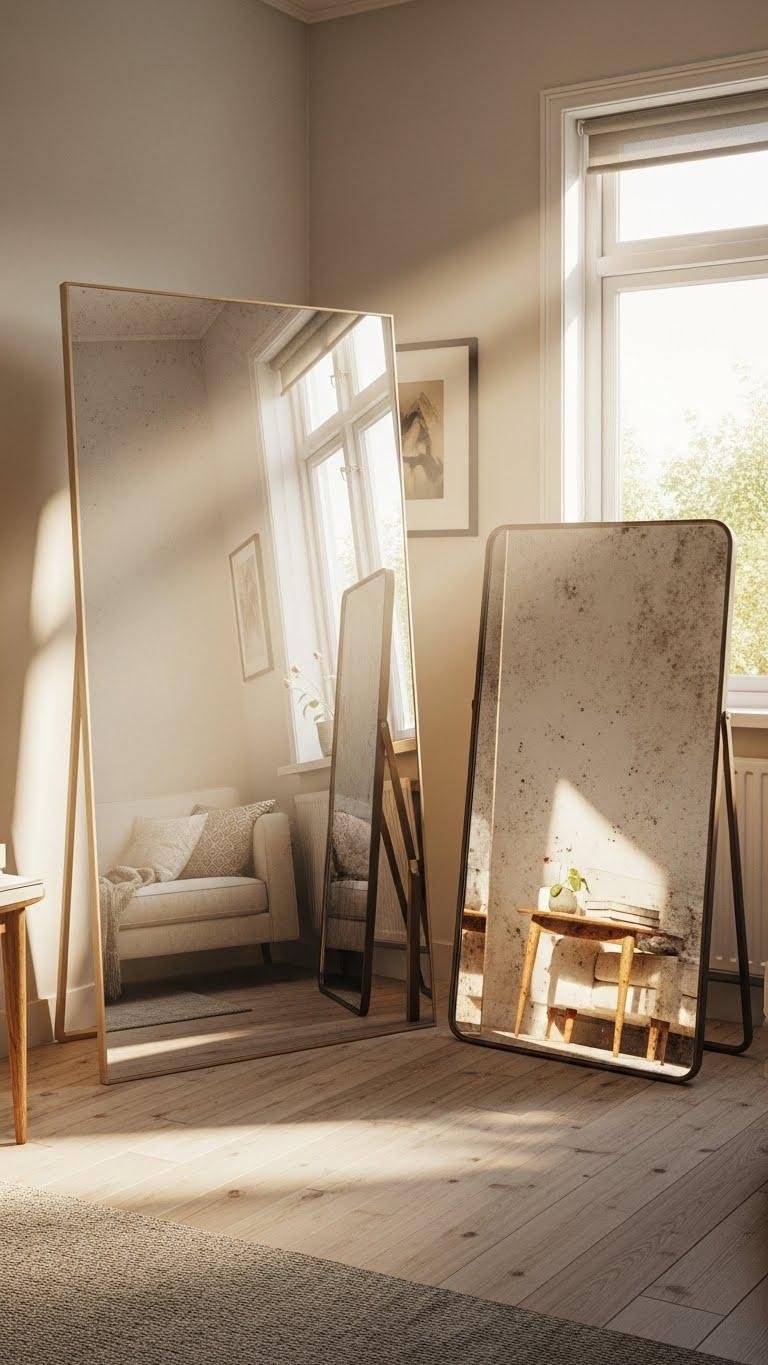
With a strategically placed mirror you’ll instantly amplify daylight and make a small room read as twice its size. Choose angled mirrors to catch sunbeams and reflect views, opening circulation without adding furniture. Mix modern frames with antiqued glass for character that feels lived-in, not cluttered. Lean large panes behind seating or opposite windows to expand sightlines and invite a freer, lighter vibe.
Keep Tall Pieces to Perimeter Walls to Maintain Sightlines
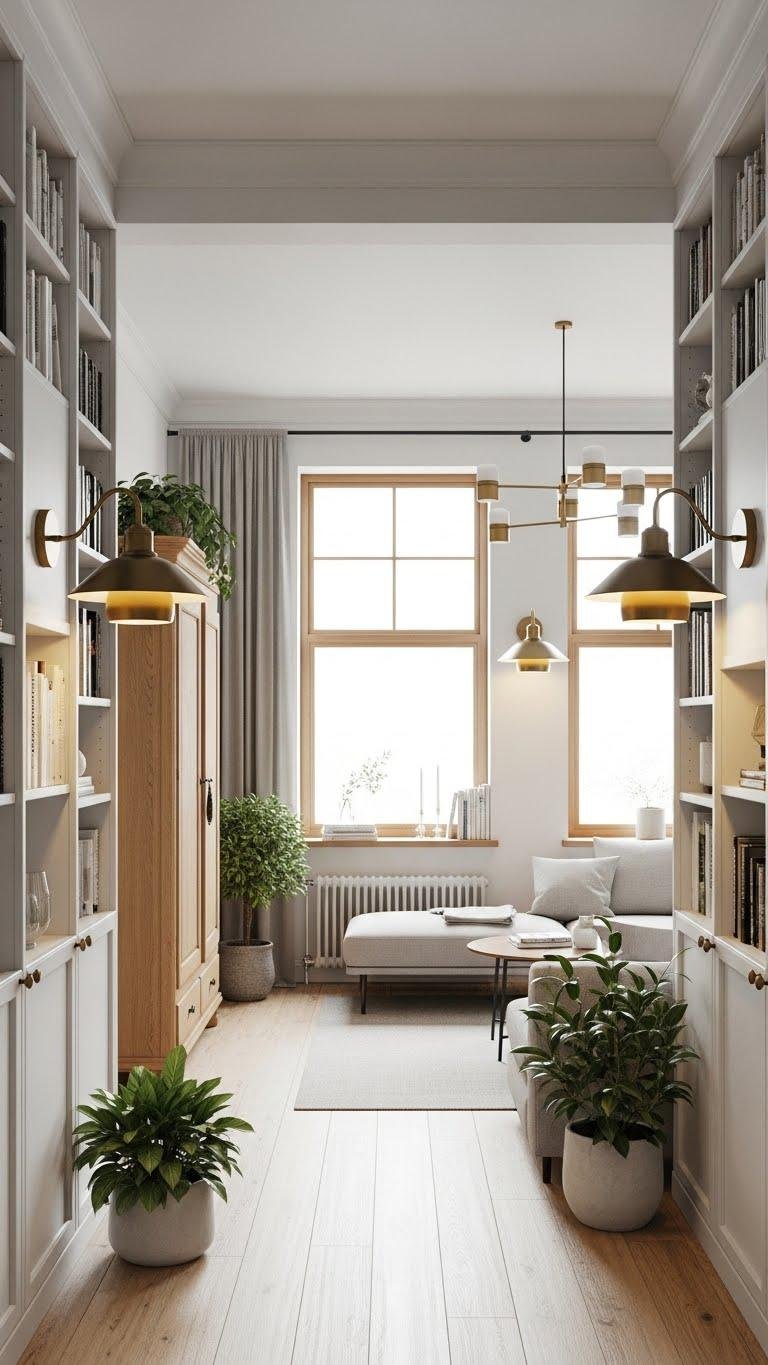
Although it’s tempting to float tall bookcases or armoires into the center, anchoring them along perimeter walls preserves sightlines and keeps a compact room feeling airy.
You’ll free movement and visual flow by placing storage and tall art against walls, pairing corner plantings for softness and wall sconces for layered accents.
This setup feels open, intentional, and liberating without crowding your space.
Exploit Vertical Space With Floor‑To‑Ceiling Storage
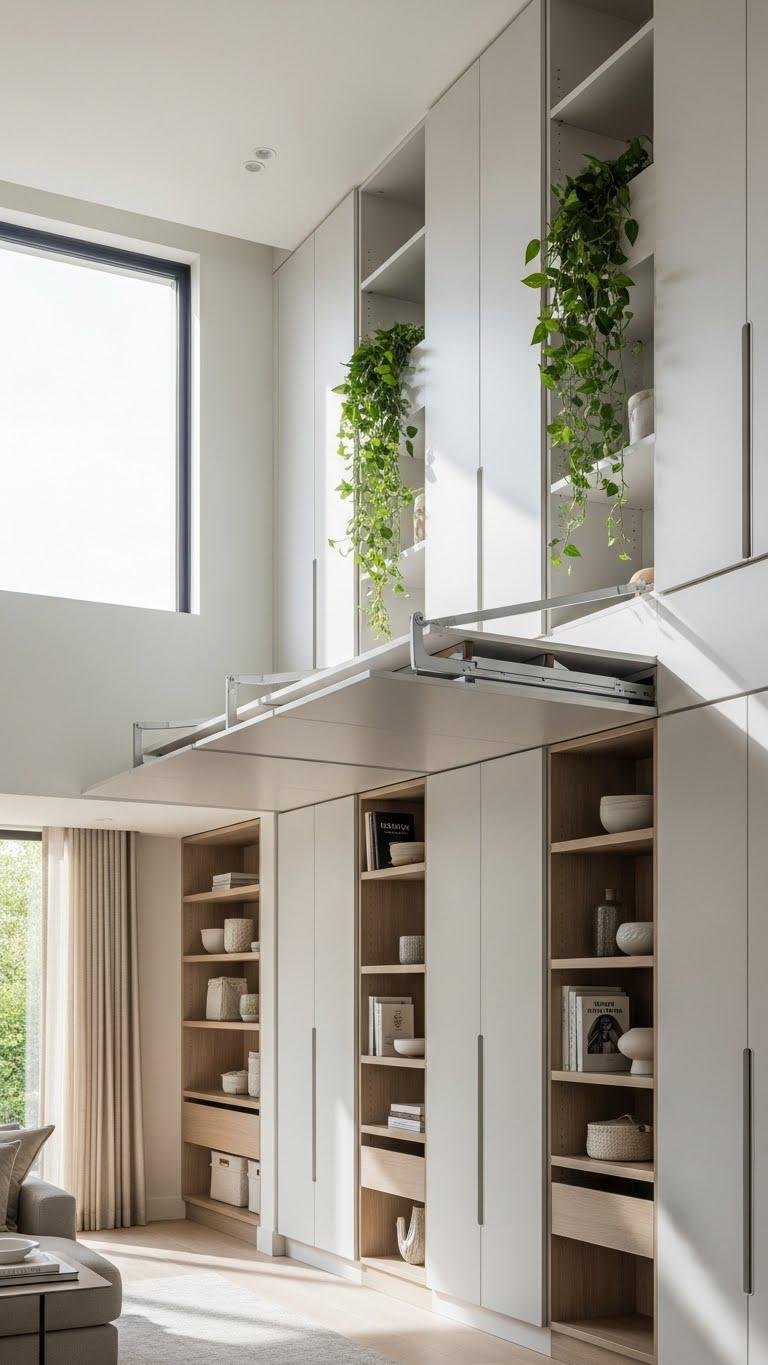
Maximize height to instantly expand both storage and perceived square footage: floor-to-ceiling cabinets, open shelving, and tall wardrobes draw the eye upward while tucking clutter out of sight. You’ll claim vertical freedom by mixing ceiling mounted cabinetry with slim vertical planters for greenery. Choose streamlined finishes, hidden handles, and adjustable interiors so every inch serves you — orderly, airy, and effortlessly chic.
Adopt Minimalist Decor and Designate Homes for Everyday Items

Hidden storage clears visual clutter, but minimalist decor asks you to go further: pare surfaces, streamline forms, and give every item a designated home. You’ll practice daily decluttering as ritual, keeping counters spare and moods light. Choose multipurpose pieces, label zones, and adopt strict item homing so retrieval is effortless. This disciplined freedom makes small spaces feel breathable, curated, and calm.