
You’ll feel calmer when your space speaks quietly: pick a warm, near-monochrome palette, soften surfaces with linen and wool, and keep shapes low and unassuming. Focus on tactile materials, matte finishes, and a few meaningful objects rather than lots of things shouting for attention. Adjust lighting so it’s warm and dimmable, hide cords and labels, and add rugs or plants for subtle acoustic and visual depth—here’s how to make that quiet happen.
Choose Warm, Dimmable Bulbs (2700–3000K)
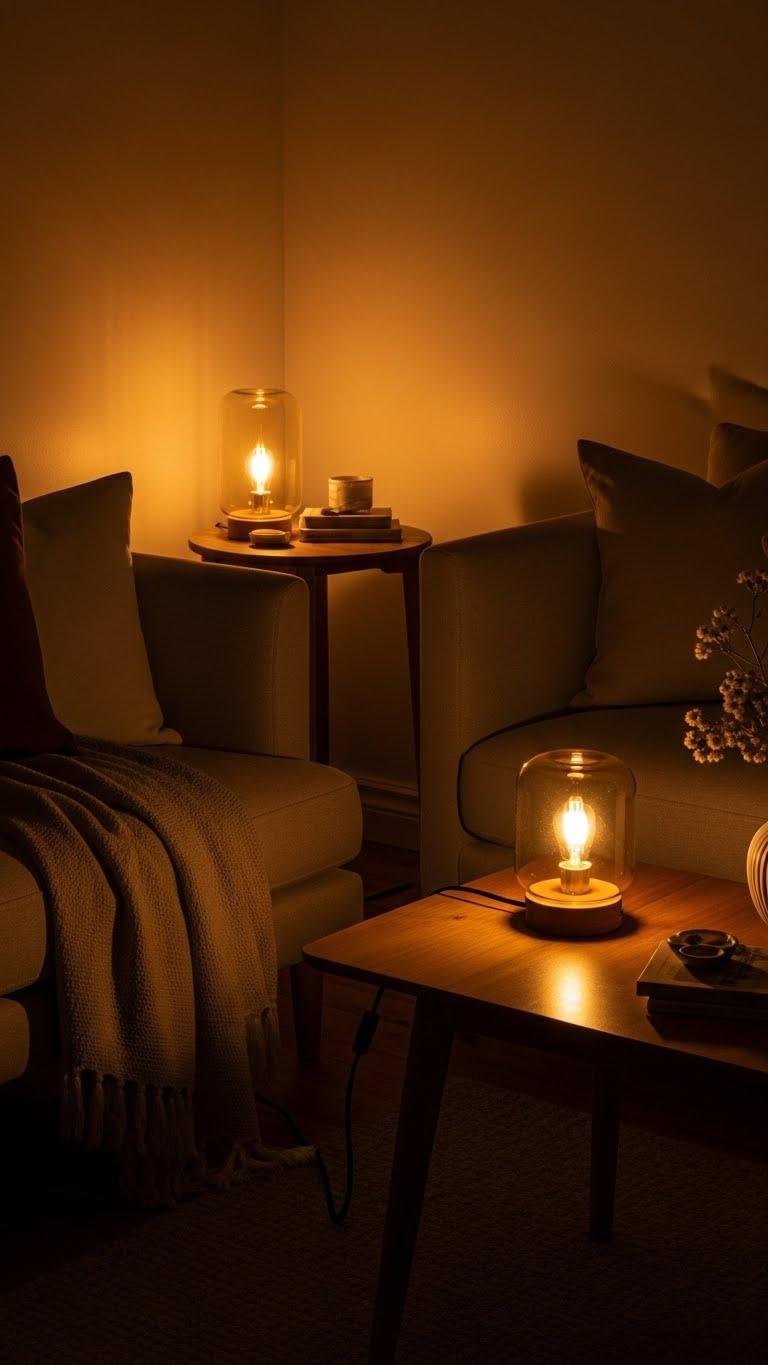
Layering a single hue gives your room a quiet, cohesive look, and the right light will make those subtle tones sing.
Choose warm bulbs (2700–3000K) and dim them to match mood. You’ll appreciate candle simulation for intimate evenings, soft gels to tame harsh glare, and amber filters for golden calm. These simple swaps free your senses and reduce visual noise.
Use Diffused Light Sources
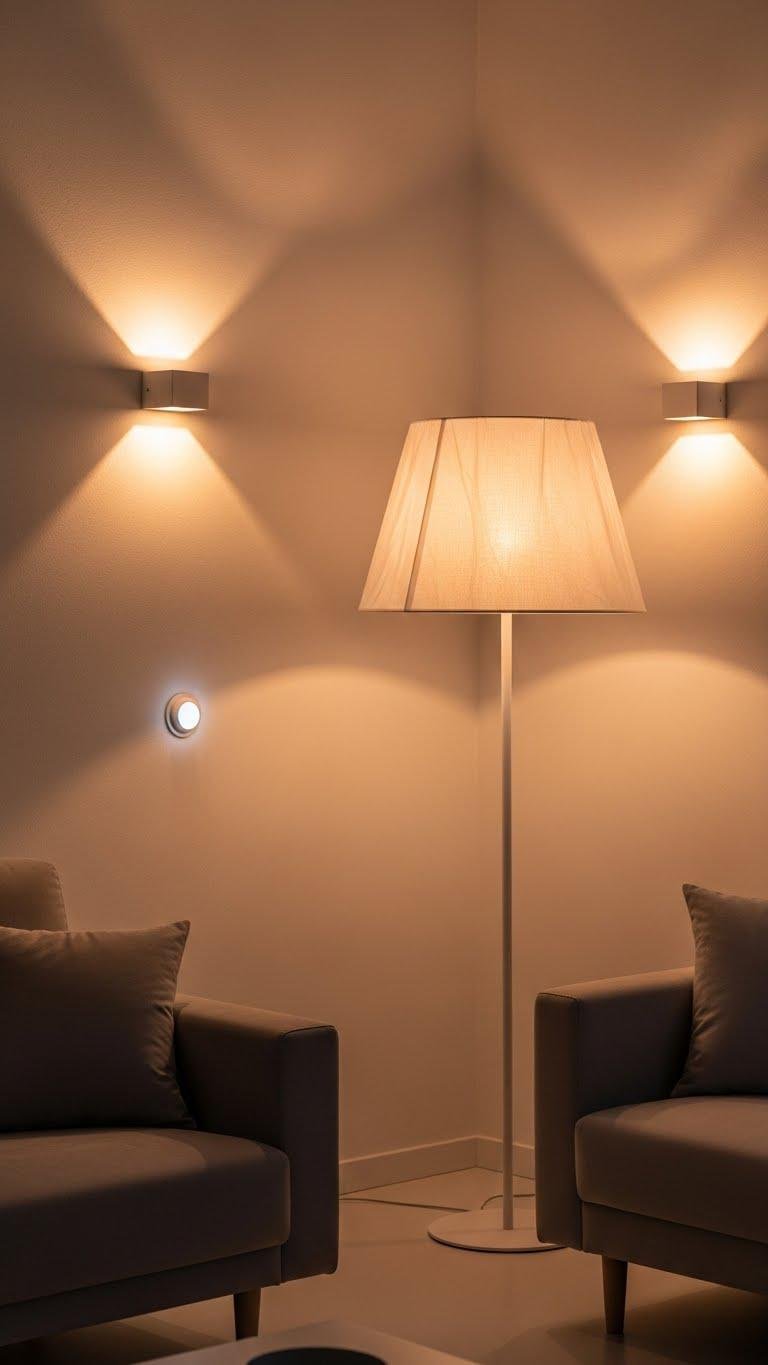
Frequently, you’ll soften a room instantly by swapping harsh bulbs and exposed fixtures for diffused light sources that scatter and calm the glow. Choose soft lampshades and indirect sconces to wash walls gently, reduce glare, and invite relaxation.
Layer low-level fixtures, dimmers, and warm bulbs so you control mood and freedom of movement, creating a serene, uncluttered atmosphere that feels effortlessly open.
Maximize Natural Light
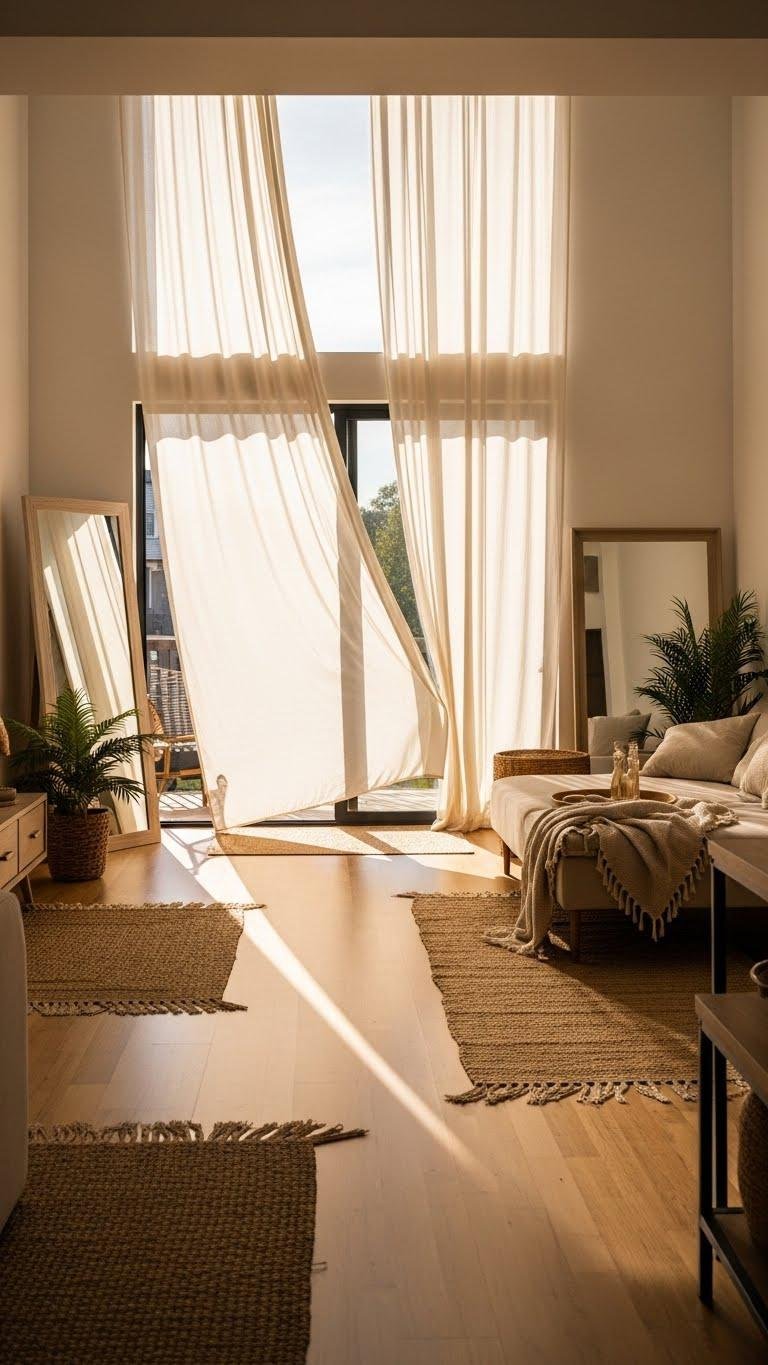
When you pull back heavy curtains and let sunlight pour in, a room instantly feels larger, warmer, and more awake; aim to amplify that effect by positioning mirrors to bounce light into darker corners, keeping window treatments sheer, and arranging furniture so sightlines and pathways stay open.
Embrace sunlit windowways, clear surfaces, natural textures, and airflow optimization to create a breathable, freeing atmosphere.
Opt for Minimalist Furniture Designs
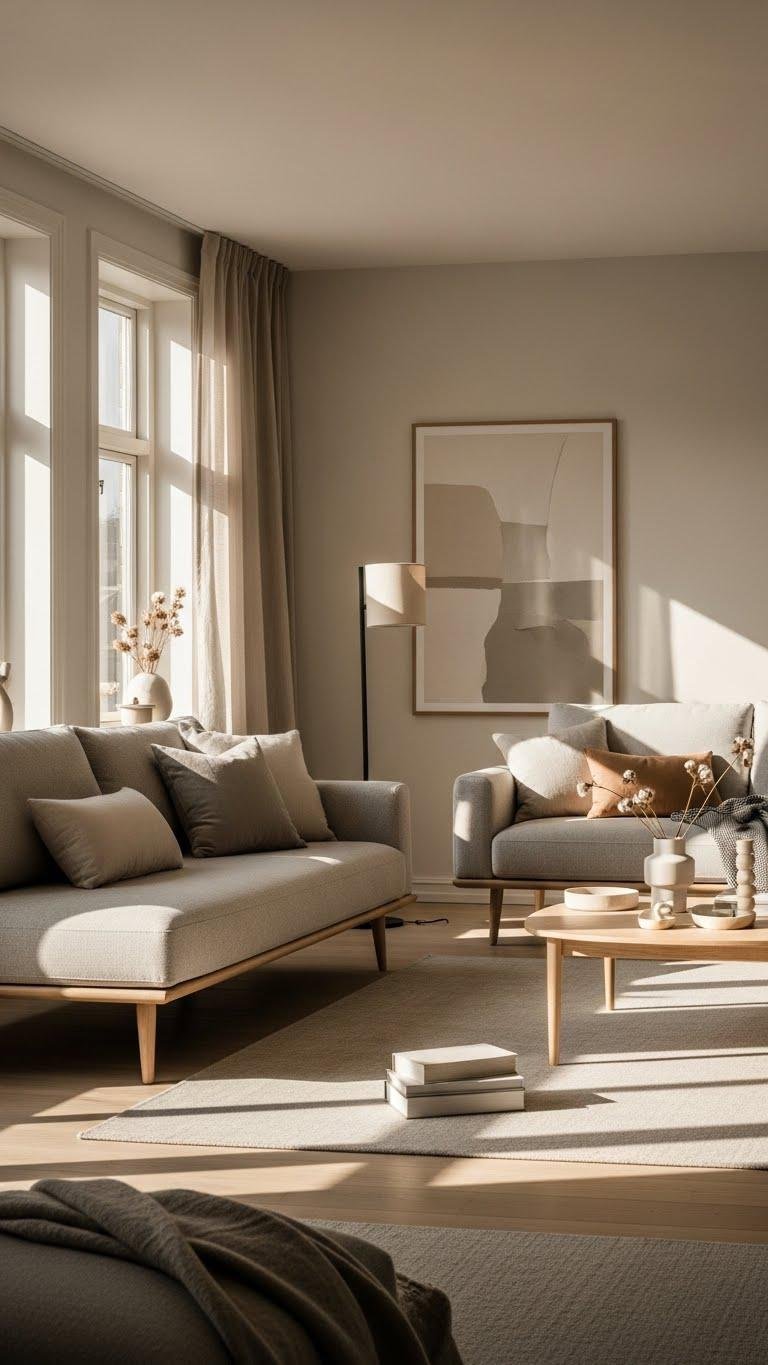
Let the light-filled openness guide your furniture choices: choose pieces with clean lines, low profiles, and slim legs so the room feels airy rather than crowded. You’ll favor slim silhouettes and low profile frames that blur edges, invite movement, and let textures and light take center stage. Select tactile fabrics, muted hues, and practical shapes that free your mind and simplify daily living.
Create Space Between Furniture Pieces
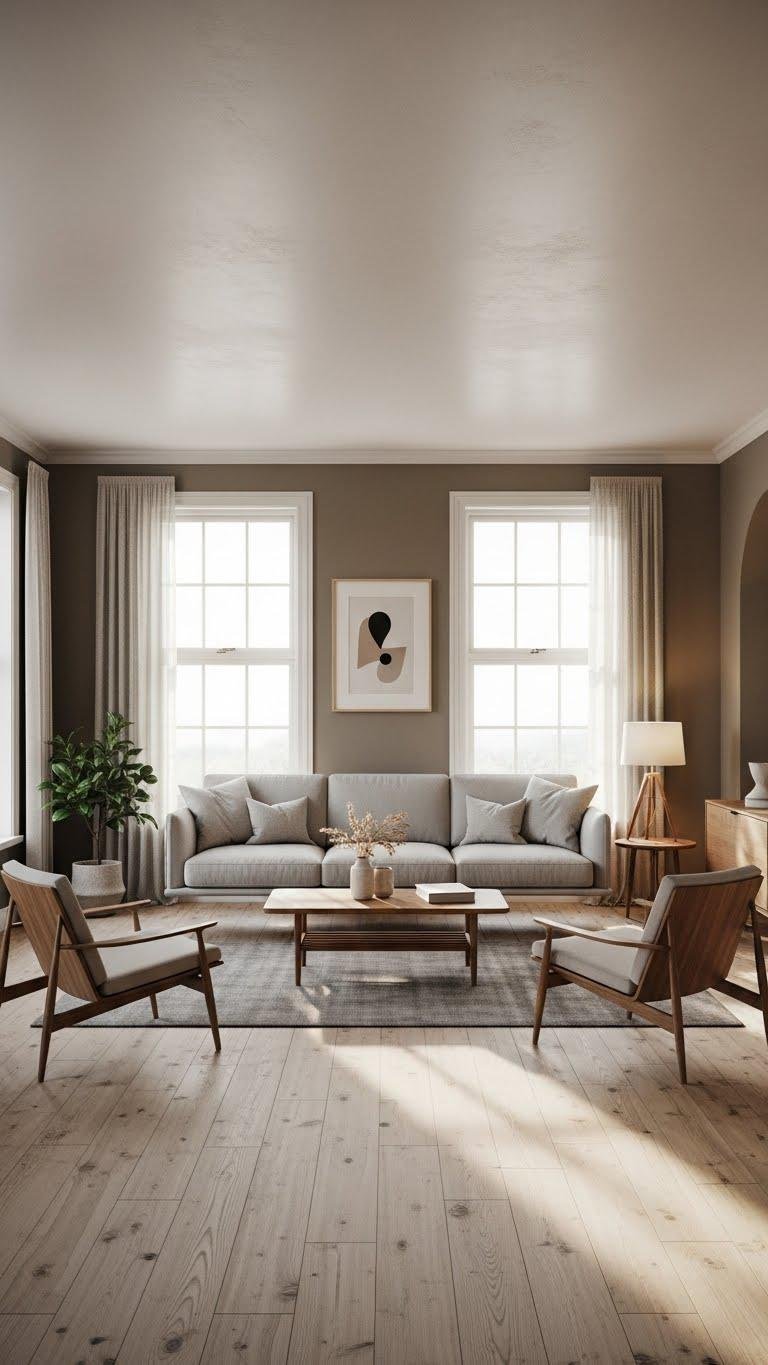
Because open flow calms the eye, leave clear pathways and generous gaps between pieces so movement feels effortless and the room breathes. You’ll use scaled spacing to balance intimacy and openness: float sofas, angle chairs slightly, and keep low tables unobstructed.
This preserves sight lines, reduces visual clutter, and gives you the liberating sensation of space to move, rest, and rethink.
Select Multi-Purpose Furniture With Hidden Storage
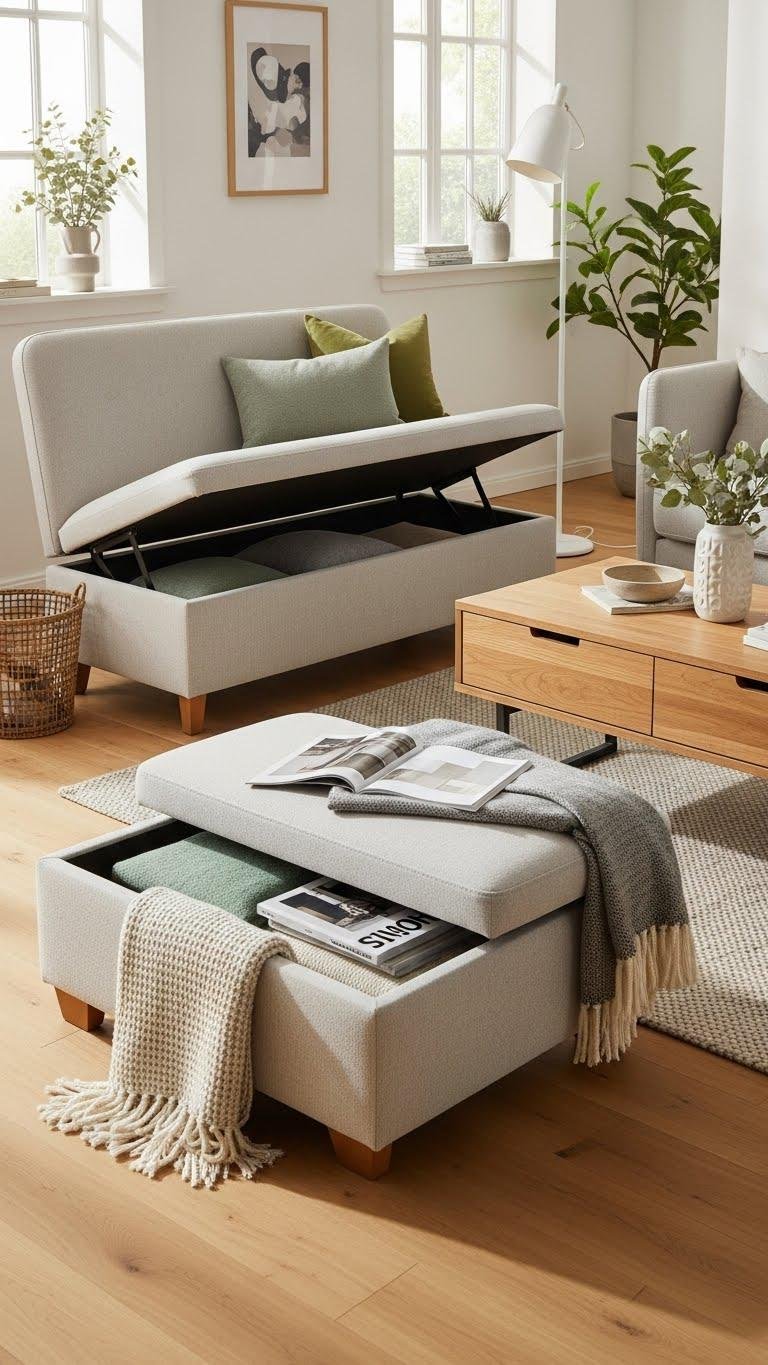
Think about furniture that pulls double duty: a bench with a lift-up seat, a coffee table with drawers, or an ottoman that holds extra throws and magazines lets you tuck away clutter without sacrificing style.
You’ll choose dual purpose seating and storage pieces that feel tactile and light. Hidden bed designs and sleek chests free floor space, so you move and breathe easier.
Clear Surfaces and Keep Only a Few Personal Items
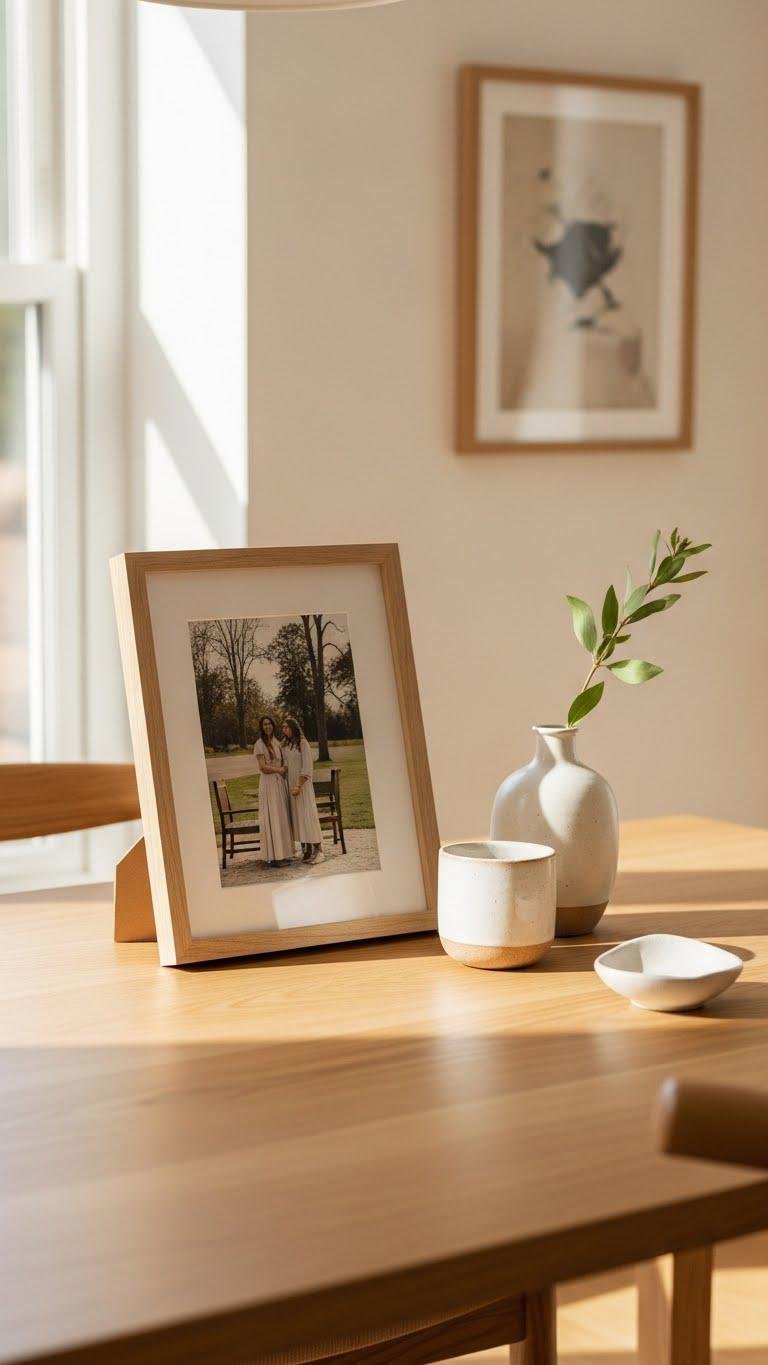
Clear off tabletops and you’ll instantly notice the room breathe more easily — a few well-chosen personal pieces keep the space warm without cluttering it.
Let surfaces feel tactile and open: a single photograph, a small vase, or a meaningful object. Use sentimental curation and seasonal rotation to swap items deliberately, keeping freedom to change while avoiding visual noise and excess.
Corral Small Items on a Single Tray
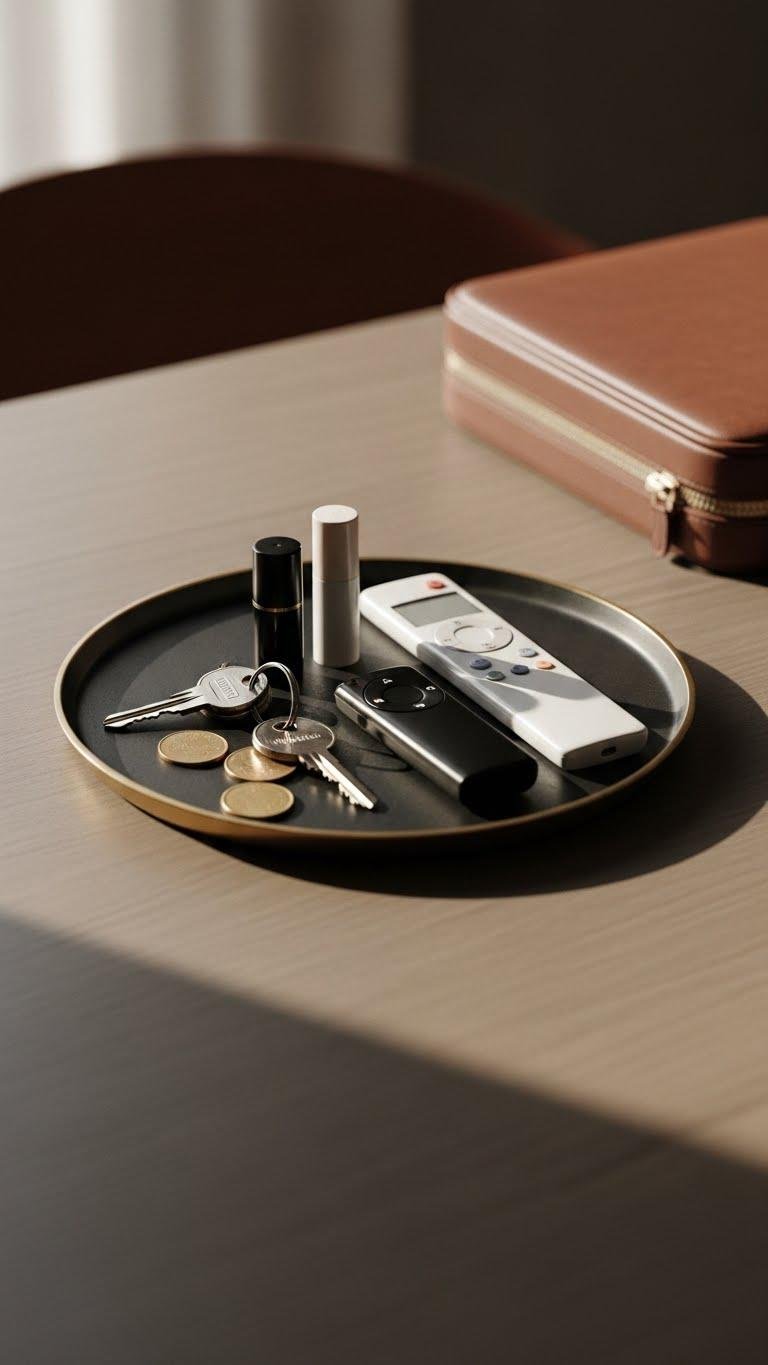
Once you’ve limited tabletop items to a few meaningful pieces, gather smaller bits—keys, lip balm, loose change, remotes—onto a single tray so they won’t scatter and create visual noise. You’ll create a calm focal point with tray grouping that feels intentional. Choose tactile materials, keep edges clean, and use portable curation so you can lift everything at once and move freely through your day.
Decant Packaging Into Simple Containers

Swap mismatched bottles for a handful of simple, tactile containers and you’ll instantly calm a busy shelf or countertop. Choose label free dispensers and glass jars with warm textures so contents read as calm, not chaotic. Minimalist decanting reduces clutter, reveals what’s essential, and frees you to move quickly. Keep shapes consistent, refill thoughtfully, and enjoy visual breathing room.
Use Neutral Base Colors to Calm the Room
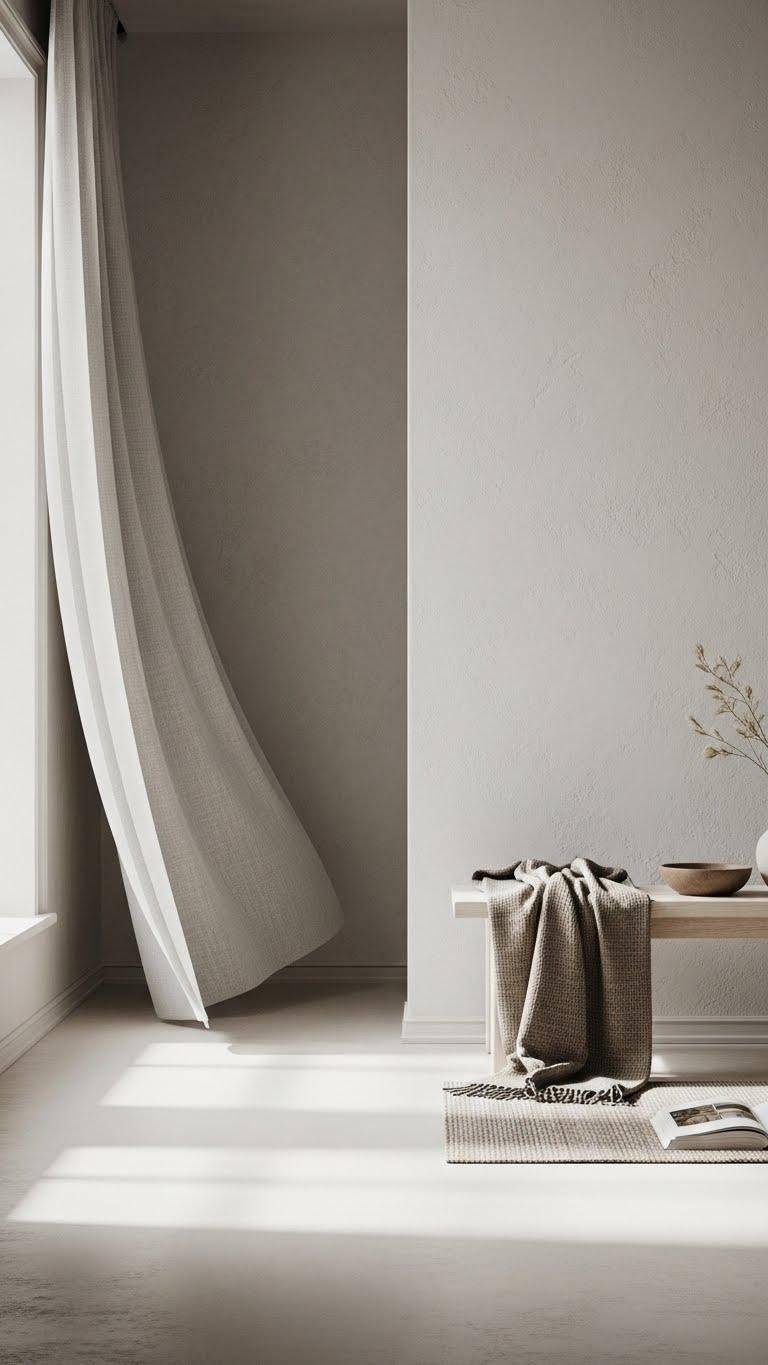
When you choose a neutral base—warm whites, soft grays, beiges—you give the room a quiet foundation that soothes the eye and lets texture and light take center stage.
Use soft grey walls and natural textiles so surfaces breathe; add linen drapery for gentle movement. Keep contrast low, layers few, and let uncluttered surfaces invite calm and effortless freedom.
Add Warm Tones for Cozy Minimalism
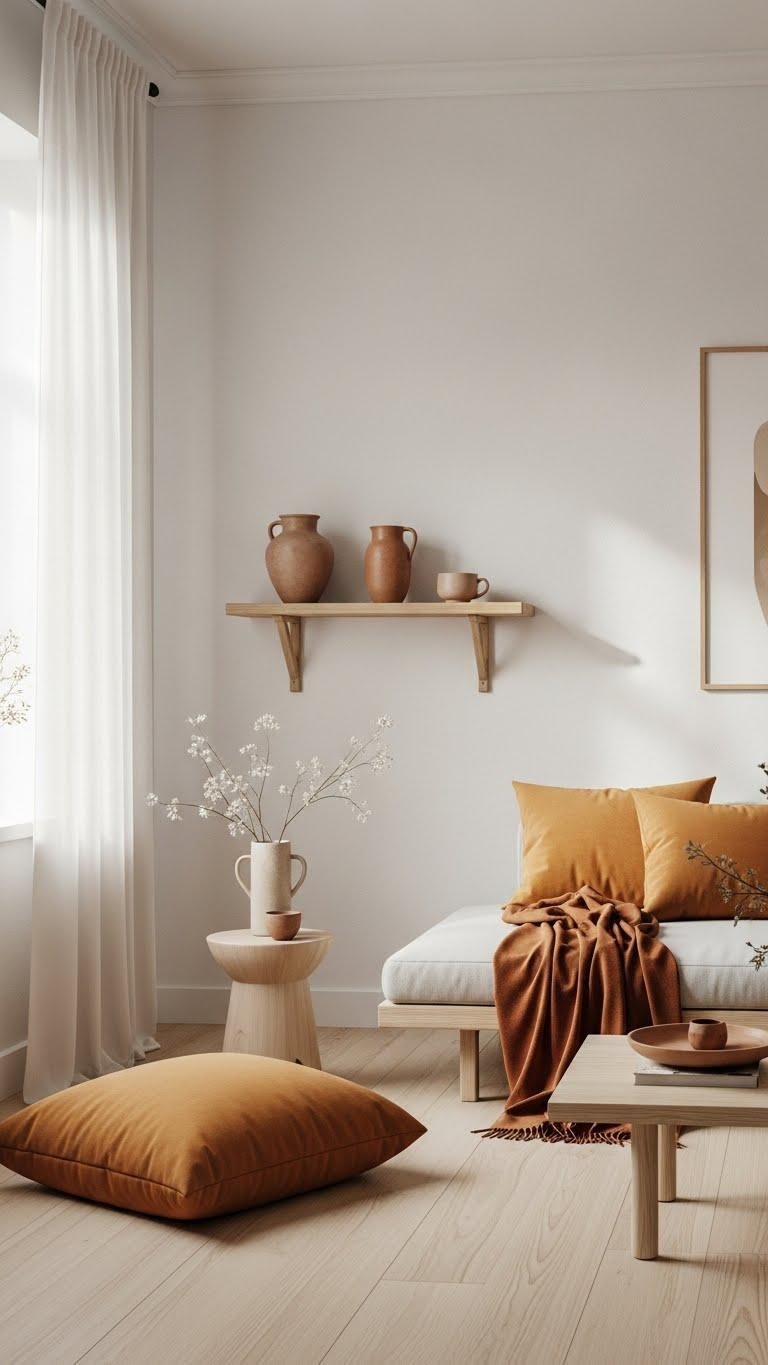
Although a neutral base keeps the room serene, adding warm tones brings a cozy, lived-in feel without cluttering the space.
You can introduce warm ochre cushions, a burnt sienna throw, or muted terracotta accents to invite warmth.
Choose a few tactile pieces—linen, wool, matte ceramics—that age gracefully.
This keeps the room open, personal, and free while maintaining minimalist restraint.
Choose Rugs With Subtle Patterns or Solids
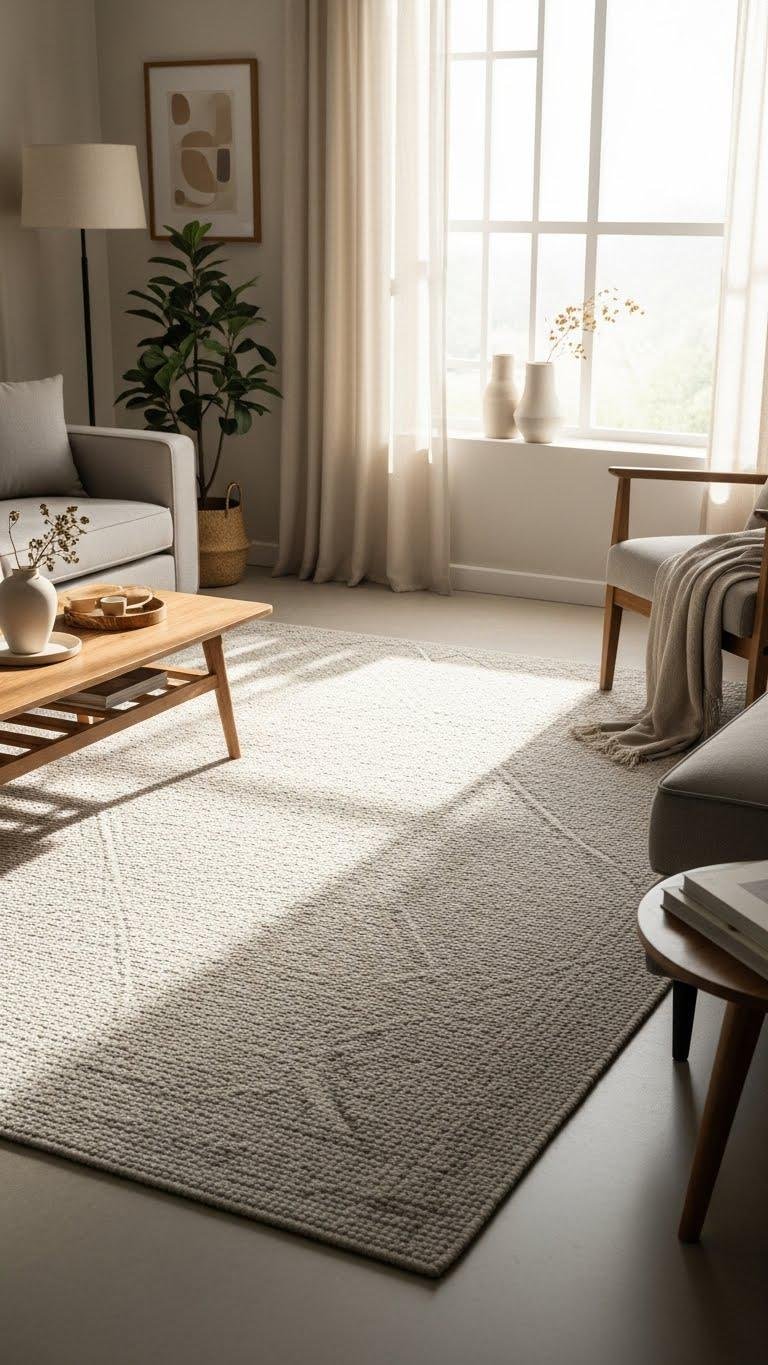
Because your rug anchors the room, pick one with a quiet presence—either a soft, low-contrast pattern or a single, calming tone—to add texture without stealing focus. Choose low pile and natural fiber for tactile simplicity. A hand knotted piece feels honest underfoot; minor geometric blemish or irregularity becomes character, not clutter. Let the rug free the rest of your space.
Add Thick Underlays and Carpets for Sound Absorption

Often you’ll notice how much quieter a room feels after you add a dense underlay or wall-to-wall carpet; it soaks up footsteps, muffles echoes, and softens airborne noise so conversations and rest stay undisturbed.
Choose heavy underlays and resilient carpet padding to feel softer underfoot, reduce impact sound, and simplify maintenance. You’ll reclaim calm, savor quiet moments, and move freely through quieter spaces.
Hang Tapestries or Acoustic Panels
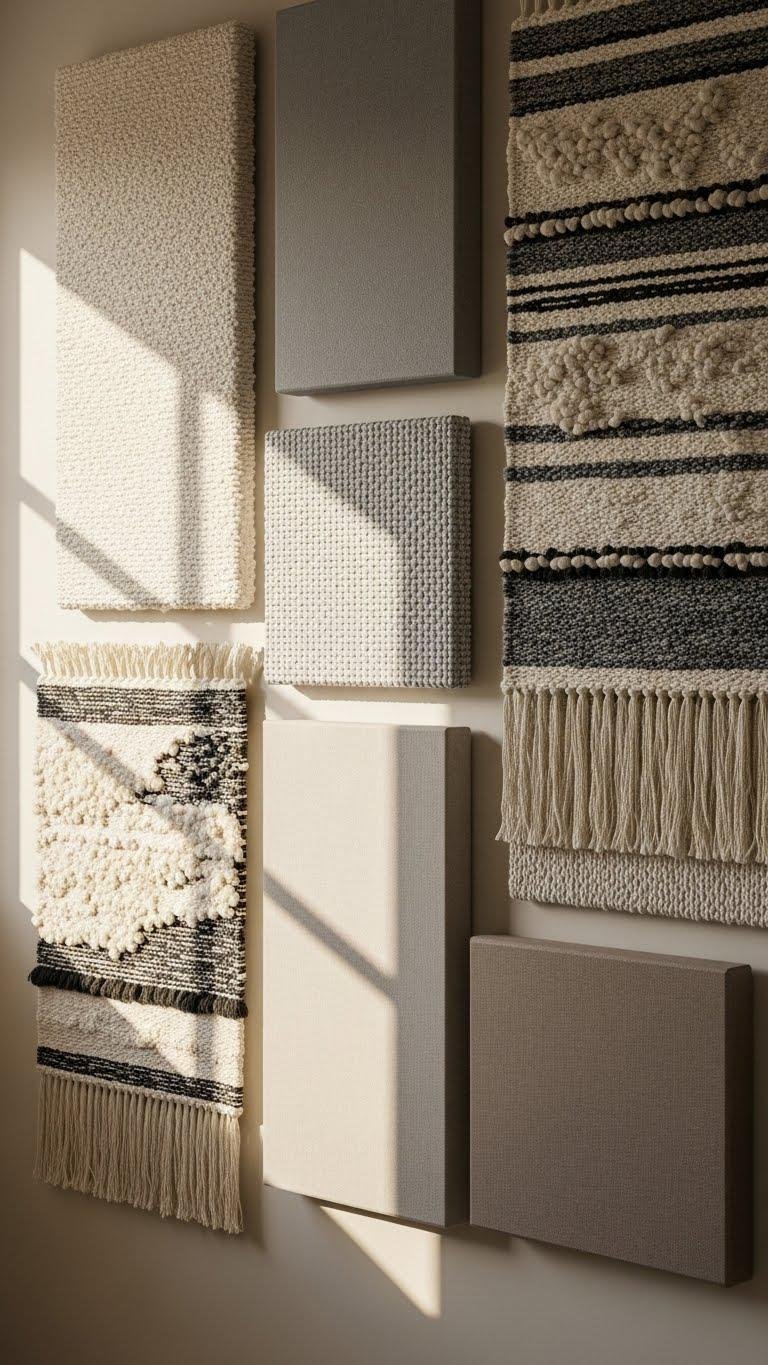
Bring warmth and quiet to your walls by hanging tapestries or acoustic panels that both soften sound and add texture to the room. You’ll choose woven tapestries for tactile warmth or sleek acoustic panels for focused absorption.
Mount them at ear height, mix sizes for balance, and pick neutral tones to calm the eye. They tame echo and free your space to breathe.
Integrate Plants With Textured Foliage
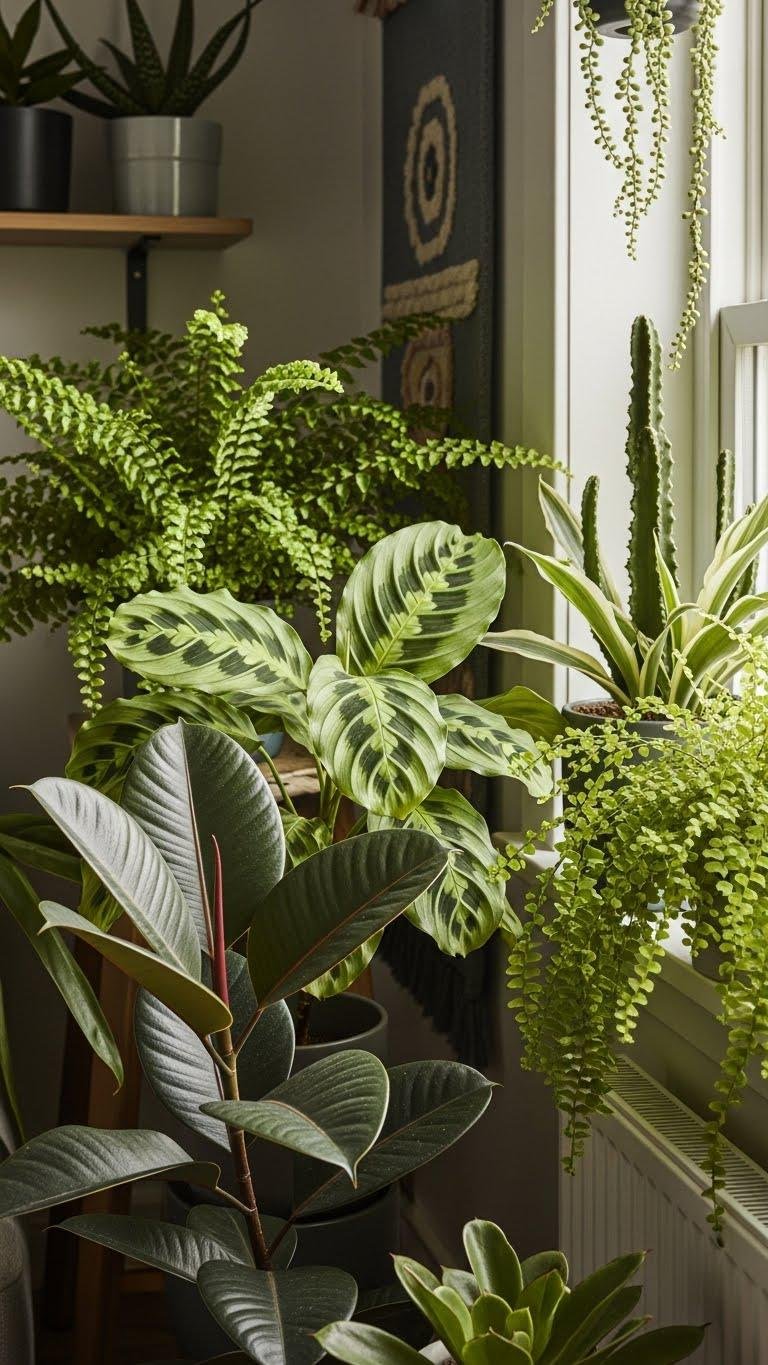
After softening your walls with tapestries or acoustic panels, add living texture that moves and breathes: choose plants with varied foliage—like the feathery fronds of a Boston fern, the rippled leaves of a prayer plant, or the chunky, veined paddles of a rubber plant—to create tactile contrast and a calmer soundscape.
Place variegated ferns near windows and group sculptural succulents for sculpted balance and easy upkeep.
Use Repetition in Materials and Textures
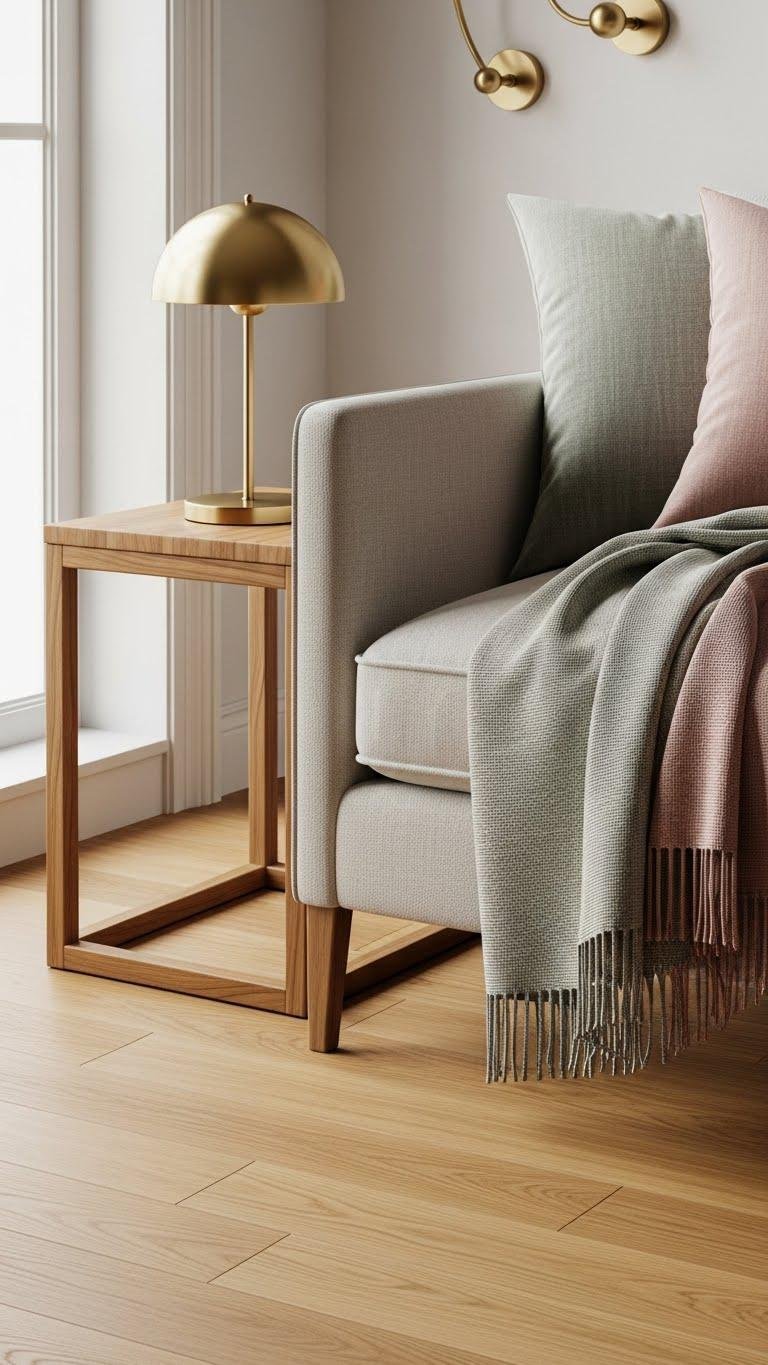
Regularly repeating a handful of materials and textures—like warm wood, soft linen, and matte metals—ties a room together visually and tactilely, so your eye can rest and your hands can follow familiar cues. Choose layered textiles in muted palettes, balance grain and weave, and keep uniform finishes on hardware. That restraint frees you to rearrange, breathe, and live without distraction.
Install Hidden Storage Solutions

Tuck clutter out of sight with hidden storage that feels effortless and still invites touch — think toe-kick drawers beneath sofas, lift-top coffee tables with lined compartments, or built-in benches with hinged seats. You’ll choose floating cabinetry and recessed shelving to free surfaces, smooth sightlines, and keep tactile access. Slide in baskets, tuck linens, and enjoy rooms that breathe without sacrificing easy reach.
Incorporate Sound-Absorbing Decor
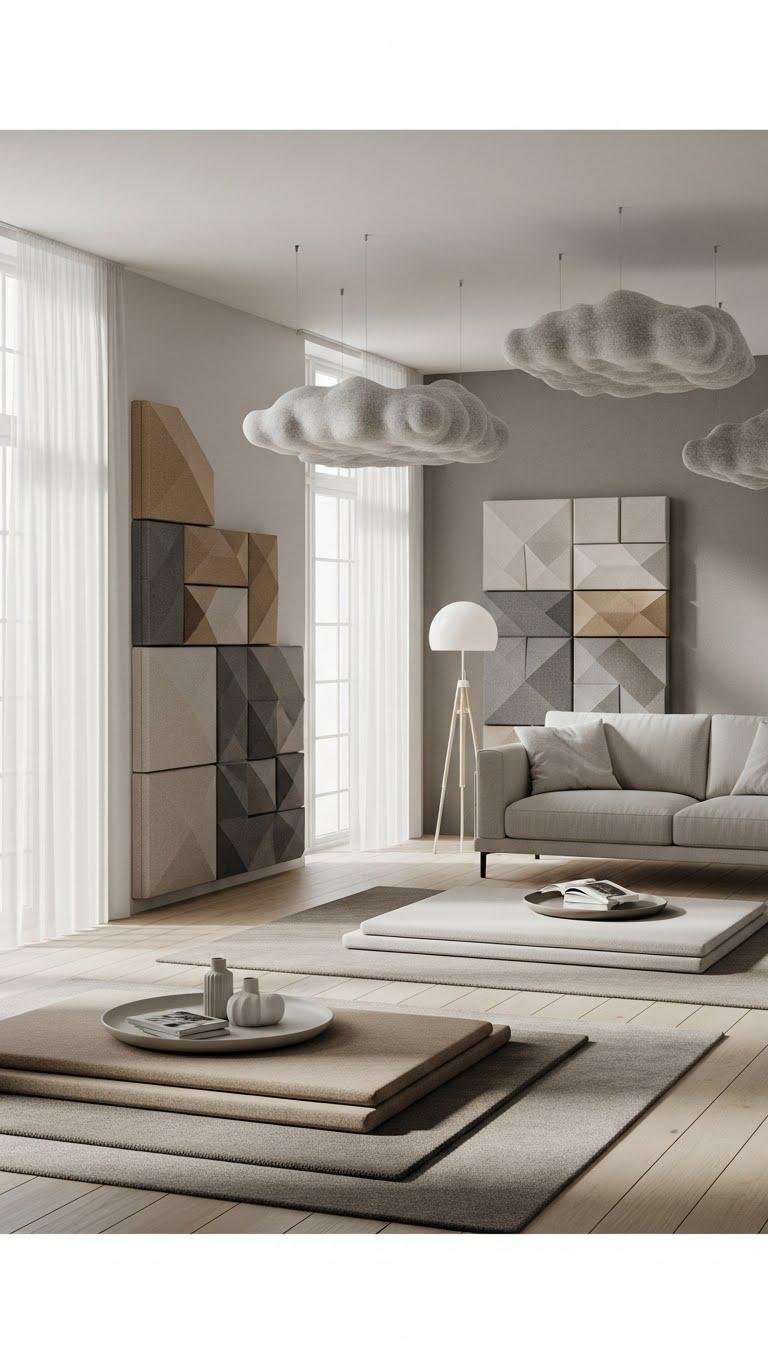
Often a room’s calm is undone not by clutter but by echo and low-level noise, so bring in soft, sound-absorbing elements that actually change how the space feels.
You’ll add fabric baffles on walls, layered rugs, upholstered furniture and ceiling clouds to tame reverberation.
Choose muted tones and simple shapes so sound and sight both settle, giving you spacious, free-feeling rooms.
Use Matte Ceramics and Woven Bins for Calm Texture

Frequently, you’ll find that matte ceramics and woven bins quietly anchor a room’s texture without shouting for attention; their soft, tactile surfaces invite touch and calm the eye. You’ll choose pieces with matte glaze and natural tones, placing woven baskets for tidy storage. These elements reduce visual clutter, add subtle warmth, and let you move freely through a space that feels intentional and unforced.
Keep Contrasting Colors Minimal and Purposeful

Matte ceramics and woven bins set a quietly neutral stage, so introduce contrast sparingly to keep the calm intact. You’ll choose limited palettes that let each hue breathe, then add strategic accents — a deep navy cushion, a brass lamp — to guide the eye.
Touch, light, and placement matter: keep contrasts purposeful so your space feels open, clear, and free.